Monday, June 27, 2016

Tropical Kingbird and Common Terns

Monday June 27th

Royal Tern bathing at Lido Beach
Today, Bob Pelkey had planned a return visit to the beach at Siesta Key, near Sarasota, in search of Common Terns. Last week he had been successful in locating a White-tailed Sandpiper at this location and maybe it'll still be around today. So I joined Bob on this trip, but we didn't see either species at this location. But we did see several Snowy Plovers that nest in this location. One surprise was a lone Greater Yellowlegs busy search the tidal pool for breakfast in the company of a pair of Rosette Spoonbills, Great Egrets, Snowy Egrets, White Ibis, Mottled Duck, Tricolored Heron, Semipalmated Plovers and a Western Sandpiper. We also had four Red Knots flyby as well as flyby Gull-billed Tern.
 
Mottled Duck at Siesta Key

Yellow-legs seen at Siesta Key Beach

Western Sandpiper at Siesta Key Beach

Rosette Spoonbill at Siesta Key Beach

We left here to search for another uncommon bird. A female Tropical Kingbird. This individual bird has been returning to a favored location at St Armonds Circle in Sarasota for several years now. This species belongs in Texas, especially in the summer. We do see occasional Tropical Kingbirds wintering in Florida, but this bird runs backward. It reportedly has been nesting with a Gray Kingbird. We first located a Nanday Parakeet and then found several Gary Kingbirds. The Tropical Kingbird did show, but took off before we could get any photos.
 
Tropical Kingbird

Tropical Kingbird

First Summer Common Term at Lido Beach

First Summer Common Term at Lido Beach

Black Skimmer Chick


Black Skimmer with chick at Lido Beach

So we elected to take to move on to nearby Lido Beach for another try at the Common Terns. Here we located six young birds in the company of numerous Sandwich Terns, Royal Terns, Laughing Gulls and hundreds of nesting Black Skimmers. Other species seen included Fish Crows, Sanderlings, Ruddy Turnstones. a Reddish Egret and a Magnificent Frigatebird.
 
Fish Crow at Lido Beach
Now we returned to St Armands Circle. As we waited for  Tropical Kingbird returned for a photo session, we encountered the Gray Kingbirds again, a couple of House Finches, a Chimney Swift and several House Sparrows. The Tropical Kingbird did show and gave us the photo opportunities we were waiting for.


It was a good trip 
Gray Kingbird

House Finch

House Finch

Saturday, May 28, 2016

Babcock-Webb


Thursday, May 26th


Common Nighthawks

I arrived this morning at 6:45 am at Babcock-Webb Wildlife Management Area in Charlotte County to be on-hand to observe Red-cockadated Woodpecker as they exit there nest holes at sunrise.  Over the years I've been successful with this strategy, making my stop at the RCW colony location on Oil Well Grade. Lately though its seems that this colony is down to a single bird. It emerged at 7 am.


Great Crested Flycatcher
The three special bird species sought here included the RCW, Bachman's Sparrow and Brown-headed Nuthatch.

The Bachman's Sparrow is a relatively secretive bird hanging low in the palmettos. But the best time to find them here is March through May when the males will be singing on territory. The remainder of the year it can be just plain luck to sight one, outside of flushing a bird while trodding through the palmetto scrub. Today I heard two males in song, but back into the pines.
Eastern Towhee
White-tailed Buck
So I had quickly ticked off two the three specialties. But I dipped on the nuthatch. Eastern Towhees, Eastern Meadowlarks, Pine Warblers, Common Ground Doves and Mockingbirds were everywhere though. Also did see a small flock of Black-bellied Whistling Ducks fly low over the property and thick concentrations of wading birds working the shrinking pools of water. As for quail, I heard a lone Northern  Bobwhite


Common Ground-Dove


Ebird list


Tuesday, May 24, 2016

Babes on the Beach

Tuesday May 24th

Note the egg peaking out from under this nesting Least Tern
Least Tern
Today I returned to the Least Tern nesting area on Ft Myers Beach to see how they have been progressing. Hundreds of the terns remain actively nesting and many have already fledged. Hundreds Black Skimmers have now joined the terns and appear to be nesting as well. 

Least Tern

Snowy Plover
Sighted at least nine Snowy Plovers, but didn't see any juveniles. One poor guy was suffering from foot rot. 

Did see a family of Wilson's Plovers with three very young chicks. 

Best sighting was spotting a young American Oystercatcher chick with its parents. Seems to me that past nesting attempts here by oystercatchers suffered from predation, so it was a pleasure to see the baby bird today.
Nesting Black Skimmer


Wilson's Plover with Chicks


h
American Oystercatcher Chick

h
Mottled Duck

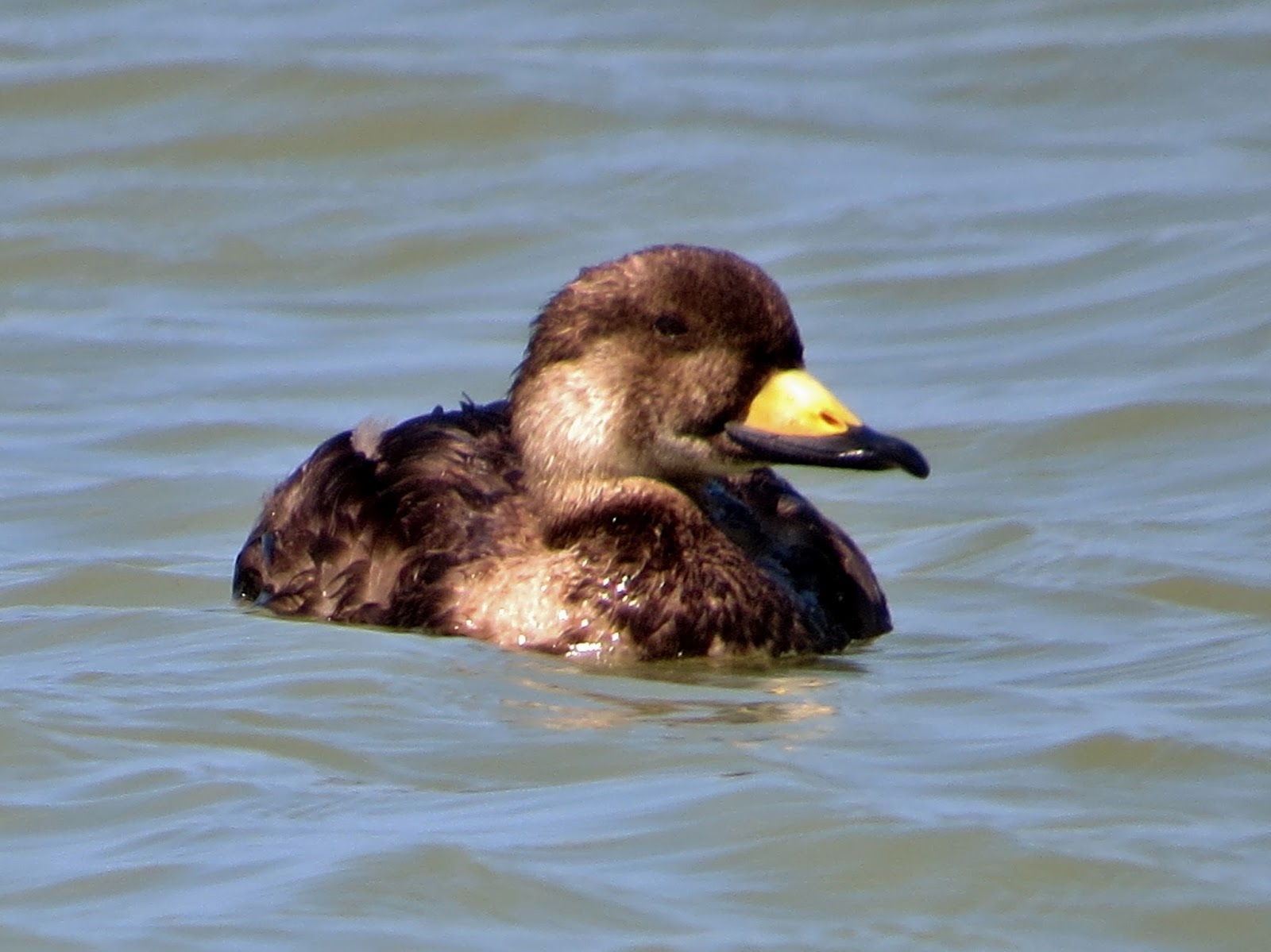
Male Black Scoter over summering in Florida

Ruddy Turnstone

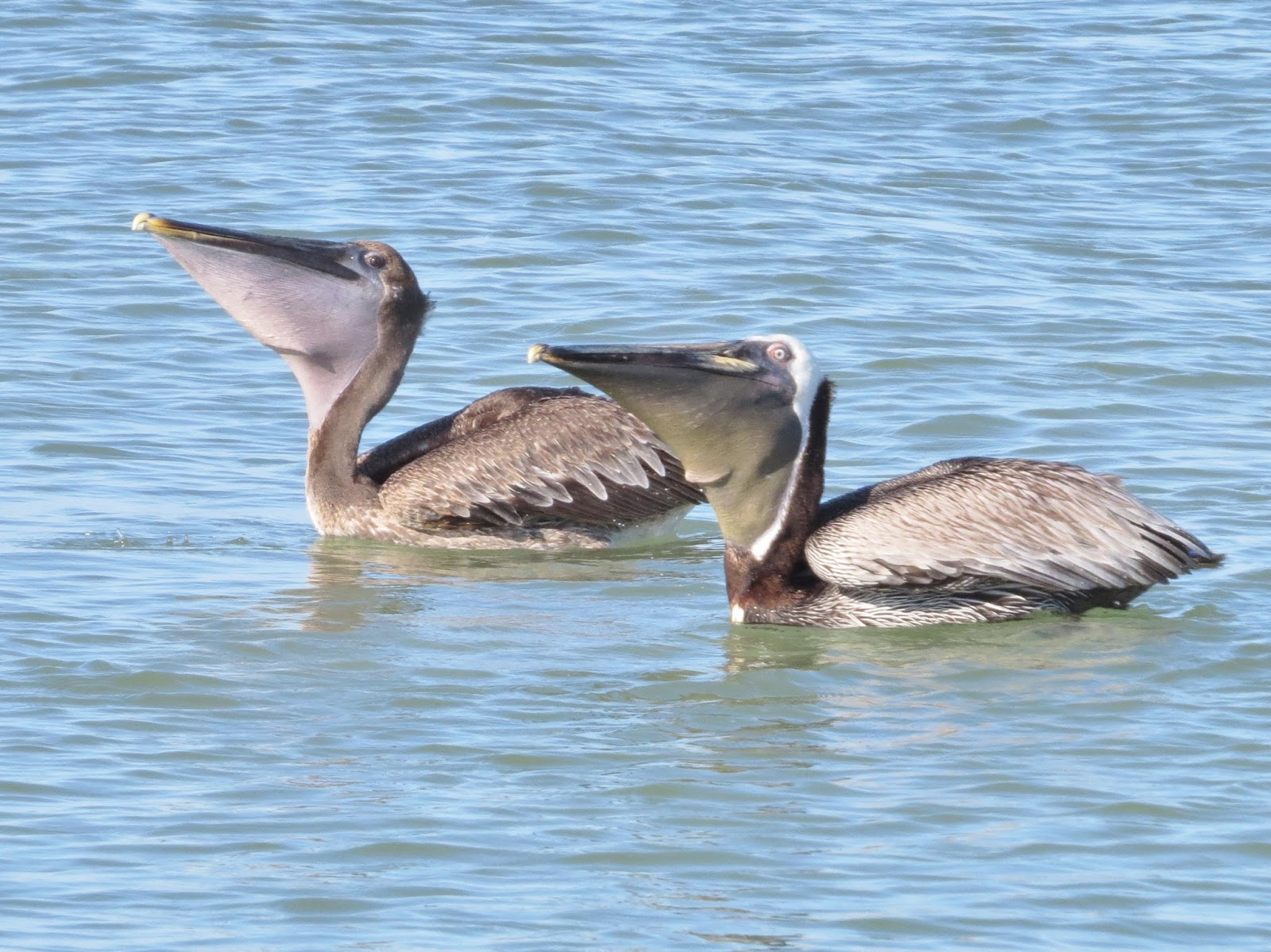
Brown Pelicans

Closest I've ever been to a Hammerhead Shark

Wednesday, May 11, 2016

The Keys


Wednesday May 11th


Monday, I made my yearly stop in the Town of Marathon in the Florida Keys looking for the nesting Roseate Terns and the seasonal Antillean Nighthawks. Both of these species arrive in the Keys in the Spring. The Roseate Terns are a primarily pelagic species, but members from the Caribbean population will come ashore for nesting.

Roseate Tern

In Marathon the small number will join with Least Terns to nest atop the Marathon Government Center building. I arrived about 5:30 pm and sited at least six of the Roseate Terns as well as the Least Terns, White-crowned Pigeons and Double-crested Cormorants. Next was a long wait at the nearby Marathon Airport of sundown to await the appearance of a pair of Antillean Nighthawks.
They began calling right at sundown and took flight shortly after. Other species seen during my wait included Gray Kingbirds, more White-crowned Pigeons, a Common Myna and Chimney Swifts.

Prior to reaching Marathon, I made a stop at the tollbooth area on Card Sound Road to look for any Yellow Warblers or Black-whiskered Vireo. But all was quite. Next stop was Carysfort Key Largo. Here were seen a flock of Bobolinks, White-crowned Pigeons and calling Black-whiskered and White-eyed Vireos
Gray Kingbird

Down the road was Dagny Johnson Hammock Biological State Park were I had planned to connect with Mangrove Cuckoos. But OOPS!!. The park is closed for renovations. Seems they're stripping the property of man made structures built prior to acquiring the hammock. 

This gave me more time to stop at Long Key State Park. Earlier in the year the Golden Orb Trail here was active with birders looking for the Zenaida Dove and Key West Quail-Dove. Both extreme rarities. Bob Pelkey and I made a try back in January on the dove but dipped. Neither bird have been reported for some time, but I was very pleasantly surprised to sight a pair of Connecticut Warblers on the trail.  Lifers!!. Florida birders have a very small window as they migrate north and even then counts are low as they are hard to locate.  This year seems folks are have better success. Also seen here were an unidentified thrush, Magnolia Warbler, Prairie Warblers, American Redstarts and lots of Ovenbirds. This would be my best stop of the trip.
Pigeon Plum is a common tree at Long Key State Park.

Tuesday was spent exploring in Dade County. Made stops at Kendall Baptist Hospital area and found a couple of Monk and Yellow-chevroned Parakeets, but no bulbuls, spot-breasted orioles or mitred parakeets. Additional stops at Matheson Hammock Park in Coral Gables and A D Barnes Park  were a total wash-out. Very quite. Last stop was was at the Snapper Creek Canal Cave Swallow site, were several Cave Swallows were observed, but were much too fast for my photography.

Yellow-chevroned Parakeet


South Florida is not just a place to look for wild exotic birds, but also a place to find exotic lizards.
Green Iguanas are found everywhere
At Mathesson Hammock I spotted several exotic lizards sunning themselves. Including Green Iguana, West African Rainbow Agamas, Brown Basilisks and a Puerto Rican Crested Anole. Mexican Spiny-tailed Iguanas were seen at Snapper Creek Canal.

Northern Brown Basilisk
s
West African Redheaded Agama

West African Redheaded Agama
s

Puerto Rican Crested Anole

Monday, April 25, 2016

Fort Myers Beach

Reddish Egret

Monday April 25th

American Oystercatcher

Yesterday I did some birding on Bunche Beach, so this morning I checked out Fort Myers Beach. I had a few target birds and wasn't disappointed. Started by parking at the Lovers Key State Park entrance,  on the south side of Big carlos Pass,were I'm greeted by an out of place American Crow. Parking is basically unavailable to access the beach at this end of Estero Island (Fort Myers Beach). While walking across the draw bridge spanning Big Carlos Pass the first of many Least Terns and a late Common Loon


The south end of Estero Island is called Carlos Point and here several struggling, beach nesting species of birds find government sponsored accommodations and are protected from human interference. Hundreds of Least Terns are starting to arrive and are pairing off for nesting. American Oystercatchers, Wilson's Plovers and Snowy Plovers are also nesting. Later hundreds more Black Skimmers will take over the nesting grounds as the Least Terns chicks are fledged. Efforts are succeeding in enticing the Terns away from Carlos Point, which is mostly private property to sanctuary at Lovers Key State Park. Meg Rousher, a local birder and a summer staffer for the Florida Fish and Wildlife Service stated that at least three hundred of the Terns are using Lovers Key this season. She also advised that the Black and Surf Scoters were still on the beach. Speculation is that the birds have been suffering from recent health issues. Meg also reporting sighting a white-rumped sandpiper earlier in the morning. So I set off looking for it.
Romance among the Least Terns

Least Tern at Carlos Point

It was a good walk.  Sighted numbers of Snowy and Wilson's Plovers, Reddish Egrets, a pair of American Oystercatchers, the Scoters and a flyby of a pair of Gull-billed Terns.

Black Scoters

Male Black Scoter

Male Black Scoter

Surf Scoter with a Black Scoter
A Peregrine Falcon was spotted atop the tallest condo building surveying all that lay about him. Never did see the white-rumped sandpiper.
Snowy Plover

Wilson's Plover

Semipalmated Plover


Least Sandpipers
Reddish Egret


Marsh Rabbit on the beach