Wednesday, November 11, 2020

Down to the Beach

 Wednesday November 11th

Haven't done very much birding lately, being stuck at home. Mostly just keeping an eye on the yard.  But with Tropical Storm Eta, or sometimes as a Hurricane Eta, lingering in the Gulf of Mexico there maybe an opportunity to encounter some pelagic birds being blown toward shore. 

An Aberrant Laughing Gull


Ended up checking on the action on the Sanibel Causeway Islands. While still under a Tropical Storm Warming, a Tornado watch and a Storm Surge watch, expected to find sea birds sheltering on the bay side of the islands, because the high winds and a high surf were crashing the gulf side.  

Lots' of Laughing Gulls, Royal Terns, Sandwich Terns, some Common Terns, Ruddy Turnstones, Willets, Sanderlings, Brown Pelicans, Cormorants, plus Semipalmated Sandpipers, a Black Skimmer, a FOS Dunlin, Black bellied Plover  and a Snowy Plover. The only pelagic was a single Magnificent Frigatebird.


Snowy Plover

Black-bellied Plover

Willet

Royal Terns

Common Tern

Wednesday, October 7, 2020

Fall Migration

 Wednesday October 7th

Sighted this Whimbrel at Siesta Key 

Great Crested Flycatcher

So far Fall Migration, as we in beautiful SW Florida are experiencing it, has been a bit so.  No great fall outs, but there recently has been some fun birding at Rotary Park in Cape Coral.


Swainsons Thrush

Veery

Palm Warblers
are just now showing up with American Redstarts being the most commonly encountered migrating warbler.  Ovenbirds, Yellow-throated Warblers, Black-and-White Warbles, Summer Tanagers and Swainsons Thrushes have been reliable. For me personally, I can add Scarlet Tanagers, Red-eyed and Yellow-throated Vireos, Baltimore Orioles, Blackburnian, Black-throated Blue, Northern Waterthrush & Chestnut-sided Warblers, Eastern Wood-Pewees and Yellow-billed Cuckoo.

Eastern Wood-Pewee

Yellow-billed Cuckoo

Baltimore Oriole


Oh, and the Gray Catbirds have shown up.

Tuesday, September 29, 2020

Rookery Bay Estuarine Preserve

 Tuesday September 29th

The other day, my friend Bob Pelkey reminded me that I was over due on a fresh post.  I do get out almost daily and have now gone beyond just making birding observations. I can say that I'm a generalist on things natural. But have been negligent with updated posts.


On September 15th, my daughter Katie joined me to explore along Shell Island Road at the Rookery Bay Estuarine Preserve located near to Marco Island. The birding on this day was not very exiting. lots of Mockingbirds, Northern Shrikes and Mourning Doves. Best bird of the day was a pair of Spotted Sandpipers seen at the end of road where it meets the bay.

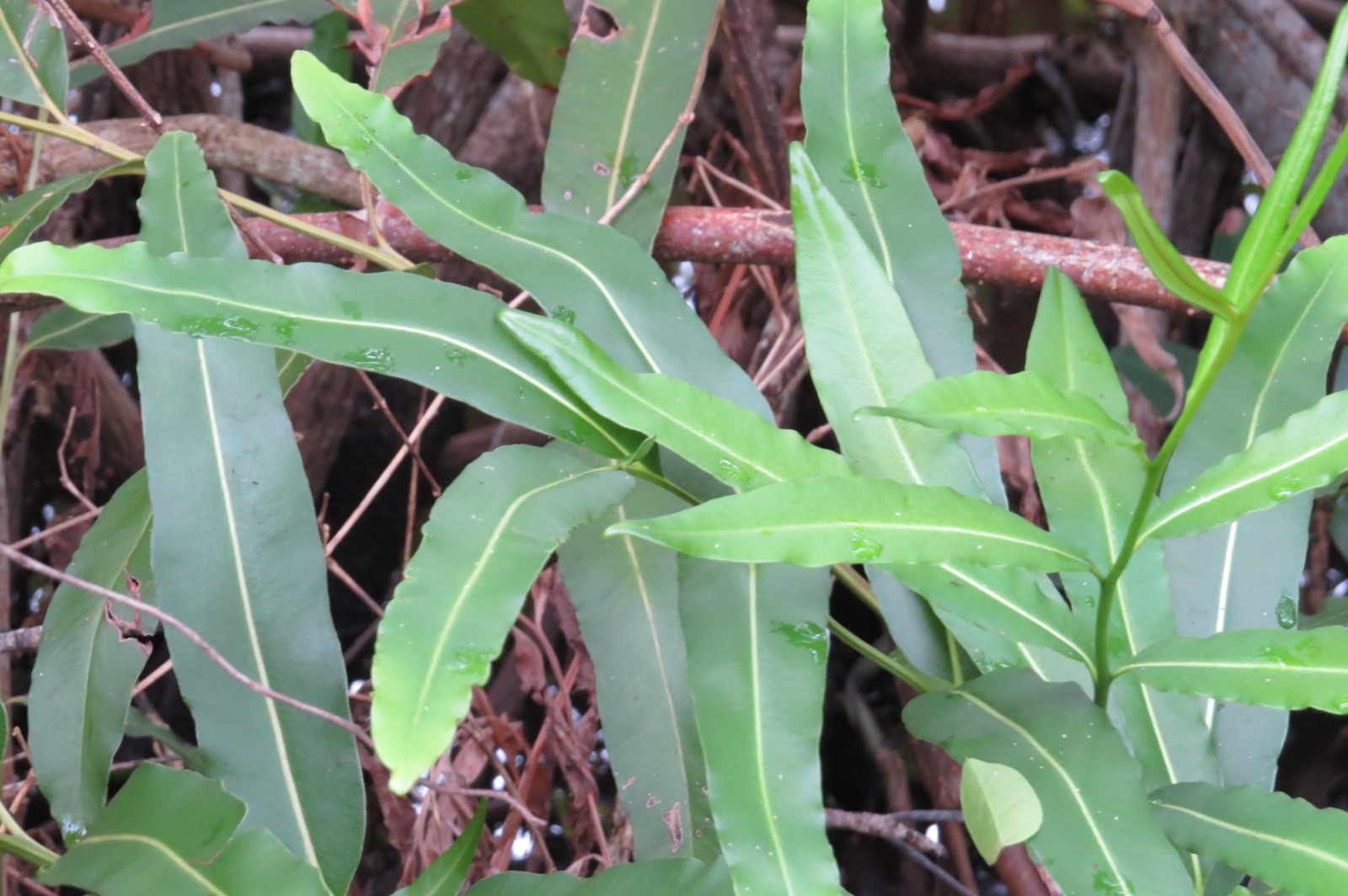
We also observed a few interesting wildflowers and flora. Like Golden Leather Ferns, Jamaican Capertree, Catclaw Blackbead, Colicwood, Mangrovevine, Green Buttonwood, Red & White Mangroves, Dahoon Holly, Sea Ox-eye, Everglades Squarestem, Beach Bean, and more. Had a few mushrooms of interest and a snail called the Mangrove Periwinkle. 


Jamaican Capertree

An unknown species of mushroom

Catclaw Blackbead

Beach Bean

Golden Leather Fern

Everglades Squarestem

Green Buttonwood

Southern Live Oak

Ocean Blue Morningglory

Mangrovevine


Tuesday, August 11, 2020

Oystercatcher

 Tuesday August 11th

American Oystercatcher


I had recently moved a bit further away from the beach, looking for a more affordable place to live.  So I have not visited the beach as much as I used to.  I've also been dipping on spotted on some of the birds you'd expect to locate. American Oystercatchers had been a nemeses bird for me these past couple of years. Just haven't seen them as often these days. Today was my FOS sighting for 2020, at Bunche Beach.  Too hot to stick around long. But did have a nice variety of birds available to enjoy.  Reddish Egrets, Red Knots, Semipalmated Plovers and Sandpipers etc.

Common Nighthawk


Yesterday was a return visit to the Everglades Ag Area.  Lots of American Avocets on the flooded cane fields as well as Long-billed Dowitchers.  Also had Roseate Spoonbills, Wood Storks,  Common Nighthawks, Black Terns, Gull-billed Terns, Stilted Sandpipers, Petrol Sandpipers, Least Sandpipers, Ruddy Turnstones, Black Skimmers, Fulvous Whistling Ducks, Yellowlegs, Cliff Swallows, Cave Swallows, Barn Swallows, Common Yellowthroats, a Caracara, a pair of Barn Owls and a King Rail. Lots of baby Black-necked Stilts and Common Gallinules


Stilt Sandpiper

What was missing yesterday, were Upland Sandpipers, Wilson's Phalarope or Brown-headed Cowbirds. Had hundreds of these cowbirds two weeks ago.

Lots of Common Gallinule chicks

Long-billed Dowitcher with a Stilt Sandpiper

Black-necked Stilt. Had many stilt chicks present

Common Guava growing along a canal

Crested Caracara at the Miami Canal


Wood Stork

Sleepy Orange Butterflies


Tuesday, July 28, 2020

Everglades Ag Area

Tuesday July 27th


Fall Migration is starting to kick and in late July and into August, its time to check out the flooded sugar cane fields and sod farms in the Everglades Ag Area south of Belle Glade.
 

Yesterday I made the trip from Ft Myers. 

 I'll usually make a stop at the Levee Park at Clewiston, which I found was not accessible.  This was due to renovations to this section of the Herbert Hoover Dike. The dike was constructed and reconstructed starting at a time because deadly hurricanes that drowned thousands of people almost a hundred years ago. The dike was a boon for agriculture and storm control to protect peoples lives.  But on the negative side these water control features cut off the natural flow of water into the Everglades, seriously effecting the health of the everglades ecosystem, plus issues with rising salinity in Florida Bay, which is an important nursery for fish stocks.  And because the waters from Lake O are blocked from going south, we now have them draining west through the Caloosahatchee River and to the east via the St Lucie Canal. Due to the high nutrient loading effecting Lake O being discharged through these man-made drainages system we have had a few very serious algae blooms along the east coast and into the Gulf of Mexico here at Ft Myers. These algae blooms are being studied to determine how they might be effecting the health of the people  as well as the awful and devastating fish kill.  

Salt-marsh Mallow

Next was a drove south along the Miami Canal.  Seen that it was too early to spot any of the swallow species that will arriving here soon. Was able to see a couple Common Nighthawks and a Bobwhite

Common Nighthawk

Then moved east along the Bolles Road Canal.  Again not very birdy.  Lots of rabbits though and a couple of rats too. Checked out one of the pumping stations were a Barn Owl did flew off.  Had a Gull-billed Tern up the canal. Also had an adult Purple Gallinule with a chick. The adult was running around with a dead frog.  Never saw that before

Purple Gallinule

Purple Gallinule Chick


Purple Gallinule with her frog


Near the intersection of State Road 880 and Brown's Farm Road, which is just south of Belle Glade is a is a Cave Swallow roost. Lots of Cave Swallow, plus Cliff Swallows and Barn Swallows.  

Some scruffy cowbirds

Didn't pick up any Upland Sandpipers at sod fields at 8 Mile Bend.  Just some Killdeers. The uppies should be be arriving soon. Will have to return in a could weeks.


Went looking for flooded fields along Brown's Farm Road. Had some success.  Had well over hundred Roseate Spoonbills at this location, a couple of Fulvous Whistling Ducks, several Black-bellied Whistling Ducks, Mottled Ducks, lots of Black-necked Stilts with young, about three dozen Least Terns, a half dozen Gull-billed Terns and a lone Black Tern, Not many wading birds or sandpipers. Only spotted a couple of Pectoral Sandpipers and a few Greater and Lesser Yellowlegs.  Again I suspect August will be more rewarding


Had to have been hundreds of Brown-headed Cowbirds, plus Red-winged Blackbirds, Starlings and Boat-tailed Grackles. Spotted more Barn Swallows, Common Nighthawks, both Night-herons and a couple of Laughing Gulls.