Showing posts with label Barn Owl. Show all posts

Wednesday, May 27, 2026

Barn Owl

 Wednesday May 27th


This Barn Owl was photographed as it perched on the highway railing in the early morning hours this past Sunday. I had driven to the Everglades Ag Area south Belle Glade, Florida with the idea of finding any swallows.

Cave Swallows are active in their colony site on East Canal Street, south of Belle Glade. My efforts to get a useful photograph were thwarted by the speed of their flight. They are presumable nesting under the closed bridge spanning the canal near the intersection with Brown's Farm Road. Several Barn Swallows were also spotted along Brown's Farm Road. 

The Barn Owl was seen across the road from the Cave Swallow Colony. 

eBird Checklist - 24 May 2026 - 6 Mile Bend Ponds - (No Public Access - View From Road) - 7 species

eBird Checklist - 24 May 2026 - Browns Farm Rd. - 19 species

eBird Checklist - 24 May 2026 - Gladeview Rd. - 15 species

eBird Checklist - 24 May 2026 - East Canal Street South, Belle Glade, Florida, US (26.648, -80.591) - 2 species

Barn Swallow


Common Mynas in Belle Glade


Eurasian Starling in Belle Glade

eBird Checklist - 24 May 2026 - Winn-Dixie Plaza - 8 species

Monday, December 27, 2021

The Day of the Raptor

 Sunday, December 26th

Belted Kingfisher

In the quest for some final year birds went out to chase a Cassin's kingbird found in Holey Land WMA in Palm Beach County on Christmas Eve. Tried to access the location by driving south along the Miami Canal from US 27.  Seemed to be the most direct route when traveling from the Gulf Coast. But it is not.  Encountered closed roads and detours but did arrive just yards from the location only to be blocked by a water management project that had removed a bridge. 

Barn Owl

Okay so I doubled back to try to access the property from another direction.  Planned to go east along Bolles Canal but encountered a locked gate on this road adjacent to a pumping station. Have access this road many times over the years and hadn't ever seen it closed before. Elected to head home from here.

But before leaving I did take a look for any Barn Owls at the pumping station and did find an owl. This was actually a nice addition to todays. Because I had already encountered a number of interesting raptors while driving around the cane fields.

There were many dozens of American Kestrels present. Added a couple Peregrine Falcons, a couple of Caracaras, several Red-tailed Hawks and Northern Harriers. White-tailed Kites were working the fields, observed a lone Swainson's Hawk. saw a couple of Bald Eagles, several Ospreys and at least one Short-tailed Hawk. Turkey and Black Vultures round out the raptors seen today. Hundreds of Tree Swallows and a single Northern Rough-winged Swallow, plus Belted Kingfishers, Grackles, Cormorants, Anhingas, Wading Birds, Meadowlarks, Phoebes, Palm warblers and Common Yellowthroats were seen too.


Eastern Meadowlark seen along the Miami Canal

Northern Harrier seen along the Miami Canal

Bald Eagle seen on Blumberg Road

Peregrine Falcon seen on Rogers Road

Sunday, August 30, 2015

A Revisit to the Everglades Ag Fields

Tuesday, August 25th


Today, Bob Pelkey and I returned to the Everglades Ag Area south of Belle Glade in Palm Beach County to look for birds we missed three weeks ago. These targets included upland sandpiper, buff-breasted sandpiper wilson's phalarope and barn owls.


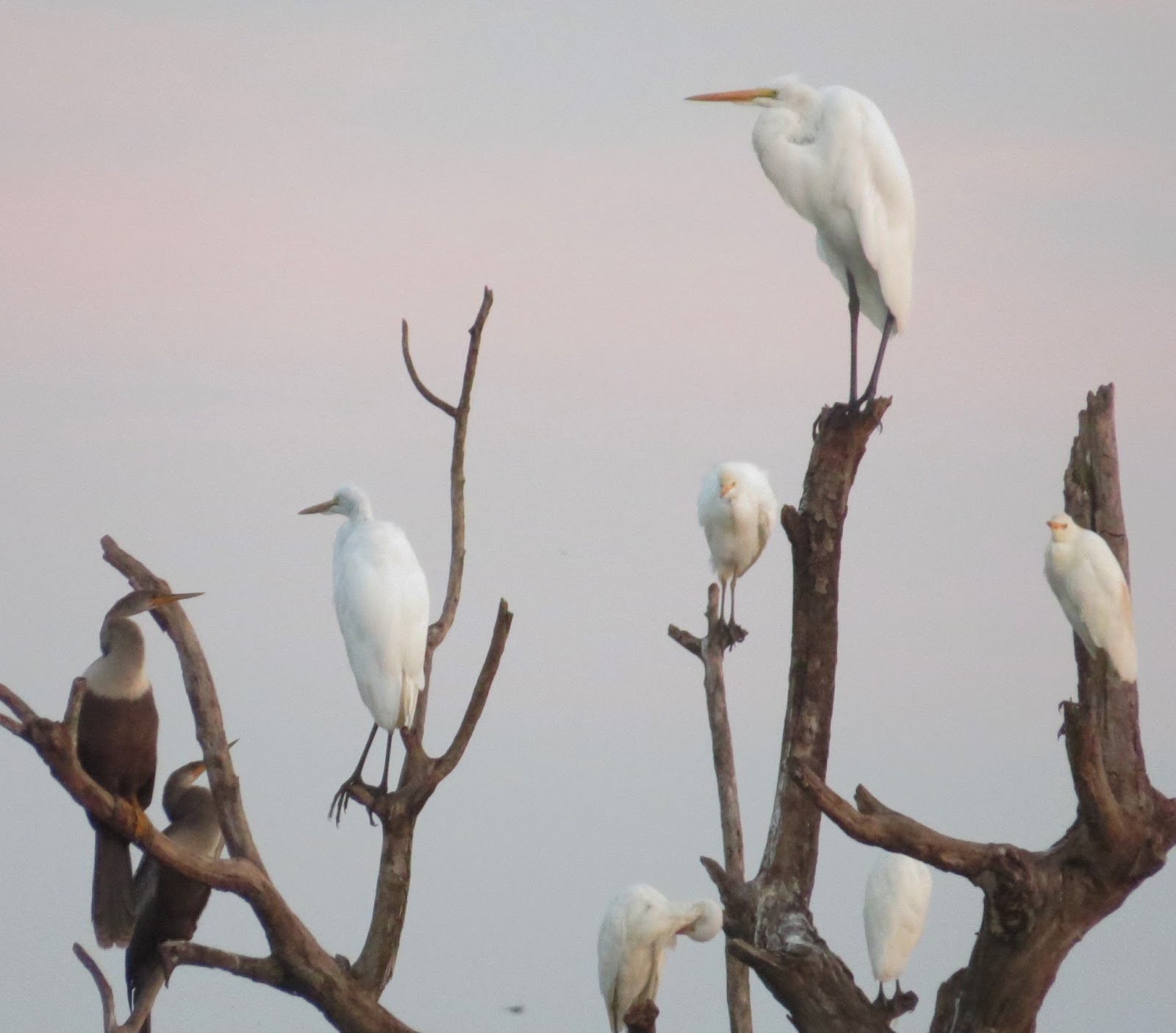
We arrived at sunrise at Brown's farm Road and CR 880 to find the heron roost there loaded with egrets, herons, anhingas, night-herons and ibis.


We then moved on and checked a couple of flooded fields in the area. The wading and shorebird numbers were down, but the number of swallows had swollen, especially Barn Swallows.  We also found Cliff, Bank and FOS Tree Swallows. One of these flooded fields was very active and had been the sight of reported wilson's phalaropes just three days prior.  Bob and scoped the site for an hour and a half without sighting the phalaropes. We did find Black-bellied and Fulvous Whistling Ducks, FOS Blue winged Teal, Mottled Duck, American Avocet, Greater and Lesser Yellowlegs, Least Sandpipers, Pectoral Sandpipers, Stilt Sandpipers, Long-billed Dowitchers, Black-necked Stilts, Common gallinule and American Coots

Juvenile Tricolored Heron. Note the strange bill on this bird


A young Barn Swallow


Bank Swallow


Black-necked Stilt

Lesser Yellowlegs

Lesser Yellowlegs
We then checked the sod fields at 8-mile bend and King Ranch properties for grass peeps and found them virtually devoid of migrant birds.

So we had dipped on three of our four targets of the day, which just left us to check out the barn owl roost on Miami Canal. We initially believed that we had missed out here.  But as Bob was maneuvering his camera to get a good shot of out FOS Eastern Kingbird, a Barn Owl burst out from cover and immediately disappeared deeper into the stand.

A last stop was made in Clewiston, at the Hoover Dike to look for any bronze cowbirds. What we did see were about fourteen Swallow-tailed Kites soaring westerly with a high flying Cooper's Hawk diving at a couple of the kites.  Not sure why the hawk has attaching the kites, but it was an entertaining conclusion for the trip.

Common NightHawk


Cattle Egret


Red-shouldered Hawk


Great Egrets
Compilation Bird Lists from Both Visits this Month - (81)

Great Egret
Black-bellied Whistling-Duck, Fulvous Whistling-Duck, Mottled Duck, Blue-winged Teal, Northern Bobwhite, Pied-billed Grebe, Wood Stork, Double-crested Cormorant, Anhinga, American White Pelican, Great Blue Heron, Great Egret, Snowy Egret, Little Blue Heron, Tricolored Heron, Cattle Egret, Green Heron, Black-crowned Night-Heron, Yellow-crowned Night-Heron, White Ibis, Glossy Ibis, Roseate Spoonbill, Turkey Vulture, Black Vulture, Osprey, Swallow-tailed Kite, Cooper's Hawk, Bald Eagle, Red-shouldered Hawk, King Rail, Purple Gallinule, Gray-headed Swamphen, Common Gallinule, American Coot, Limpkin, Sandhill Crane, Black-necked Stilt, American Avocet, Semipalmated Plover, Killdeer, Spotted Sandpiper, Solitary Sandpiper, Least Sandpiper, Greater Yellowlegs, Lesser Yellowlegs, Stilt Sandpiper, Pectoral Sandpiper, Western Sandpiper, Long-billed Dowitcher, Laughing Gull, Least Tern, Gull-billed Tern, Black Tern, Black Skimmer, Rock Pigeon, Eurasian Collared-Dove,
Common Ground-Dove, White-winged Dove, Mourning Dove, Barn Owl, Common Nighthawk, Belted Kingfisher, Eastern Kingbird, Fish Crow, Purple Martin, Tree Swallow, Bank Swallow, Barn Swallow, Cliff Swallow, Blue-gray Gnatcatcher, Northern Mockingbird, European Starling, Common Yellowthroat, Prairie Warbler, Red-winged Blackbird, Eastern Meadowlark, Common Grackle, Boat-tailed Grackle, Brown-headed Cowbird and House Sparrow

Wednesday, August 17, 2011

Barn Owls & Upland Plovers - Return to the Everglades Ag Area

Wednesday, August 10th


Made a return visit to the Everglades Agricultural Area in the company of master birders Vince Lucas, who lead the trip, Jose Padilla and wildlife photographer Bob Pelkey. Just a week ago I ventured solo, sans scope, and was rewarded with a a Lifer in Wilson's Phalarope. My personal goals for the day are to add upland sandpiper, barn owl and cliff swallows, which I missed last week.

Vince has birded the EAA many times in the past and would lead our party.  It was a long day, starting at 4:30 am to make the 2 hour plus trip to Palm Beach County. After sunrise, we started adding bird as we passed through Hendry County such as Common Nighthawks, American Crows, Black Vultures, Crested Caracara, Swallow-tailed Kites, Sandhill Cranes, Mourning Doves, Eurasian Collared Doves, Ground Doves, Osprey, Red Shouldered Hawks and Grackles.

The Cedar Stand  owl roost
First stop was the 'Cedar Stand' located along the Miami Canal.  We had already located Barn Swallows, an early Tree Swallow, Purple Martin and Eastern Meadowlarks along the canal and at the stand, Vince found us four Barn Owls, five Black-crowned Nightherons, plus some roosting Black Vultures.  Barn owls have been a nemesis bird for me, which I have dipped on at this location, and elsewhere, several times.  So for me I they were a  Lifer.

We moved onto the King Ranch sod fields along US 27, were Bob caught-up with us.  Here we had four Upland Sandpipers and a few Pectoral Sandpipers and Killdeers.

An extremely active location was a site 1.5 miles east of Duda Road along cr-880. This flooded field had to contain 2,500 plus birds - waders, shorebirds, terns, gulls, swallows etc.. Here we found that good numbers of Wilson's Phalaropes were still present. We counted at least fifteen, which is a good number for Florida. As these birds concentrate their fall migration further west from here. I did have a scope view which initially began with four of the birds doing their spinning, expanding to eight phalaropes in the one view.  Other sighting here included Roseate Spoonbills, American Avocets, Black-necked Stilts, Pectoral Sandpipers, Stilt Sandpipers, Mottled Ducks, Least Sandpipers, Semipalmated Sandpipers, Long-billed Dowitchers, Black terns, Black Skimmers, Least Tern, Caspian Terns, Forster's Terns and Gull-billed Terns

Bob Pelkey looking for that perfect shot

Sod fields at Six Mile Farms were we located lots of Upland Sandpipers
At the nearby Six Mile Bend Sod Farms, we could spot several Upland Sandpipers, but they were quite distant. Luckily we were given permission to enter the property and were able to get much closer views. Still only Bob's camera rig could possibly get a decent photograph because they are skittish birds and still kept a good distance. Be sure to check-out Bob's blog on this trip and enjoy his photography.  Our Uplands count here were sixteen birds. We also had several Cattle Egrets, some White Ibis, Pectoral Sandpiper, Killdeer, Laughing Gulls and a Spotted Sandpiper.

Vince Lucas and Dr Jose Padilla trying to get the numbers off the spoonbills' leg bands
Also nearby, off the first bridge on Brown's Farm Road was another good flooded field. Had to be 150 Roseate Spoonbills. Vince noted three had leg bands, but we were unable to get any numbers off them. Also seen among the Great Egrets was a Great White Heron ( the white-morph of the great blue heron ). Other birds present included Snowy Egrets, Tricolored Heron, Wood Storks, American Avocets, Black-necked Stilts, a Black-bellied Whistling Duck, Semipalmated Plovers, Pectoral Sandpipers, Long-billed and Short-billed dowitchers, Green Heron, Forster's Tern, Black Terns, Gull-billed Terns, Least Tern, several Semipalmated Sandpipers, a Ruddy Turnstone, lots of Barn Swallows, Bank Swallows, and the Cliff Swallows I wanted to add today.

We wrapped up the EAA trip with stops at Sam Senter and Gladeview Roads. Here we were able to add more Black-bellied Whistling Ducks and had a a few Fulvous Whistling Ducks, including a duckling.  Also had a couple of Black-bellied Plovers and flock of about a hundred Brown-headed Cowbirds

The actual final stop was on Oil Well Road, near Ava Maria University, in Collier County, were Vince had found a flooded spot with lots of birds.  Recent rains have deeped the water level, so most of the shorebirds were absent now, except for Black-necked Stilts, Glossy Ibis, White Ibis and a few dowitchers and Pectoral Sandpipers. Present were most of the waders, about fifty Mottled Ducks and several Wood Ducks. A couple Swallow-tailed Kites were soaring nearby and we were able to add a couple Limpkins on the trip back to Gulf Coast.

It was a great and exhausting trip.  Hit all of my goals on an incredible day of birding.  Thanks to Vince, Jose and Bob for a fun day.

Day's List (73)
Black-bellied Whistling-Duck, Fulvous Whistling-Duck, Wood Duck, Mottled Duck, Wood Stork, Double-crested Cormorant, Anhinga, Great Blue Heron, Great White Heron, Great Egret, Snowy Egret, Little Blue Heron, Tricolored Heron, Cattle Egret, Green Heron, Black-crowned Night-Heron, White Ibis, Glossy Ibis, Roseate Spoonbill, Black Vulture, Turkey Vulture, Osprey, Swallow-tailed Kite, Red-shouldered Hawk, Crested Caracara, Common Gallinule, Sandhill Crane, Black-bellied Plover, Semipalmated Plover, Killdeer, Black-necked Stilt, American Avocet, Spotted Sandpiper, Greater Yellowlegs, Lesser Yellowlegs, Upland Sandpiper, Semipalmated Sandpiper, Least Sandpiper, Pectoral Sandpiper, Stilt Sandpiper, Short-billed Dowitcher, Long-billed Dowitcher, Wilson's Phalarope, Laughing Gull,  Least Tern, Gull-billed Tern, Caspian Tern, Black Tern, Forster's Tern, Black Skimmer, Rock Pigeon, Eurasian Collared-Dove, Mourning Dove, Common Ground-Dove, Barn Owl, Common Nighthawk, Loggerhead Shrike, American Crow, Purple Martin, Tree Swallow, Bank Swallow, Cliff Swallow, Northern Mockingbird, European Starling, Northern Cardinal, Red-winged Blackbird, Eastern Meadowlark, Common Grackle, Boat-tailed Grackle, Brown-headed Cowbird, House Sparrow


Friday, August 5, 2011

Wilson's Phalarope - A Visit to the Everglades Ag Area


A flooded field off cr-880
Wednesday, August 3rd

This is the time of year that concentrations of migrating shorebirds show up in the sod fields and flooded crop fields in Palm Beach County.  This is an area known as the Everglades Agricultural Area. So with reports coming in that the birds are already present I choose to make the 350 mile round trip on Wednesday. My targets for the day included Upland Sandpipers, Wilson's Phalaropes and Barn Owls.


Common Nighthawks are easily located on the wires
 Arrived at Bolles Canal which runs east-west alongside of cr-827, about 9:30 AM. The county road ends at the Miami Canal, which is a location that has been a popular roosting spot for barn owls. Well the barn owl is one of my nemesis birds and again I failed to find any.  I had been advised to check the back sides of the pumping stations located along this stretch of road to find owls. The first station was under repair and the second came up empty. Another bird I would have liked to have seen was a king rail and last year I did have one standing in the middle of this road. No owl or rail this time, but did have a Least Bittern fly up and disappear into the sugar cane.


Black-necked Stilts in flight
Got to cr-880/ Brown Farm Road area about 10:30 am and did find several good spots (all as reported on the TAS message board).  I don't own a spotting scope, which is a must for birding the area. Almost all of the properties are on private, posted land, so you must bird from the shoulder of the road. But even with just using my binoculars I was able to identify many of the species present.  I dipped on the upland sandpiper, american avocet and was unable to clearly ID many of the peeps present. But I did get my LIFER in a  couple of Wilson's Phalaropes doing there whirly gig spins. Also had several dowitchers which I never heard call, so I am assuming that they are Long-billed dowitchers based on there location.  Had a few Greater Yellowlegs and lots of Lesser Yellowlegs, Stilt Sandpipers, Pectoral Sandpipers and Black-necked Stilts.  Managed to spot a Least Sandpiper out of the crowd. Also present were several Black Terns hawking for a meal at the water's surface.


Lots of waders and at one dry field, which appeared to being prepped for flooding were at least a hundred Wood Storks, dozens of Roseate Spoonbills and a smattering of other waders, plus several Laughing Gulls were lined up along the trough water was filling from a nearby opened water control gate.  Must be a lot of food present   Even had a few Black-necked Stilts fly in to that area to see what all the fuss was about.  .  

This link is to photos taken the same day by Trey Mitchell and posted on the TAS message board

The wires along the road offered dozens of sleeping Common Nighthawks plus lots of Barn Swallows, Bank Swallows, Northern Rough-winged Swallows and a lone Purple Martin. A flock of some forty birds I had inticially thought to be starling turned out to Brown-headed Cowbirds.  Checked them for any shiny or bronzed cowbirds, but only noticed BHCs.

A stretch of Brown Farm Road
As for raptors, only noticed a couple of Red-shouldered Hawks. And as I earlier noted I had a drove of 350 miles across the state and found absolutely zero swallow-tailed kites. Could they all be gone already?