Showing posts with label Wood Stork. Show all posts

Thursday, January 18, 2024

Central Florida

  Thursday January 18th


Osprey seen at Merritt Island National Wildlife Refuge

January 14th 

Central Florida - eBird Trip Report

Began my birding vacation at Lake Apopka.  The wildlife drive on the North Shore of Lake Apopka is a must visit venue for wintering waterfowl and wetlands bird life. Managed by the St Johns Water Management District, this property is an example of taking heavily polluted farmlands, responsible for some terrible bird die-offs, and rehabbing the lands and waters into a much healthier habit for the environment. 

Arrived early in the day and traveled the six miles under threat of rain. Some of the birds present today included thousands of American Coots, Hundreds of Common Gallinules, Black-belled Whistling Ducks, Ring-necked Ducks, plus Purple Gallinules, Swamphens, Sora, Wilson's Snipe, American Wigeons, Pintail Ducks, Northern Shovelers, Blue-winged Teal, Gadwall, Mottled Ducks, Osprey, Northern Harriers, Savannah Sparrows and more.

It rained the remainder of the day as I moved onto Cocoa Beach. Did a little sea watch birding at the cocoa beach pier. Noted that Northern Gannets were on hand offshore.


Wood Stork
Merritt Island

January 15th

Toured Merritt Island National Wildlife Refuge. Birded the Black Point Wildlife Drive and Bio Lab Road.  Lots of Blue-winged Teal were present as well as Northern Shovelers, Common Gallinules, Pintail Ducks, Ring-necked Ducks, Greater & Lesser Scaup. Bonaparte's Gull, Reddish Egrets plus Wood Storks, Rosette Spoonbills, American White Pelicans, Hooded Mergansers, Northern Harriers and Caspian Gull were seen.

Looked for the American Flamingos reported to be seen from the Haulover Canal site in MINWR. Spotted Kestrels and Brown Pelicans, but not the flamingos.


Glossy Ibis
Merritt Island

Snowy Egret
Merritt Island

January 16th

Spent the day in Gainesville, birding at Sweetwater Wetlands Preserve and Paynes Prairie State Park. The weather conditions have remained wet so that when I arrived early at Sweetwater Wetlands, I opted to protect my camera from the rain by leaving it my car. This was a mistake. Had several awesome photography opportunities with a posing King Rail, Ruby Crowned Kinglet and Sparrows. 
One observation was that there were almost no waterfowl present - a pair of Blue-winged Teal and a trio of Black-bellied Whistling Ducks. 
Did seen Carolina Chickadees, Tufted Titmice, Kinglets, Marsh Wrens, Chipping, Savannah, Song & Swamp Sparrows.  Plus Orange-crowned Warblers, Common Yellowthroats, Palm & Yellow-rumped Warblers. I missed on snipe, sora, purple gallinules and bitterns.

Blue-winged Teal
Lake Apopka
The next stop was at the Le Chua Trail where Snail Kites have taken up residence in the area of The Sink.  Counted five today. Had an Ovenbird seen in the parking area as I was leaving.

Orange-crowned Warbler
Sweetwater Wetlands

January 17th  

On my way home made a stop at the Paynes Prairie State Park Visor Center to look for the Whooping Crane reportedly seen out on the prairie. It was only 35 degrees this morning as I checked for any interesting birds. Had some Spanish Horses, Sandhill Cranes and Northern Harrier.  But no Whooping Crane today


Savannah Sparrow
Sweetwater Wetlands

Snail Kite
La Chua Trail - Paynes Prairie State Park

Limpkin

Carolina Wren
Paynes Prairie State Park

Gadwall
Lake Apopka

Little Blue Heron
Lake Apopka


Monday, January 9, 2023

Week One of the New Year

 Monday January 9th

In the first week of this new year did a little birding in Palm Beach and Dade Counties.  Checked out some of the rural areas in the Everglades Ag Area looking for Raptors and Barn Owls. Spotted dozens of American Kestrels, three White-tailed Kites, several Northern Harriers, Red-shouldered Hawk, an Eastern Red-tailed Hawks, Short-tail Hawk, Crested Caracara and a Barn Owl. 

Came across some flooded fields with Blue-winged and Green-winged Tea, Mottled Ducks, Greater and Lesser Yellowlegs, Least Sandpipers and Long-billed Dowitchers. Other sightings included Tree and Northern Rough-winged Swallows.


Chipping Sparrow
seen at Lucky Hammock - Frog Pond WMA
 

Checked out the Sem-Chi Rice Mill and was disappointed that no blackbirds or cowbirds were present and not much of interest seen at the nearby wetlands.

Glossy Ibis
seen at Wakodahatchee Wetlands at Delray Beach

Visited the Wakodahatchee Wetlands in Delray Beach were waking the boardwalk noticed that the rookeries of wading birds hadn't starting nesting yet. Lots of Wood Storks and various wading bird species were present. Had Black-belled Whistling Ducks, Gray-headed Swamphens and Green Iguanas


Palm Warbler
seen at Harns Marsh, Lehigh Acres, Florida


Gray-headed Swamphen
seen at Harns Marsh, Lehigh Acres

Tricolored Heron
seen at Wakodahatchee Wetlands at Delray Beach

Wood Stork
seen at Wakodahatchee Wetlands at Delray Beach

Cattle Egret
seen in Palm Beach County

Red-shouldered Hawk
seen at Lucky Hammock - Frog Pond WMA


Down in Dade County, west of Florida City briefly walked along the L31W Canal.  Not much spotted aside from a resting Broad-winged Hawk. At the Souther Gladys Trail 111 Canal/ Pumping Station, saw the Vermilion Flycatcher, a couple of Brown-headed Cowbirds, Eastern Phoebes and a White-tailed Kite.


Scissor-tailed Flycatcher
seen at Lucky Hammock - Frog Pond WMA
 

Then at Lucky Hammock, I had run into a very large birding group from Tropical Audubon Society. Best sighting here was a Swainson's Hawk, plus a couple of Short-tailed Hawks. Also added were some Chipping Sparrows and a Scissor-tailed Flycatcher. Spotted a bright Great Crested Flycatcher but would have liked to have spotted the brown-crested flycatcher seen by the Audubon birders..

Monday, August 9, 2021

Everglades Ag Area

 Monday, August 9th

South of Lake Okeechobee, are farms in an area referred to as the Everglades Agricultural Area. Here is were sugar cane, rice and turf is grown and this is the time of the year to come out here for some birding. 


Upland Sandpipers are probably the most coveted species to find here as they make pit stops to refresh on the sod farms as they migrate south toward Argentina. Other species we chase here include migrating shorebirds, wading birds, gulls and terns, white pelicans, nighthawks and migrating swallows. 

Came out on Saturday to take advantage of the, potential, lighter traffic on these roads and lanes. Besides checking the sod farms for plovers and sandpipers, locating the flooded ag fields is important to find many of the species we'd be chasing. 


Common Nighthawk

Did see the Cave Swallow colony along County Road 880 just north of Brown's Farm Road. The flooded fields just across the road from the swallows have actually almost dried up. So moved on to Brown's farm Road to another location few miles south. This list for this flooded field included Black-bellied whistling Ducks, Mottled Ducks, Common Nighthawks, Lots and Lots of Black-necked Stilts, Killdeers, Stilt Sandpiper, Greater & Lesser Yellowlegs, Gull-billed Terns, Barn swallows, and the expected wading birds.


American Avocet

Close by is another road, Gladeview Road, lined with sugar cane, sod farms, rice and barren fields. Spotted Black-bellied Whistling Ducks, Fulvous Whistling Ducks ( they really like the rice fields), lots more Black-necked Stilts, Pectoral Sandpipers, Yellowlegs, Wood Storks, Cattle Egrets, Great Egrets, Little Blue Herons, Green Herons, Roseate Spoonbill, Yellow-crowned Night-herons, Common Yellowthroat  and Barn Swallows. Dipped on the spotting any Uplands Sandpipers that are being seen along this road.  Seems I missed on a seeing a newly reported American Golden Plover as well. 

The best spot for the day was a flooded field at the end of Gladeview Road. Species listed included more Black-bellied Whistling Ducks, lots of Doves, Blackbirds and Grackles. But also seeing almost a dozen American Avocets, Lots more Black-necked Stilts, a Wilson's Phalarope, several Stilt Sandpipers, Killdeers, Common Nighthawk, Least Sandpiper, Spotted Sandpiper, Long-billed Dowitcher, Yellowlegs, Black Terns, Gull-billed Terns, Glossy Ibis, White Ibis and more.  Awesome seeing the phalarope, the avocets and some many stilt sandpipers.


Wilson's Phalarope, not a very common bird here

Probably will come here one more time soon to see if can catch-up on the Uppies.

Stilt Sandpiper

Gull-billed Tern

Pectoral Sandpiper

Greater Yellowlegs

Wood Stork

American Avocet

Lesser Yellowlegs

Black Tern


Sunday, February 21, 2021

Wakodahatchee Wetlands

 Sunday February 21st

Neotropic Cormorant

For several years now, the only reliable venue to look for Neotropic Cormorants is at Wakodahatchee Wetlands in Delray Beach in Palm Beach County. The bird is nested here and has young in the nest.

This venue is owned and operated by the Palm Beach County Utilities as a water reclamation project for the processing of treated waste water. The marsh they created acts a natural filter as these waters are returned to the environment. It is also open to the public to enjoy the great array of Florida wetland wildlife attracted to the marsh. Gators, turtles and green iguanas are common and the huge numbers of wading birds are on present and nesting within feet of curious visitors.


Believe this is an offspring of the Neotropic and a Double crested Cormorant

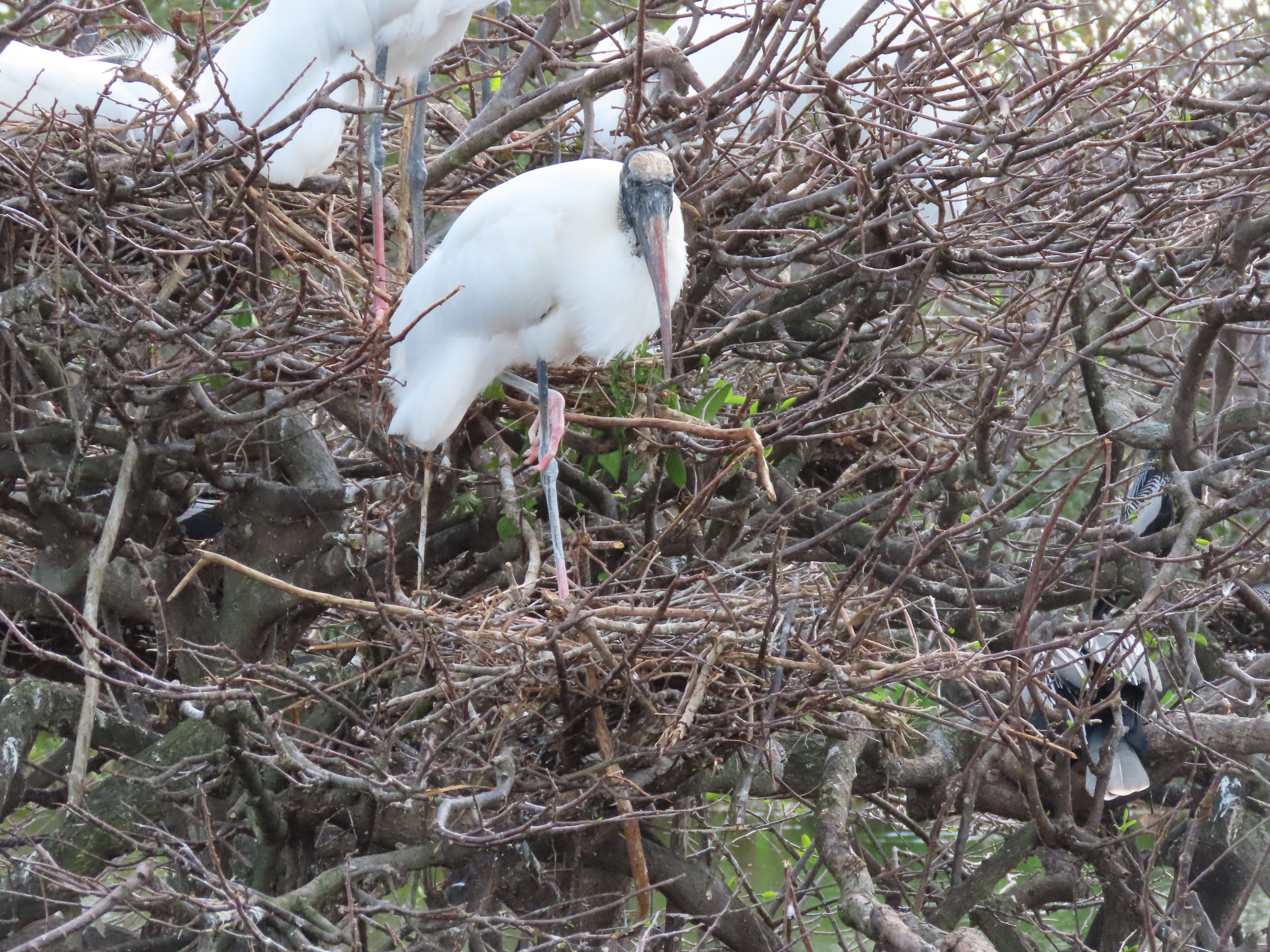
Nesting Wood Stork

Nesting Wood Stork

Nesting Wood Stork

Double-crested Cormorant on the nest

Male Anhinga sporting his breeding plumage

Male Anhinga sporting his breeding plumage

Female Anhinga

Green Iguana

Black-bellied Whistling Ducks

Gray-headed Swamphen

Black-bellied Whistling Ducks

Purple Gallinule

Glossy Ibis

Sailfin Mollies are a food source for many species here

Purple Martins have arrived

Great Blue Herons on a nest