Showing posts with label Tree Swallows. Show all posts

Tuesday, May 7, 2024

East Tennessee

 Tuesday May 7th

eBird Trip Report https://ebird.org/tripreport/245480

Black Bear Cub

I recently visited Eastern Tennessee, including Seven Island Birding State Park and the Great Smoky Mountains National Park. Although rain cut my day trip to the Smokies short, I managed to take the auto tour at Cades Cove. Spotting black bears was a highlight, with four sows and their twin cubs in view. However, capturing a great photo of the bears proved challenging.


Black Bear Sow with Cubs


Eastern Hemlock

Mountain Laural


Some of the bird life seen and heard at the park included Wild Turkey, Indigo Bunting, Blue Grossbeak, Wood Thrush, Swainson's Thrush, American Robin, Eastern Wood-Pewee, Carolina Chickadee, Acacian Flycatchers, Eastern Kingbird, Chipping and Field Sparrows, Ovenbirds, Hooded Warblers, Prairie Warblers, Yellow-throated Warblers, Northern Parula, Louisiana Waterthrush, Scarlet Tanager, Carolina Wren, Blue-headed Vireo, White-eyed Vireo, Red-eyed Vireo, Yellow-throated Vireo & Eastern Phoebe.

Had also made two short visits to Seven Island Birding State Park, which is near to Knoxville, which features prairie, woodland and river habitats. Canada Geese, Mallards, Wood Ducks, Cliff Swallows, Tree Swallows, Barn Swallows, Field and White-crowned Sparrows, Wood Thrush, Yellow-breasted Chats, Tufted Titmice, House Finches, Prothonotary and Hooded Warblers.


Cliff Swallows

Cliff Swallows


House Finch

Tree Swallow

Little Wood Satyr

Mallard Ducklings

Tufted Titmouse

Downy Woodpecker and House Wren

Tree Swallow

Carolina Chickadee

Musk Thistle

Southern Blue Flag

Song Sparrow


Carolina Sweetshrub

Wednesday, December 21, 2011

American Wigeon


A juvenile Red-shouldered Hawk at Babcock-Webb

A bad photo of the American Wigeon at Harn's Marsh
This past Sunday, the 18th,
 I spent about three hours in search of the reported pair of American Wigeons at Harn's Marsh. If I could locate the birds it would give me an  exact 200 count for Lee County for this year.
Walked about five miles and managed to locate the ducks in the company of a flock of Blue-winged Teal just a few yards from were I had parked my car. Should have turned right instead of left I suppose. I had not purposefully targeted 200 birds for a county count, but became interested when my friend Jose Padilla stated that it was his Big-Year Goal for 2011 and as I was only a few birds behind him, why not. Well as of this morning he has 203 according to e-bird. Other sightings at Harn's Marsh included Sandhill Cranes, Tree Swallows, Ring-billed Ducks, Mottled Ducks, Common Galinulle, Coots, my first American Robin for the season, a couple of Limpkins and a couple of Snail Kites. The limpkin and kite numbers are down right now as the higher water level does not help them in search of their apple snails.

Earlier in the day I had checked out Bunche Beach in search of Common Loons and Horned Grebes.  Here, I ran into Ruth Woodall, who was with Curt and Joan. They put me onto the loons and grebes and later on to a Snowy Plover. Seems we are finding snowys here much more frequently these days. Other birds included Least and Western Sandpipers, Black-belled, Semipalmated, Wilson's and Piping Plovers, American White Pelicans, a lone Marbled Godwit, Willets, Sanderlings and the usual waders and gulls. Ruth did invite me to the Bird Patrol's Christmas Count at Bunche Beach on Monday. I would have loved to attend, but my work scheduled did interfere.

A Brown-headed Nuthatch at Babcock-Webb
Today, Wednesday the 21st, last day of fall, I birded Babcock-Webb in Charlotte County.  Had not been to this venue for a couple of months.
Arrived a bit after seven am.  The camp grounds were full and swamp buggies were parked all in a row. Small game hunting was continuing on this property, but I went ahead and spent three hours birding without hardly seeing anyone else.
Flock of Tree Swallows at Babcock-Webb
Checked out the Red-cockaded Woodpecker colony along Oilwell Grade. Was on site for the emergence of at least three of the woodpeckers from their nest holes. There were lots of Yellow-rumped, palm and Pine Warblers present in a number of mixed flockes which included a couple of Brown-headed Nuthatches, several Bluebirds and Red-bellied Woodpeckers, plus a Downy Woodpecker, a Hairy Woodpecker and a  Northern Flicker. Did hear several Eastern Towhees and Eastern Meadowlarks today.  Sandhill Cranes were also numerous, along with Great Blue Herons and Great Egrets plus a couple of Wood Storks. Got a very close viewing of a swirling flock of hundreds of Tree Swallows. 
There is so much energy in their rapid and fluid flight to no-where as they move inmass. Other birds today included Red-shouldered Hawks, Kestrels, Northern Mockingbirds, Belted Kingfishers, White Ibis, Eastern Phoebes, Red-winged Blackbirds, House Wrens, Gray Catbirds, and red Cardinals

Sunday, July 17, 2011

Willow Flycatchers - Illinois trip - Day Five

Saturday, June 18th

Today birded new locations in McHenry County - Moraine Hills State Park and dam, and Glacial Park Conservation Area.  As the names suggest the geology of the terrain is the results of the melting of the ice sheets at the conclusion of the last Ice Age.  Rolling hills, steep moraines and various wetlands formed from kettles.


Moraine Hills State Park and dam

Moraines Hills State Park


Boardwak at Lake Defiance

Started out the day at Moraine Hills State Park, arriving just as the gate was being opened for the day.  Hit the first picnic area near the gate.  Barn Swallows, American Robins and Gray Catbirds were active here.  Green Herons seen flying over head.  Moved onto the Pike Marsh Trail, venturing onto the floating boardwalk into the marsh.  Here were found singing Swamp and Song Sparrows, Red-winged Blackbirds and Common Yellowthroats.
Lake Defiance

Baby Tree Swallows
Next drove up to Lake Defiance.  Walked segments of the trails around the lake passing through marsh, forest and grasslands. While on another floating boardwalk in this marsh I was able to add  Lifer in a pair of Sedge Wrens. these wrens would pop-up briefly then quickly retreat back into the protection of the reeds. Common Grackles and Red-winged Blackbirds everywhere here.  Another Lifer for me were Willow Flycatchers. Had good views of a couple of the flycatchers and was surprised to follow one that had flown into some brush to find it sitting on a nest.  So I left her alone.  Other nesters included eastern Bluebirds and Tree Swallows using the nest boxes provided for them.  My walk along the trails provided a count of thirty species. These included Mallards, a Double Crested Cormorant and a Great Egret. A pair of drifting Red-tailed Hawks were seen soaring over head.  Also found a male Ruby-throated Humminbird, Downy Woodpecker, Eastern Phoebe, Great Crested Flycatcher, eastern Kingbirds, American Crow, Brown-headed Cowbird, American Goldfinch, a House Wren, Blue-Gray Gnatcatcher, Cedar Waxwings, Yellow Warblers, and a Savannah Sparrow.


Common Grackle at Lake Defiance

After three hours, headed over the McHenry Dam section of the park. The dam straddled the Fox River and it being a Saturday the park was busy with people picnicking and fishing. The trail leaving he parking lot and circling the Black Tern Marsh was much more peaceful. Here I had a conversation with a park employee and it seems that the marsh has not seen any black terns for a few years know and he had not heard or seen any yellow-headed blackbirds or common moorhens this season. As we were talking a pair of Sandhill Cranes made an appearance.  Other birds of the marsh included Great Blue Heron, Great Egrets, Mallards, Blue-winged Teal, Canada Geese and Red-winged Blackbirds.  Along the forested path was able to add another hummingbird, Red-eyed Vireo, Black-capped Chickadee, Blue-Gray Gnatcatcher, more Robins, a Cedar Waxwing, Yellow Wabler, an American Redstart, Northern Cardinal, American Goldfinches, an Indigo Bunting and a Baltimore Oriole.

Glacial Park Conservation Area.

My final stop was the nearby Glacial Park Conservation Area. The park has grasslands, marsh and forested habitat. Parked by the Marsh Education Center and walked the Marsh Trail. Was able to locate a lone Bobolink and another lone Dickcissel in the grass, along with Red-tailed Hawks soaring overhead. In the marsh was able to add Canada Geese, Mallard and lone Blue-winged Teal. Added Red-winged Blackbirds, Brown-headed Cowbirds and Barn Swallows. Searched for any yellow-headed blackbirds, but struck out once more. However I did at first heard and later located a Common Moorhen. A very common bird back home in Florida but not so much up in Northern Illinois. Strange that I had not noted any coots at all on this trip.


View of Glacial Park prairie


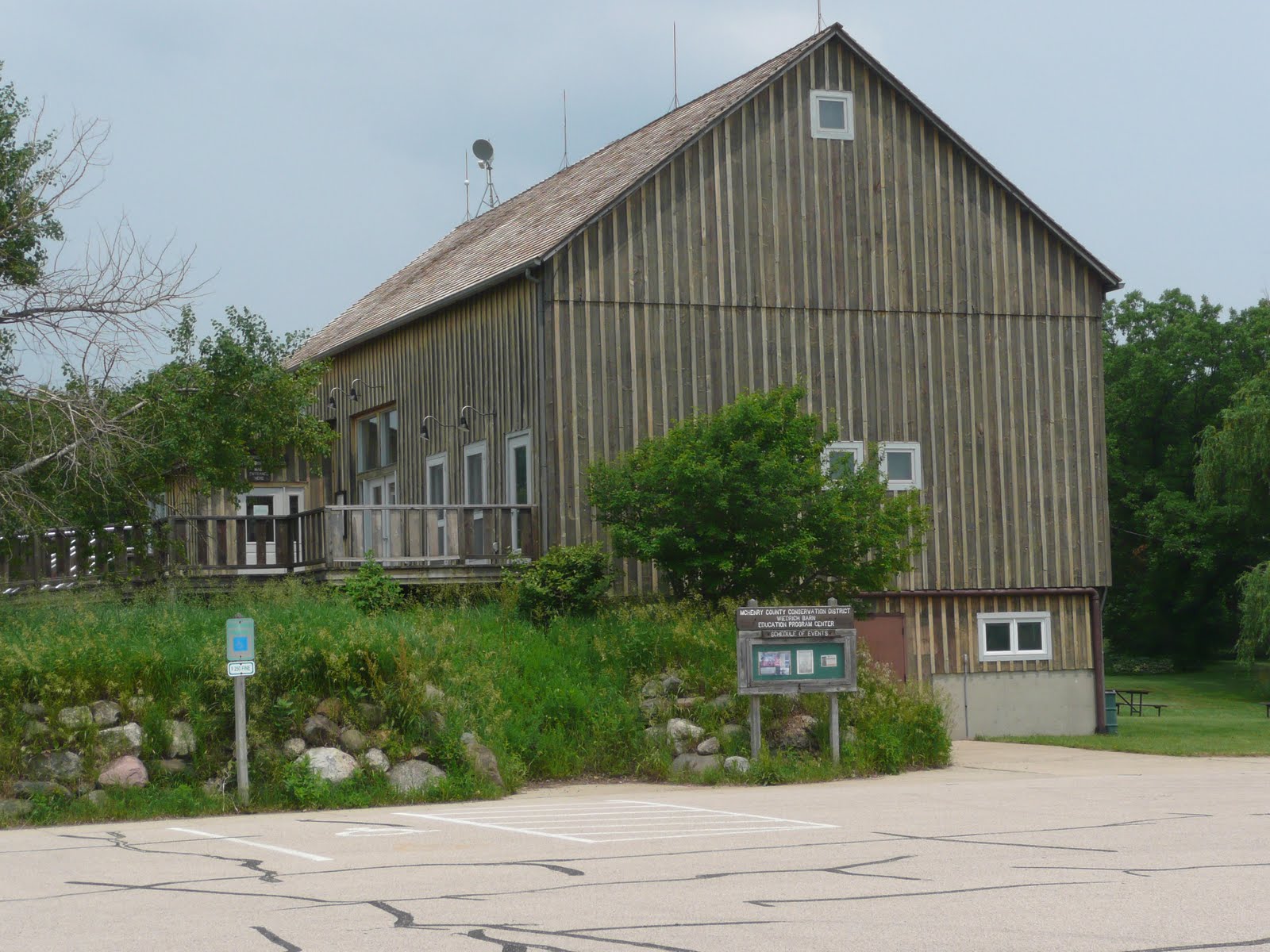
Education Center at Glacial Park

While walking the forested areas I was able to add another Willow Flycatcher that had flown almost to my feet.  Another uncommon bird here, but a yard bird back home was a Northern Mockingbird. Other birds to add included Tree Swallows, Common Grackles, Eastern Kingbirds, Common Yellowthroats, American Robins, Yellow Warblers, Song Sparrows, American Goldfinches and a lone Indigo Bunting.

Glacial Park
This concludes my family/birding trip to northern Illinois. Had a great time visiting with family and lots of good birding.  gained two lifers and had a count of 72 birds.  Wonder if I had been here a month earlier if I could have easily exceeded 100 species. Some good finds were the willow flycatcher and the sedge wren, but I would add finding the swans, blue grosbeak, warbling vireo etc.  Misses included both tanagers, rose-brested grosbeak, red-headed woodpecker, and any thrushes.

Thursday, July 14, 2011

Tree Swallows - Illinois Trip - Day Four

Friday, June 17th

Blue Flag
Today's birding involved visits to Volo Bog State Nature Area and Chain-o-Lakes State Park, both in Lake County to do my birding.  Was interested in yellow-headed blackbirds, mute swans and black terns. The geography of this area of northern Illinois was greatly influenced by the effects of glaciation during the retreat of the great ice age.  My birding these last two days were in parks featuring these effects including moraines and kettles. The moraines would be either tall grass or oak forested preserves.  Whereas the kettles would become the many lakes, marshes, wetlands and bogs common throughout northern Illinois and up into Wisconsin.
Volo Bog
Arrived too early at Volo Bog Nature Center and had to burn a little time before the gate was opened at eight am.  Spent the time birding the roadside and the marsh across the way.  I was aware that willow flycatchers have been seen and heard in the marsh.  But I missed on them.  Did get lots of Tree Swallows, a Mallard, a Mute Swan family, Double Crested Cormorant, Great Blue Heron and a Great Egret. American Robins continued to be about the most commonly seen bird of the day.

Floating walkway through bog
Once the the bog was opened I took the 2.75 mile Tamarack View Trail, which circles the bog wetlands. The trail passed through forested and grassland covered moraines and down close to to the edges of the ancient bog. The bog was the creation of glaciation were the melting ice left a deep, steep sloped kettle.  First it was a deep lake which through time and sedimentation evolved into the bog we see today. I concentrated on my birding, but the botany here is just as interesting.  Such as bog plants like pitcher plants and rare orchids. The tamarack trees are a species that loves the acid bog environment, but is rare in most of Illinois.  I missed seeing any, but the bog is also home to mink, muskrat and beaver.

Tree Swallows
As for my birding I was able find a wide range of bird life including the mute swans, Canada Geese, a single Blue-wing Teal and more Great Blue Herons, Great Egrets and a couple of Green Herons. Other species enjoying life in the bog included a great many Red-winged Blackbirds a family of Sandhill Cranes and another family of Marsh Wrens. In the forests and fields we had  Northern Flicker, Eastern Phoebe, Great Crested Flycatcher, Eastern Kingbirds, Blue Jay and a lone American Crow. The Tree Swallows were active in the nest boxes provided for them.  As could add Blue-gray Gnatcatchers, Eastern Bluebirds, more Robins, Gray Catbirds, a Brown Thrasher, several Cedar Waxwings and Yellow Warblers. Lastly I can add Common Yellowthroats, Savannah Sparrow, several Song Sparrows, several Northern Cardinals and American Goldfinches a lone singing Indigo Bunting and  Brown-headed Cowbirds. One of my favored sighting was an American Kestrel seen in flight.

Chain-o-Lakes State Park
I had never been to this park but found there was a lot of space to explore. Found Red-tailed Hawks and more Tree Swallows soaring over the grasslands. The ponds and marshes held a family of Wood Ducks, more Canada Geese, Double Crested Cormorants, Great Blue Herons and a Great Egret. Other birds included Red-eyed Vireo, Northern Flicker, more Robins and Catbirds.  Plus the usual Northern Cardinals, Indigo Bunting, American Goldfinches and an Orchard Oriole.

My sister and brother-in-laws business in Antioch
Later we joined my Mom for dinner up in Antioch. Here I was able to add a trio of Chimney Swifts soaring over her yard and a Black-capped Chickadee could be heard in a nearby tree, but the most interesting sighting was hearing then seeing a trio of Bobolinks fly overhead.  They certainly seemed out of place.

Tuesday, February 1, 2011

Pine Warblers - Lee County

Tuesday February First

Elected to bird Harn's Marsh and Alva this morning.  It was a nice day especially compared to the heavy snows and cold weather our family and friends are experiencing up-north.  Began the day with a stop on nearby Domestic Street to check the ponds for ducks and the shrub for sparrows.  Found the ponds much emptier than expected. Not as many American Coots were present as I have noticed these past few weeks, and no ducks. Perhaps later in the mourning they will arrive. And no sparrows.  A few Palm Warblers and a calling Eastern Meadowlark were noted.
Pine Warbler photographed at Hickey Creek Preserve
Had to stop at the bank by the I-75 rest stop area, which gave me an opportunity for a quick check of the wetlands located there and got to see Greater and a Lesser Yellowlegs fly-in. 
From here headed to Alva to look for woodpeckers and buntings. Stopped by the Hickey Creek Preserve, which was on the way, to check for any red-headed woodpeckers and Florida scrub jays.  Did not see the woodpecker or jays but had great views of Eastern Phoebes and Pine Warblers. I have had very few successful results from trying to photograph small, active birds like warblers. Just have a point and shoot camera.  So I was happy with the results of the pine warblers photos, as they let me get close enough and would pose long enough for the shot.


Stopped by the White's house in Alva to view their feeders and the gracious Mr White came out to say hello.  Noted the many Painted and Indigo Buntings present along with a trio of White-winged Doves. Didn't see any goldfinch's, but Mr White did assure me that they were still around.
Red-headed Woodpecker found in Alva, Florida.
Checked the nearby pasture for the Red-headed Woodpecker. Had a chance to get a photo of the bird as it investigated a telephone pole, but it would not pose and flew back into the pasture.  Had to settle for for photos from further away.  Also seen here were American Kestrel, Sandhill Crane, European Starlings, Boat-tailed Grackles, Eastern Meadowlark, Loggerhead Shrike, Northern Mockingbird and Limpkin. Down the road I was able to add a Blue-headed Vireo at the Caloosahatchee Regional Park
.

Hundreds of Tree Swallows in a huge swirling flock in LeHigh Acres, Florida
Came across this huge ball of swirling Tree Swallows as I came into LeHigh Acres.  Could of been a thousand birds.  As I arrived at Harn's Marsh I could see that hundreds of Tree Swallows were present as well. 
A mud turtle interrupted on its way to the water at Harn's Marsh
The water was higher than on my last visit, and I not sure if it had an effect on the Snail Kites  Just that they seemed less numerous as I only saw two from a distance. If the apple snails they consume diminish, the kites will spread out.  But the Limpkins, who also survive on apple snails, were very numerous today.
Apple Snail Shells, remnants from Snail Kite meals
Still had numerous American Coots and large numbers of Ring-necked Ducks, Lesser Scaups, and Pied-billed Grebes. Only saw a couple of Mottled Ducks today  and a pair of Sandhill Cranes are nesting in the middle of the marsh. All of the usual waders were still present Great Blue Herons, Tricolored Herons, Great Egrets, Cattle Egrets, Snowy Egrets, Little Blue Egrets, Glossy Ibis, and White Ibis. Killdeer would rise up and noisily fly off as you approach too closely, just as the Wilson's Snipe would rise up silently. The only other raptors seen aside the snail kites was a soaring Bald Eagle and lone American Kestrel
A Little Blue Heron at Harn's Marsh
I will eventually add a page on this blog with directions to my favorite birding spots in southwest Florida, as I have meet several people who were visiting Harn's Marsh for the first time complaining on how hard it is to find. I believe that Lee County is working on plans to develop this location for better public access. A good idea as I have met birders from all over the USA, Canada and overseas.  Maybe we could look at developing something like The Celery Fields in Sarasota.