Thursday, December 26, 2019

Banded Oystercatchers

Saturday December 28th


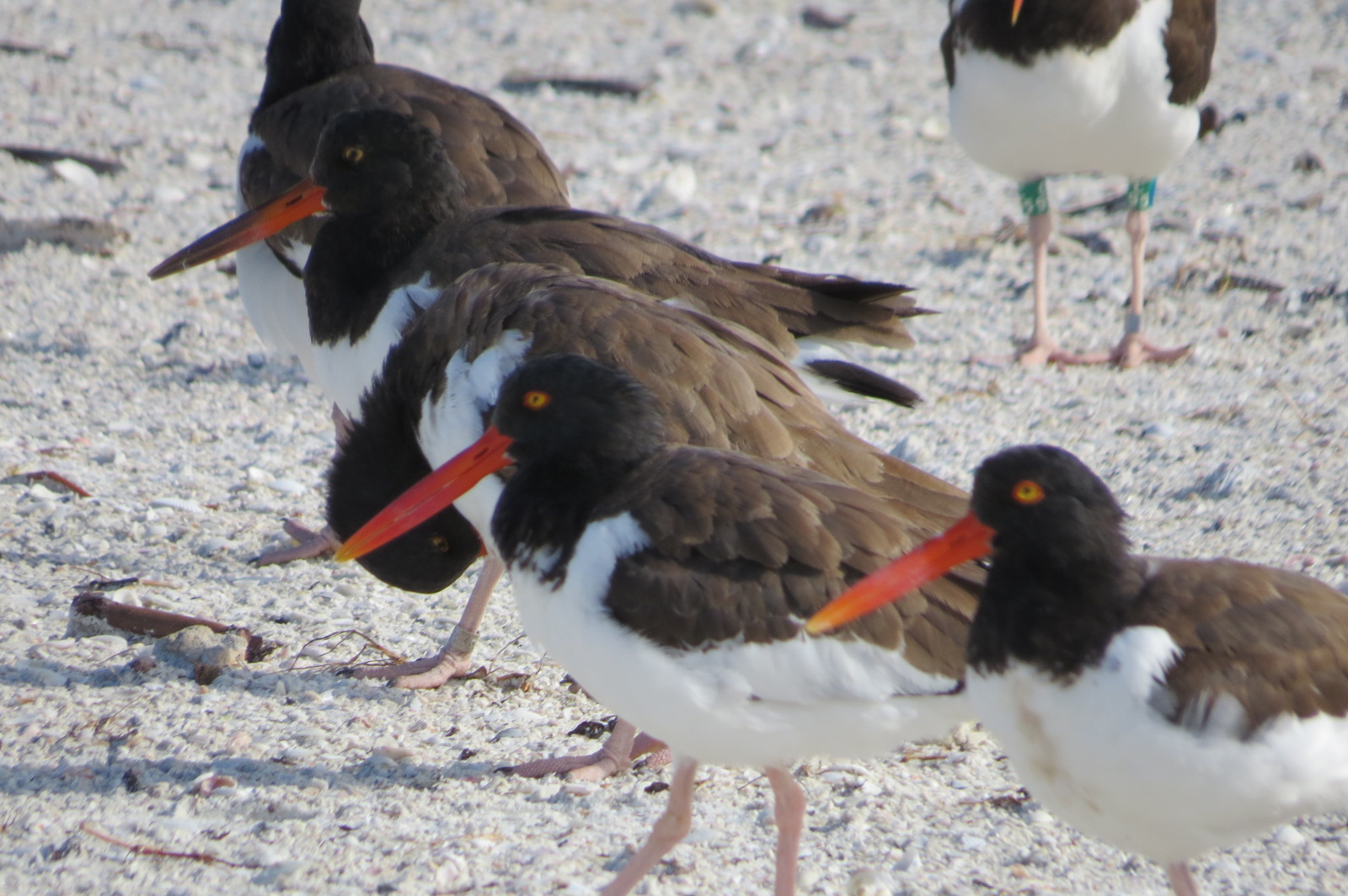
Recently, I birded Carlos Point on fort Myers Beach, where I encountered a flock of thirty American Oystercatcher. Six of these birds were banded.  Passed their band information onto the American Oystercatcher Working Group.

Today emails came in acknowledging and confirming these six resightings, with links to histories on each bird.


CA3 was captured and banded with its siblings CA2 and CA4 in July 2018 on Muskeget Island, Massachusetts. Its has been resighted over the past two years in southwest Florida in the company of its sibling CA2.   In October of 2019 its found to be ill from the effects of Red Tide. It was captured and treated by the  Conservancy of Southwest Florida, Von Arx Wildlife Hospital in Naples, Florida.  After four weeks of care its was released back to Fort Myers Beach and has reunited with CA2

CA2 and its siblings CA3 and CA4 were banded in July 2018 on Muskeget Island, Massachusetts. Has been frequently Been resighted wintering in southwest Florida with its sibling CA3

HM was first captured and banded in at Little Beach, Edgartown, Massachusetts in July 2009. HM would return to nest at Little Beach after wintering at Fort Myers Beach every year.

C95 was captured and banded with its mate, C96, at their nest in May 2019 on the Outer Banks, North Carolina. Chicks did hatch, but would shortly disappear. Currently resighted several times wintering here
NC7 was first captured and banded in June 2019 om Long Island, New York. Only two resightings so. November 2019 on Keewaydin Island, Colliers County and December  2019 on fort Myers Beach.


Y50 was captured and banded on the Snook Islands at the Lake Worth Lagoon, in Palm Beach County, Florida in July of 2019. Presumably was hatched there. Currently found wintering at Fort Myers Beach. 


Sunday, December 15, 2019

Road Trip

Sunday December 15th

Add caption
Its been awhile since I've been able to go on a birding road trip.  But this weekend I headed up to Lake Apopka and Gainesville looking for wintering Sparrows and Waterfowl.


Fulvous Whistling Ducks


Ash-throated flycatcher 
 Arrived on Friday morning at the Lake Apopka Wildlife Drive to look for interesting waterfowl and other birds. First task  was to seek out the Ash-throated Flycatcher that has been hanging out close to the entrance gate. Almost got a great pic as the bird fly across the road to pose in a nearby tree. 

There were thousands of American Coots seen here and maybe another thousand Common Gallinules. The most interesting bird of the day was a male Painted Bunting seen near the Pump House. A Merlin was also cruising the Pump House area.

A Male Painted Bunting

A Peregrine Falcon and  Kestrel would be seen later along the drive.

Anhingas, Pied-billed Grebes and Double-crested Cormorants were also very numerous. As for the waterfowl, we had hundreds of Ring-necked Ducks, plus Fulvous and Black-bellied Whistling Ducks, American Wigeons, Blue-winged Teal and Northern Shovelers.  Additional sightings included Swamp Sparrows, all of the expected Wading Birds, Red-winged Blackbirds, Common Yellowthroats, a couple of calling Soras, Palm Warblers, House Wrens, Belted Kingfishers, a juvenile Purple Gallinule and Eastern Phoebes. 

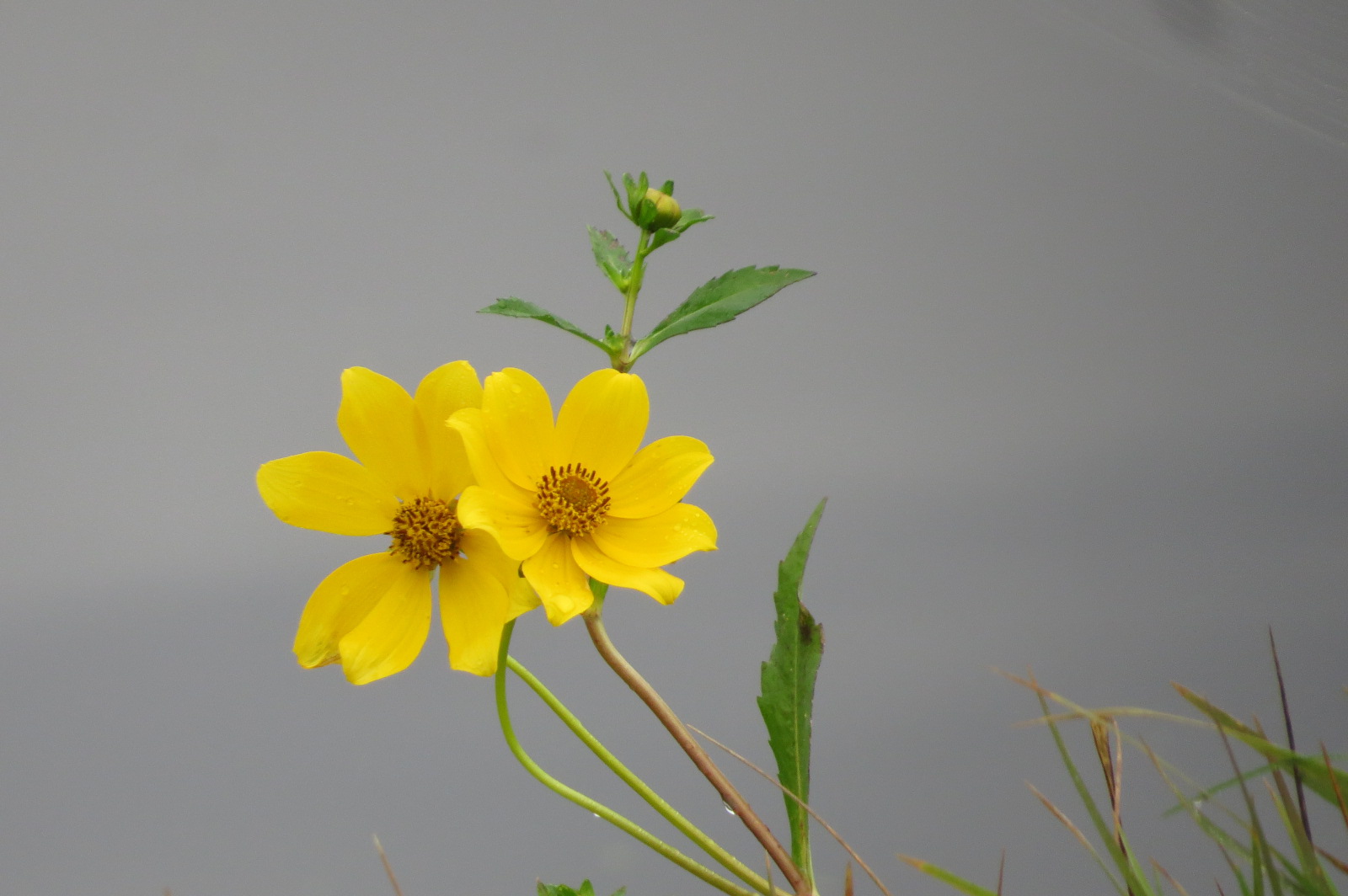
Bur Marigolds were in Bloom

Pied-billed Grebe

Great Blue Herons were numerous

Merlin at the Pump House Area
From Lake Apopka, traveled up to Gainesville with plans to check-out The La Chua Trail and Sweetwater Wetlands located on the northern edge of Paynes Prairie, tomorrow. But today as day was waning went over to an area called Magnolia Parke with the idea to see if any Rusty Blackbirds were coming in to roost. Didn't identify any rustys, among the Red-winged Blackbirds but had a few Yellow-rumped Warblers, Yellow Bellied Sapsucker, Carolina Chickadee and black-and-White Warbler.


Swamp Sparrows dining on Spanish Needle seeds

Snowy Egret


Day two was spent visiting venues in Gainesville.
 First stop was a stretch of the Gainesville-Hawthorne Trail - North, walking from SE 4th Street to the Sweetwater Spur and back. Only spotted a single Chipping Sparrow, that was identifiable. Other sightings included Eastern Towhees, Northern Flickers, Downy Woodpeckers, Eastern Phoebes, Ruby-crowned Kinglets, Carolina Chickadees, Gnatcatchers, Blue-headed Vireo and Black-and-White Warbler

American Bittern
Next up was the Sweetwater Wetlands Preserve. Haven't visited here in almost two years and there was quite a different experience today. Back then the water level was lower with plenty of exposed muddy shores to attract Long-billed Dowitchers, various Sandpipers, Wilson's Snipes and a rare to Florida, female Ruff. Lots of waterfowl too.

Today the American Coots, Common Gallinules, Anhingas and Double-crested Cormorants are very abundant, But not a lot of other waterfowl - Blue-winged Teal, Mottled Ducks, Black-bellied Whistling Ducks and a lone American White Pelican. Heard a Sora and photographed a Purple Gallinule, but dipped on any snipes or other rails


Purple Gallinule
Common Gallinules
Snail Kites have also moved into this venue since my last visit. Which is a good sign that this once threatened species is expanding their range.


 I also  joined a stack-out for another rare in Florida bird, LeContes Sparrow. As I waited on the bird, an American Bittern made an appearance as did a trio of Savannah Sparrows and a Song Sparrow. 


Turns out that the last sighting of the LeContes was made yesterday, before a strong storm, with tornados passed through the area last night. 


Snail Kite at the Sink Boardwalk


It didn't take long to cover the LaChua Trail at Paynes Prairie State Park as much of the area was flooded. The park volunteers I talked with said that the water levels were actually falling, and that the Spanish Horses and the Bison herd had been moved to another area of the park because of the high water.

At the Sink Boardwalk, several Snail Kites were active and very tolerant of the human visitors as were the huge alligators. Other sightings included a White-crowned Sparrow, more American Coots and Common Gallinules, Limpkins, Sandhill Cranes, Anhingas and Double-crested Cormorants


Bluejacket


Wednesday, December 11, 2019

Snakes and Things

Tuesday December 10th

Big Soft Shelled Turtle at Six-Mile Cypress Slough Preserve


Yesterday I found myself checking out some of the habitat at Lovers Key for any Racerunner Lizards. Dipped on the lizards, had seen them at Long Key State park earlier this year. No photo.  They are so quick.

Curly tailed Lizard

But down in the Keys there are a lot of lizards to be found. Curly Tailed Lizards are everywhere, and they will pose for you.  Seems every time I return to the Keys, these invasive lizards are becoming more numerous. 

Green Iguanas are everywhere too.
A male African Agama

A male African Agama

A female African Agama


Another interesting invasive lizard is easily seen at Matheson Hammock Park in Coral Gables, are African Agamas. The males can be brightly colored and these lizards can be found sunning themselves. This location also hosts, Green Iguana, Knight Anoles, Basilisk Lizards, all invasive

Green Iguana are everywhere in south Florida

I have yet to come across a wild Nile Monitor Lizard, but master birder Eary Warren, trapped one in his back yard in Cape Coral. Defidently an unwanted invasive.  Right up there with the Burmese Python.


Green Anoles are natives, but Cuban Brown Anoles are aggressive invasive that are out competing the green.

A native Green Anole

A Large Male Brown Anole Displaying a Dorsal Crest
This Knight Anole was observed in a Mango Tree


Well what about Snakes? Have a few.

Ribbon Snake


Ron Bishop spotted a small mass of Brown Water Snakes
 sunning on some rocks at Harns Marsh
A Pair of Water Moccasins sharing a cozy spot


Monday, December 9, 2019

Lovers Key State park

December 9, 2019


Sea Grape

Lover Key State Park is a collection of barrier islands popular with boaters and beach goers, located just south of Ft Myers Beach.  I hadn't visited the place for a long time. Hadn't planned on stopping here today either. Was passing by and decided to just stop in.

Zebra Longwings tend to pose for the camera

Walked one of the trails first, before checking out the beach. There is a butterfly garden present along the trail and several species were present today including Cloudless Sulpher, Zebra Longwing, Gulf Fritillary and a Cassius Blue.  Hadn't seen a cassius blue till today. Might go back to try for a good photo.

Not too birdy, till I reached the beach. Had Herring, Ring-billed and Laughing gulls, Sandwich and Royal Terns, some Brown Pelicans, Sanderlings, Willets, Ospreys and Ruddy Turnstones. Scoping out Carlos Point, which lays across the inlet, could seen a great many seabirds at rest. 

Herring Gull

White Ibis
Add caption
Catclaw

Herring Gull


Monday, December 2, 2019

Myakka River State Park

Monday December 2nd

Myakka River State Parks hosts lots of large American Alligators
Snow Goose

Snow Geese are a common bird. But not in south Florida.  A few Snow Geese may migrate as far south as Florida, so now a young Snow Goose has been found near Sarasota at Myakka River State Park. 

Today was windy as a cold front was moving in. And no waterfowl were out on the water, except for a few Black-bellied Whistling Ducks seen from the bridge and the Snow Goose.  I found in the exact location, near the weir, as other birders had already reported. This same location was also hosting numbers of Rosette Spoonbills, Black-necked Stilts, White Ibis, Limpkins, Yellowlegs, vultures and some rather large alligators.

Glossy Ibis
Black-necked Stilt
Snow Goose


Other sightings included White-tailed Deer, feral Hogs, Wild Turkeys,
 Cormorants, Anhingas, 
American Robins, American Avocets, 
Long-billed Dowitchers, Least Sandpipers, American White Pelicans, Glossy Ibis and 
Wood Storks.
Least Bittern at Celery Fields
After visiting Myakka River, made a quick stop at nearby Celery Fields.  Didn't expect much due to the time of day and the winds. No waterfowl here either, but was treated to a cooperative Least Bittern and a Purple Gallinule.

Lesser Scaup at Akerman Park

Did eventually find a few ducks a Akerman Park. Some Mottled Ducks and a pair of Lesser Scaups. 
Plus some Pied-billed Grebes and a few 
Starlings, 
Brown-headed Cowbirds and Laughing Gulls