Sunday, November 15, 2015

Trip Report - RGVBF King Ranch Field Trip and Parrots

Friday, November 6th
Day Three


The diminutive Ferruginous Pygmy-Owl

King Ranch - Norias Division


Today's field trip was to the famous King Ranch (Norias Division) near Kingsville in Kenedy County.  The King Ranch occupies 825,000 acres of Texas and has property in Florida as well,  were we go to bird in August looking for Uplands Sandpiper on their sod farms. Revenue is regenerated from cattle ranching, agriculture, sod farming, oil, hunting and nature tourism

Tom Langschied is the coordinator  for the King Ranch Nature Tour program. He and his associate Barbara  were our guides and tour leaders, 
Ferruginous Pygmy-Owl Nest Box

Arriving at the ranch about 8 AM, Tom and Barbara spent the next four hours working to put onto the target species of the day - Ferruginous Pygmy-Owl. The ranch holds the largest population of these tropical owls north of the Rio Grande. The Ferruginous Pygmy-Owl is a common species going south through Mexico, Central and South America.  But it is very uncommonly seen in south Texas and south-central Arizona.

Golden-fronted Woodpecker

At our first stop, the owls were uncooperative, but we were able to find several Rio Grande race of Wild Turkeys, and looks at another diminutive south Texas specialty called the Northern Beardless Tyrannult.
Ferruginous Pygmy-Owl

After several attempts to find an owl, Tom and Barbara finally succeed at our very last stop before we had to return to Harlingen.

Raptors were very evident and we saw Red-tailed Hawks (including the Fuerts race), White-tailed Hawks, Harris's Hawks, a Swainson's Hawk, White-tailed Kites, Crested Caracaras, Sharp-shinned Hawks and Coopers Hawks. 

Other Texas species seen included Golden-fronted Woodpeckers, Vermilion Flycatchers, Great Kiskadee, Couch's Kingbird, Scissor-tailed Flycatchers, Green Jays and Long-billed Thrashers.
Couch's Kingbird

We also saw several white-tailed Deer, which are hunted along with Turkey and Bobwhite Quail. Another animal hunted here are a free-range population of over 10,000 Nilgai antelopes. This is an exotic species from India that has been introduced for hunting and has been quite successful in adapting to life south Texas and into Mexico.


Scissor-tailed Flycatcher

Hugh Ramsey Park - Harligen


Arriving back in Harlingen, I had some free time, so visited a great local birding sight called Hugh Ramsey Park.


 Birds added here included  Plain Chachalacas, Orange-crowned Warbler, Curve-billed Thrasher, Belted Kingfisher, Great Kiskadees, Black-crested Titmice, Bewick's Wren and  Green Jays, House Sparrows
Plain Chachalaca


This maybe a Texas Spiny Lizard

Parrots


Red-crowned Amazon Parrots

After dinner I joined with a large group of birders looking for parrots at a known roosting location in town. Near the Calvary Baptist Church a large and noisy flock of Amazon parrots were gathering to roost for the evening. They consisted primarily of Red-crowned Parrots and was able to see at least one Red-lored Parrot with the flock. Both species are found south of the border in Mexico. 
The Red-crowned is considered threatened in Mexico, The amazons are suspected to be descended from a escaped pets.
Red-lored Amazon Parrot

White-winged Dove
Birds for the Day (52) -
Plain Chachalaca, Wild Turkey, Neotropic Cormorant, Great Egret, Snowy Egret, Rosette Spoonbill, Black Vulture, White-tailed Kite, Sharp-shinned Hawk, Cooper's Hawk, Harris's Hawk, White-tailed Hawk, Swainson's Hawk, Red-tailed  Hawk, Laughing Gull, Rock Pigeon, Eurasian Collared-Dove, White-winged dove, Mourning Dove, Great Horned Owl, Ferruginous Pygmy-Owl, Belted Kingfisher, Golden-fronted Woodpecker, Ladder-backed Woodpecker, Crested Caracara, American Kestrel, Red-crowned Parrot, Red-lored Parrot, Northern Beardless Tyrannult, Eastern Phoebe, Vermilion Flycatcher, Great Kiskadee, Couch's Kingbird, Scissor-tailed Flycatcher, Loggerhead Shrike, Green Jay, Barn Swallow, Black-crested Titmouse, House Wren, Bewick's Wren, Blue-gray Gnatcatcher, Ruby-crowned Kinglet, Gray catbird, Curve-billed Thrasher, Long-billed Thrasher, Northern Mockingbird, Orange-crowned Warbler, Northern Cardinal, Pyrrhuloxia, Great-tailed Grackle, Brown-headed cowbird, House Sparrows.

Wednesday, November 11, 2015

Trip Report - RGVBF and Birding Mexico

Thursday, November 5th
Day Two

The Rio Grande Valley Birding Festival has reported that over 550 people are participating in the scheduled field trips and seminars. Today I am taking part in a field trip that is centered on finding a small sparrow-like bird from tropical Mexico and Central America called the White-collared Seedeater. It was once fairly abundant in Texas along the river banks of the Rio Grande River from Laredo to Brownsville.  Today it is a rare and coveted species seen only in pockets around Laredo and Zapata.


Port of Entry for Nuevo Laredo, Mexico

For these festival sponsored searches for the seedeater, the privately owned La Laja Ranch has been the place to go.  However, due to recent heavy rains the property is inaccessible.  So we visited Laredo instead.


Seedeater Sojourn - Laredo, Texas

Leaving Harlingen about 5 AM, our group of some forty participants. lead by Chip Clouse, Dudley Edmondson and Ashii Gorbet,  arrived at our destination about 8:30. 

Some good birds seen along the way included Chihuahuan Raven, Harris's Hawk, Crested Caracara, Golden-fronted Woodpecker and Scissor-tailed Flycatchers.

The venue for searching for the seedeaters started under the International Crossing on the Rio Grande between Laredo, Texas and Nuevo Laredo, Mexico. From this spot one could bird both countries. 
We added Black Phoebe, Great Kiskadee, Green Parakeets, Peregrine Falcon, American Kestrel, Green Kingfisher and a suspect white-collared seedeater. 


Black Phoebe


Moving further down along the river along the Las Palmas Trail, we added Common Yellowthroat, Cooper's Hawk, Chipping and Savannah Sparrows and more than half the group had brief glimpses of the very secretive White-collared Seedeater.  Sadly I wasn't among that group. Maybe another time


Salineño, Texas


Green Jays at Salineño feeders
Next stop were the bird feeders at the small border community of Salineño in Starr County. The location has been noted for Brown Jay, Muscovy Duck, Red-billed Pigeon and Audubon's Oriole. 

Today the first three were not expected, but we did have great views of the Audubon's Oriole at the feeding station. Other birds at the feeders included Green Jays,, Inca Dove, White-winged Dove, Black-crested Titmouse and Northern Cardinals. Down at the Rio Grande we added Osprey, Gray Hawk, Spotted Sandpiper and Red-tailed Hawk.


Black-crested Titmouse at Salineño feeders
Salineño Town History  


Day's List (33)
Neotropic Cormorant, Great Egret, Snowy Egret, Rosette Spoonbill, Turkey Vulture, Osprey. Harris's Hawk, Gray Hawk, Red-tailed Hawk, Spotted Sandpiper, Rock Pigeon, Eurasian Collared-Dove, Inca Dove, White-winged Dove, Green Jay, Golden-fronted Woodpecker, Crested Caracara, American Kestrel, Peregrine Falcon, Great Kiskadee, Black Phoebe, Green Parakeet, Scissor-tailed Flycatcher, Green Jay, Chihuahuan Raven, Black-crested Titmouse, Blue-gray Gnatcatcher, Eurasian Starling, Chipping Sparrow, Savannah Sparrow, Great-tailed Grackle, Audubon's Oriole and House Sparrow.

Tuesday, November 10, 2015

Trip Report - Rio Grande Valley Birding Festival


Day One
Wednesday, November 4th

Today, I arrived at Harlingen, Texas about 11:00 am to attend the Rio Grande Valley Birding Festival. The Rio Grande Valley hosts many bird species that aren't found anywhere else within the U.S. as well as western species not seen at home in Florida.  And I have wanted to visit here for a long time.
 
Bronzed Cowbird
So after collecting my rental car, headed over to the convention center to collect my credentials Here I also collected my first species of the trip - the very numerous Great-tailed Grackle, Bronzed Cowbird and Inca Doves. 

Estero Llano Grande State Park

Then it was off to Estero Llano Grande State Park in Weslaco. This park is a must visit location for birders and had recently hosted a juvenile Northern Jacana. I had high hopes of seeing this rare-in-the-States Mexican bird, and had been regular in Estero for several weeks. but disappeared just two days before the festival began. Disappointing, but there was so much more to see.(bird List)
Ruby-throated Hummingbird

Upon arrival birders were commenting on sightings of a Ducky-capped Flycatcher and a Blue-throated Hummingbird. Spent some time looking for hummingbirds and saw Bluff-bellied and Ruby-throated Hummers. Missed the Blue-throated. At the visitors center deck over-looking ibis pond, was able see add both Least and Pied-billed Grebes, American Coots, Gadwall, Great Kiskadee, Great Egret, more Great-tailed Grackles and Red-winged Blackbirds. 
Gadwall

On the trails I added White-tipped, Inca and Mourning Doves, Indigo Buntings, Eastern Phoebes,  Vermilion Flycatcher, Sora, Lark Sparrow, a Eared Grebe, American White Pelicans, Scissor-tailed Flycatchers, Couch's Kingbird, a pair of White-tailed Kites, White Ibis, Great Blue Heron, Black-bellied Whistling Ducks, Blue-winged Teal, Tree and Barn Swallows, Blue-gray Gnatcatchers and Mockingbirds.
A pair of White-tailed Kites


Savannah Sparrow

Vermilion Flycatcher


Later in the afternoon, Dave and Tammy McQuade arrived at Estero Llano.  Dave and Tammy had been on a guided tour of a northern section of the King Ranch earlier in the day and had great success including a Ferruginous Hawk and a large gathering of Mountain Plover.

Eastern Screech OwlTexas Screech Owl or McCall's Screech Owl (Megascops asio mccallii, Range: Southern Texas (USA) south to northeastern Mexico
So now they were on-hand and quickly began a search for the Blue-throated Hummingbird. After a time we moved on as Dave was going to take me to a spot he knew about, to see a ground roosting Common Pauraque. This bird was just inches off the trail but was so easily missed do its being able to blend into the forest floor. Then we looked at a near by screech-owl box which had its resident Eastern Screech-Owl (McCall race) poking its head out to greet visitors. Down the trail was Alligator Pond, were  we saw  Anhinga, Ringed and Green Kingbirds, Long-billed Thrasher, Nashville Warbler, Spotted Sandpiper and Black-crested Titmouse.
Common Pauraque


After five and half hours of birding the property, it was time to check-in to the hotel and crash.  Dave and Tammy stuck around Estero to wait for the arrival of some friends of the theirs and to continue the search for the Blue-throat. They would add Plain Chachalaca after I left and Dave would spot a female Red-legged Honeycreeper at Estero a few days later.


White Ibis
Day List (50) - Black-bellied Whistling Duck, Gadwall, Blue-winged Teal, Least Grebe, Pied-billed Grebe, Eared Grebe, Anhinga, American White Pelicans, Great Blue Heron, Snowy Egret, Great Egret, Tricolored Heron, Green Heron, White Ibis, Turkey Vulture, Osprey, White-tailed Kite, Sora, Common Gallinule, American Coot, White-tipped Dove, Mourning Dove, Inca Dove, Eastern Screech Owl, Common Pauraque, Ruby-throated Hummingbird, Buff-bellied Hummingbird, Ringed Kingfisher, Green Kingfisher, Eastern Phoebe, Vermilion Flycatcher, Great Kiskadee, Couch's Flycatcher, Scissor-tailed Flycatcher, White-eyed Vireo, Tree Swallow, Barn Swallow, Black-crested Titmouse, Blue-gray Gnatcatcher, Long-billed Thrasher, Northern Mockingbird, European Starling, Nashville Warbler, Lark Sparrow, Indigo Bunting, Red-winged Blackbird, Bronzed Cowbird, Great-tailed Grackle and House Sparrow.
Couch's Kingbird


Ringed Kingfisher

Tuesday, October 27, 2015

A Mega Rarity - Variegated Flycatcher

Tuesday October 27th

Variegated Flycatcher seen at Evergreen Cemetery in Ft Lauderdale

Variegated Flycatcher
Last Saturday Russ Titus was leading a birding group and found a mega rarity in a Variegated Flycatcher at the Evergreen Cemetery in Ft Lauderdale. (ABA Code 5)

Variegated Flycatchers are native to South America and have had only a hand-full of sightings within the United States. Doing some research on-line, I found that these few birds may have originated from a population at the south end of its range, as they are noted for being long-distance migrants, with a few flying a bit to far. 

 Initial speculation was the bird was a piratic flycatcher. But as word got out that an even rarer bird was on hand, it has become a super star.

As of today the flycatcher has been found in the same ficus tree since Saturday. Hopefully it'll hang for awhile longer.

Today Bob Pelkey and I arrived about 8:30 am and easily sighted the flycatcher as there were at least a dozen birders surrounding the host tree. 

Blue-crowned Parakeet

After getting our pics we ventured off for other findings.  Evergreen Cemetery is a known birding hot spot for migrants and exotics. Earlier this month another rare to our area sulfur-bellied flycatcher was seen in this same location. We added several warblers including Prairie, Black-and-White, Northern Parula, Magnolia, Palms, Cape May and Black-throated Blue. Several unidentified parrots flew over head and a Blue-crowned Parakeet was seen perched atop a neighboring palm tree.

Hoped for sightings of Baltimore and spot-breasted orioles did not appear before our departure of home. But all told this was a good trip


Black-throated Blue Warbler

Tuesday, October 20, 2015

Migration Continues

Tuesday, October 20th


Palm Warbler
A recent spurt of migration activity in our area, due to less favorable wind conditions for the birds, have many birders heading to their favorite spots. Six-Mile Cypress Slough Preserve  has had some improvement lately, but Rotary Park in Cape Coral has been drawing the locals.

I followed up at Rotary Park today and had a few good birds, even though many of the migrants seem to have departed last night. 


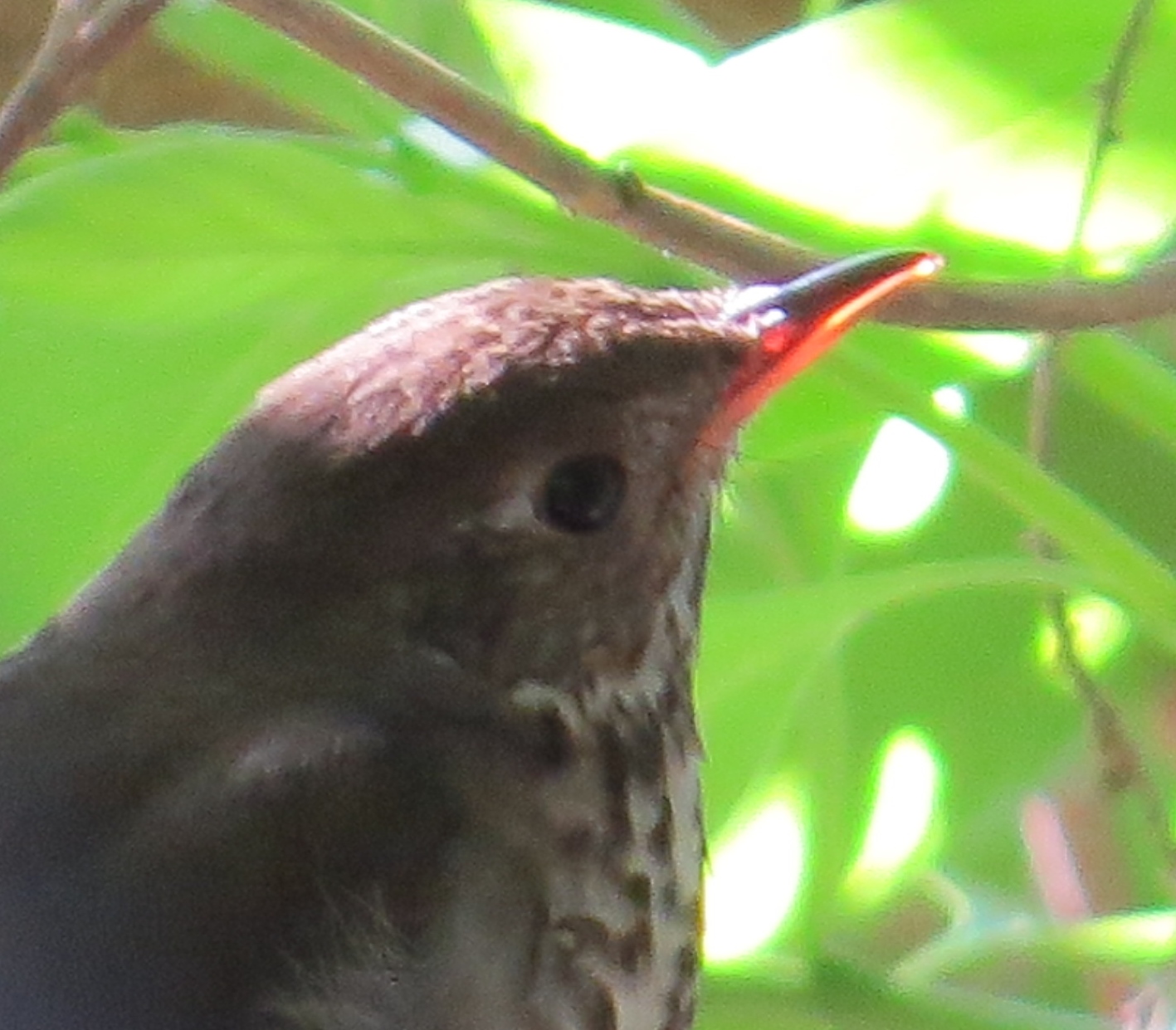
Lots of Palm Warblers are present,  are Magnolia, Black-and-White, Northern Parula, American Redstart and Black-throated Blue Warblers. The star of the day was a continuing Gray-cheeked Thrush. Eastern Phoebe, Eastern Wood-Pewee and a Great Crested Flycatcher are present as well.  Lots of Gray Catbirds have moved in as well.

Gallary

Gray-cheeked Thrush

Eastern Wood-Pewee

Eastern Wood-Pewee


Ovenbird

Wednesday, October 14, 2015

Some Birding on Sanibel

Sunday, October 11th

Peregrine Falcon
The Audubon Society of Southwest Florida hosts an annual Hawk Watch at the Sanibel Lighthouse each October, which is always lead by master birder Vince McGrath. Lately the event has featured few raptures. 

This year was no exception. The only raptor to make an appearance, aside from the local Osprey was a Peregrine Falcon that greeted all of as we approached the parking lot. The early sighting of the falcon was considered a good omen for the day, but apparently the winds would be against us. Other birds seen today included lots of migrating Palm Warbler, several Northern Rough-winged Swallows, a Scarlet Tanager and the usual waders and shore birds.
Snowy Egret near the fishing pier

In 2008 we had a very good day. The American Kestrel count exceeded 100,  plus several Merlins, Peregrines, Osprey and Sharp-shinned Hawks. 

The next year, 2009, we had sixteen American Kestrels, a dozen Sharp-shinned Hawks a pair of Broad-winged hawks, six Merlins and a few Osprey.

White Ibis near the fishing pier

The next good event was in 2011 with a pair of American Kestrels, three Merlins, a pair of Sharp-shinned Hawks, a Red-tailed Hawk, a pair of Northern Harriers, a Broad-winged Hawk some Osprey, plus a Scissor-tailed Flycatcher, a Pin-tailed Whydah, an Audubon Warbler and Baltimore Oriole. 

Eastern Phoebe seen at the Bailey Tract

Bob Pelkey elected to visit the Ding Darling NWR Bailey Tract. Here we added a Blue-winged Teal, more Palm Warblers, a FOS Eastern Phoebe and a Red-shouldered Hawk. Maybe next year would be better.

Marsh Rabbit seen at the Bailey Tract

Monday, October 5, 2015

Fall Migration Improves

Monday, October 5th

 The month of September was very disappointing to those of us that had waited in anticipation for the fall migration. Weather conditions were probably unfavorable for birding in our corner of Florida. Yet that should be good for the birds on their long journey.


An FOS American Kestrel seen at Festival Park in Cape Coral
Florida Scrub Jay seen at Festival Park in Cape Coral

Yesterday I had spent a couple of hours birding in Cape Coral. First stop was a stack-out location for a recently seen lark sparrow. However it looks like it had already moved on.  So I spent time in Cape Coral looking for birds like the Burrowing Owls and Monk Parakeets at the Pelican Boulevard baseball park,  Then to Festival Park near Kismet and Chiquita Boulevards. Here were located Florida Scrub Jays, a Burrowing Owl, Eastern Meadowlarks, and an FOS American Kestrel.


Loggerhead Shrike seen at Festival Park in Cape Coral
Then I headed to Six-mile Cypress Slough Preserve in eastern Ft Myers, were I learned that I had missed a very nice mixed flock that consisted of several warblers including a male Golden-winged Warbler. The Golden-winged is a much sought after species as we only see a few each fall.
Recent weather conditions spawned by Hurricane Juanita seemed to have encouraged the migrants to take a break and rest up till the winds change.  So we maybe seeing some good improvement. Though this nice mixed flock disappeared by the time I had arrived, it was encouraging
Monk Parakeet seen Pelican Blvd Baseball Fields in Cape Coral
This morning was very much better for those of us who had gathered at Six-mile Cypress Slough Preserve. Most everyone were able to observe a female Golden-winged Warbler, a Lifer for me. Additionally we added a Scarlet Tanager and a Summer Tanager Additional warblers seen by our group included Ovenbird, Worm-eating, Yellow-throated, Common Yellowthroat, Black-and-White, Blackburnian, Northern Parula, Pine, Palm, Prairie, Tennessee, American Redstart, Magnolia, and Chestnut-sided. Some have added Acadia Flycatcher and Swainson's Thrush.
Burrowing Owls seen Pelican Blvd Baseball Fields in Cape Coral

Eastern Meadowlark seen Festival Park in Cape Coral
The Lark Sparrow photographed by Tammy McQuaid in Cape Coral


On October first, Charlie Ewell spotted the Lark Sparrow and posted an alert. Seems it only stayed around through the second. Maybe it'll reappear soon.