Showing posts with label Bachman's Sparrow. Show all posts

Tuesday, June 2, 2026

West Marsh Preserve

 Saturday May 30th

Today I went birding at the West Marsh Preserve in Lehigh Acres. Took the path around the impoundment, about 2 miles. The target today was to find a snail kite. The Everglades Snail Kite is a resident to the enviros here and at the adjacent Harn's Marsh Preserve, were their primary food source, the Apple Snail, thrives. Limpkins need the snails too. 


Snail Kite

https://ebird.org/checklist/S349384411

SOME HISTORY

Located on Romero Ave, in Lehigh Acres, the property was first obtained by the Lee County 2020 program, which buys environmentally sensitive properties for conservation, around 2008.  The land sits across the street from the Lee County Firing Range and lies between the Lee County Mosquito Control District and the Lehigh Acres Water Control District property.

Burrowing Owl


Female Snail Kite

More than eighty years ago, this entire property was part of Buckingham Fields, a United States Army training base where thousands of servicemen learned to serve as aerial gunners defending bombers during World War II. Over time, much of the 7,000-acre site was gradually developed. Today, the Lee County Mosquito Control District owns the original runway and uses it for aerial spraying with drones, helicopters, and planes. In the past, the district also used DC-3 aircraft for spraying. When we first moved to the area in the 1980s, we were startled by the noise of the DC-3s flying at treetop level over our house at dawn.


Black-necked Stilt


In the 1980s the Water Management District developed Harn's Marsh as a storm water retention site, which has become popular for walkers, fishing and birding.  


Snow Goose was a rarity seen in 2021,
found by Ron Bishop but only stayed a few days.

Prior to the redevelopment of the West Marsh Preserve into a water retention wetland managed as a joint partnership between Lee County and the Lehigh Acres Municipal Services District, it was a reliable location for Bachman's Sparrows. So, when the property was cleared and dredged for water retention there was great disappointment with the loss of this venue.

But the newly created wetlands have expanded our birding options with waterfowl, shorebirds, snail kites, wading birds, swallows and burrowing owls have now shown up.

My Life List for West Marsh


Sunday, March 26, 2023

Bachman's Sparrow

 Sunday March 26th


Bachman's Sparrow

Had
my first-of-the-season Bachman's Sparrow today at Babcock-Webb. These birds are resident at Babcock but because of their skulking nature are often missed.  Except when they on territory and can be heard and seen singing. This window-of-time goes from late March till into July and sometimes later. 

Since the devastation caused by Hurrican Ian back in September, my tried-and-true locations for finding red-cockaded woodpeckers, at Babcock-Webb, are not currently viable. I stack-out a colony site at daybreak to see the birds erupt from the nest holes.  This method was taught to me many years ago in an email exchange with Jeff Bouton. It has usually been successful till the storm has disrupted the status quo. I have crossed paths with the woodpeckers occasionally but do wonder on the status of this species at Babcock. Didn't see any today and dipped on the brown-headed nuthatch as well.

eBird Checklist - 26 Mar 2023 - Babcock-Webb WMA - 45 species

Florida Soft Shelled Turtle

Today there was also a large concentration of shorebirds at the shrinking marsh area located about ten miles east of the entrance on Tucker Grade. Counted 139 Least Sandpipers and dozens of Greater & Lesser Yellowlegs and Long-billed Dowitchers.


Sandhill Crane

Wood Stork


Double Crested Cormorants

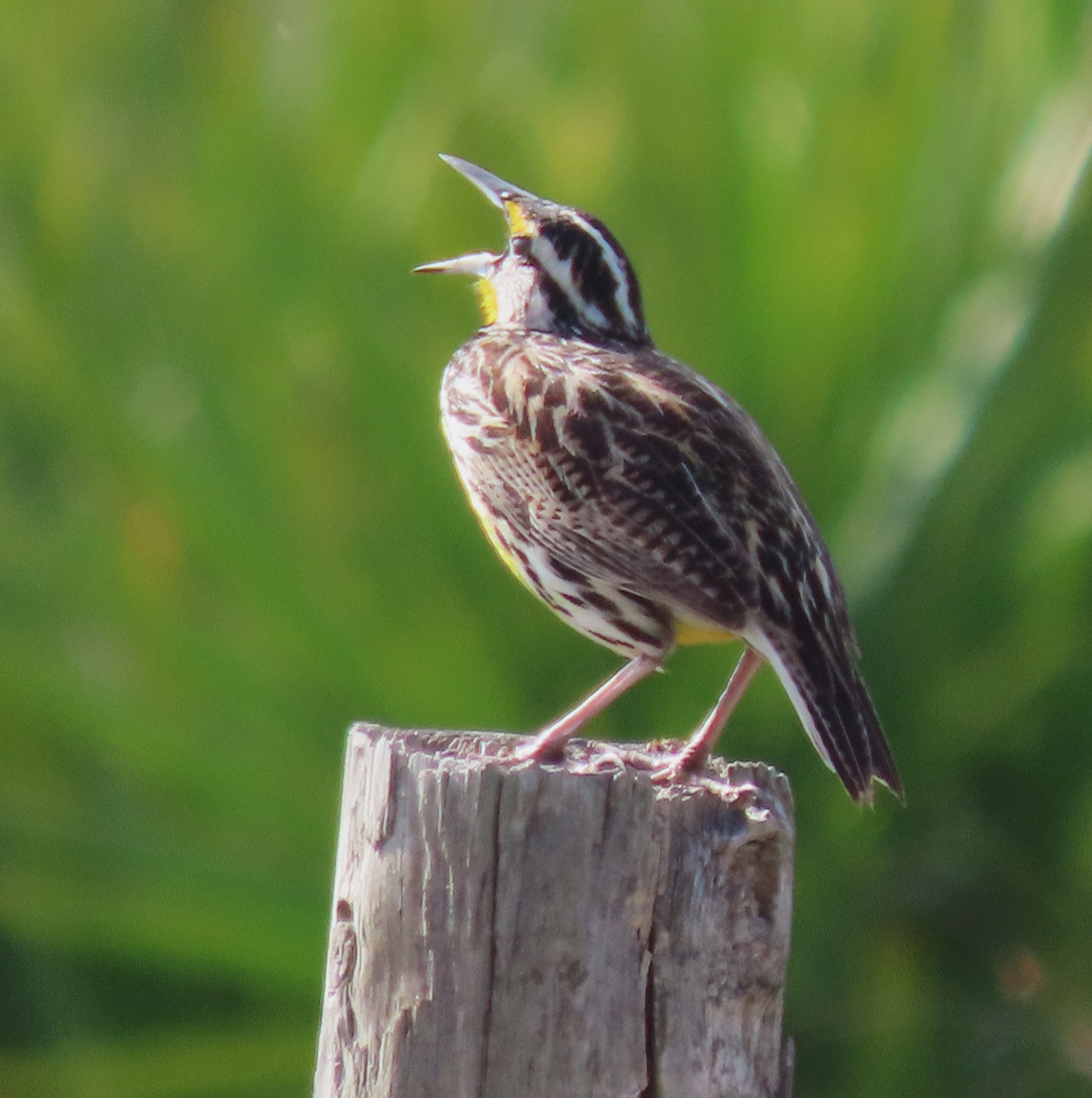
Eastern Meadowlark

Dowitchers and Yellowlegs

Lesser Yellowlegs

Least Sandpiper

So What's Blooming
Gopher Apple Geobalanus oblongifolius

Whorled Milkweed Asclepias verticillata

Asclepias tuberosa rolfsiiRolfs' MilkweedAsclepias tuberosa ssp. rolfsii

Friday, April 20, 2018

Babcock-Webb WMA

Friday April 20th

Bachman's Sparrow

Arrived at Babcock Webb just at dawn and headed to the Red Cockaded Woodpecker site on Tram Grade road. Within just a few minutes  I witnessed all of the 'Big Three'.  They include a Red cockaded Woodpecker, several Brown headed Nuthatches and a couple of singing male Bachman's Sparrows.

Numerous Bachmans Sparrows  were singing throughout the property this morning and I was able to get a few photos of these normally shy birds.

Also found my first sighting of a Hairy Woodpecker for the year, plus a pair of Brown Thrashers, calling Northern Bobwhites, Eastern Towhees and Eastern Meadowlarks. Also saw lots of Black crowned Night herons, Great created Flycatchers, White eyed Vireos, Sandhill Cranes and a lone White winged Dove.
Eastern Towhee

Met a couple, birding from Miami who were pointing out a pair of Eastern Bluebirds checking out a RCW nest hole.  At this point, FWC biologist, Kellie,  joined us and offered further insight on Bluebirds and Great created Flycatcher using RCW nest holes. Kellie spent time with us, discussing the various species on the site,  like the RCWs, the Bobwhites population and control burns. And very interesting to me, was the research and management of local bat population.  Including Florida's rarest bat - the Florida Bonneted Bat.


Bachman's Sparrow

As we were conversing, a singing Bachman's Sparrow popped up next us, providing  a great photo opportunity. Kellie also provided the use of her scope as scanned a pair of young Great Horned Owls consuming a snake.

Black-crowned Night-heron


Tuesday, March 20, 2012

Bachman's Sparrow at Babcock-Webb

The Ides of March - 2012

Eastern Towhee
I arrived just past sun-rise and expected to miss the Red-Cockaded Woodpeckers as they exit there nest holes. I did hear a couple of calling Bachman's Sparrows in the pines after I had  passed the gun range, and as I appreached the the RCW colony on Oilwell Grade I could see that I was not the first ones here today.  Met a very nice couple from up-state New York, who already had one of the woodpeckers in their scope. But the other two woodpeckers found here did not exit their holes till ten minutes later. It was very nice to have hit on two of the three special species seen at Babcock so quickly. But it was too not long of a wait for the Brown-headed Nuthatch as I had one sighted in the same locality shortly,  while sorting through a mixed flock of Palm, Pine and Yellow-rumped Warblers.


Bachman's Sparrow at Babcock-Webb by Joe Turner
As we were watching the woodpeckers another couple, Leslie Starr and Joe Turner from Maryland arrived. I offered suggestions on where to find the Bachman's Sparrows and later on I reconnected with them as they were scoping on a singing male bachman.  Joe was able to offer the a couple of his better photos of the sparrows for posting on this blog.  Leslie is quite a birder. As of this posting she has 323 birds for the year and is sitting #10 on the ebird list for the United States.

I was able to add most of my expected birds for Babcock-Webb  totaling 41 species - Pied-billed Grebe, Wood Stork, Double-crested Cormorant, Great Blue Heron, Great Egret, Snowy Egret, Little Blue Heron, Tri-colored Heron, White Ibis, Swsallow-tailed Kite, Turkey Vulture, Common gallinule, American Coot, Sandhill Crane, Eurasian Collared-Dove, Mourning Dove, Common Ground-Dove, Belted Kingfisher, Red-bellied Woodpecker, Yellow-bellied Sapsucker, Downy Woodpecker, Northern Flicker, Great Crested Flycatcher, Blue Jay, Tree Swallow, House Wren, Eastern Bluebird, Gray Catbird, Northern Mockingbird, Brown Thrasher, Eastern Towhee, Northern Cardinal, Red-winged Blackbird, Common Grackle, Boat-tailed Grackle and Brown-headed Cowbird.
Red-cockaded Woodpecker
,

Wednesday, June 8, 2011

Bachman's Sparrows at Babcock-Webb

Tuesday, May 24th

Arrived a bit late to caught the Red-cockaded Woodpecker, in their roosting holes, but made up for it with several easily found Bachman's Sparrows.  In the area just beyond the firing range, along Truckers Grade I located four singing sparrows. The males will sit on lower limbs of the pine trees and sing in the early morning hours, making them much easier to locate.  That is until the nesting season is over and the sparrows returning to their skulking ways. Other birds located in this open pine land environment included Eastern Bluebirds, Eastern Towhee, Northern Mockingbirds, Pine Warblers, Northern Cardinals and calling Northern Bobwhites.

Red-cockaded Woodpecker
Spent about four hours exploring the Babcock-Webb's roads for more species. I missed on the brown-headed nuthatch, but did find a Red-cockaded Woodpecker later in the day along with locating Red-bellied Woodpeckers, Downy Woodpeckers, Brown Thrashers, both Grackles, Common Yellowthroat, Red-wing Blackbirds, Great Crested flycatcher and Eastern Meadowlark. Had hoped to relocate a kestrel I had observed all winter in a particular tree, but could find it today. If it had been of the Southeastern subspecies, it may have stuck around. Was able to add a couple of Swallow-tailed Kites, but saw fewer wading birds than usual. No doubt due to the shrink water levels.

On the way home I drove through the north side of Cape Coral to location  Florida Scrub Jays. Was able to add a pair of jays, plus several Eastern Meadowlarks, more Northern Mockingbirds, Killdeer, Eurasian Collared Doves, regular Blue Jays, a soaring  Red-tailed Hawk and another Swallow-tailed Kite

Tuesday, April 13, 2010

Great Crested Flycatcher

Babcock-Webb
April 13th

Headed over early to Babcock -Webb Wildlife Management Area for the trifecta - Red-Cockaded Woodpecker, Backman's Sparrow and Brown-Headed Nuthatch. The woodpeckers were very cooperative at the first colony on Oil Well Road.  Had three active woodpeckers included a young bird picking throuh the gravel on the road. Also had a Bachman's Sparrow present by the colony. Found a a singing male later on that morning. The Brown-Headed Nuthatch has much harder to locate.  Several other birders I talked with were also dipping on the nuthatch. But I managed to locate one shortly before heading to home.  For some reason this little bird was stalking a Red-Bellied Woodpecker.  Following him from limb to limb. Eastern Towhees and Great-Crested Flycatchers were plentifull. A young Bald Eagle was observed setting in a snag. Missed on any warblers and northern bobwhites.


Great Crester Flycatcher at Babcock-Webb

My List - Anhinga, Great Blue Heron, Great Egret, Little Blue Heron, Tricolored Heron, White Ibis, Turkey Vulture, Osprey, Bald Eagle, Common Moorhen, Sandhill Crane, Mourning Dove, Red-bellied Woodpecker, Red-cockaded Woodpecker, Pileated Woodpecker, Great Crested Flycatcher, Loggerhead Shrike, Blue Jay, Fish Crow, Brown-headed Nuthatch, Gray Catbird, Northern Mockingbird, Eastern Towhee, Bachman's Sparrow, Northern Cardinal, Red-winged Blackbird, Eastern Meadowlark, Common Grackle, Boat-tailed Grackle, Brown-headed Cowbird

Monday, January 25, 2010

Swamp Sparrow


White Ibis

Babcock-Webb and The Celery Fields
January 19th - Day #2 of Birding Vacation

Babcock-Webb WMA - I try to time my arrival at Babcock-Webb just at dawn so as to have the best opportunity to locate the Red-Cockaded Woodpeckers as they exit their holes. Today my timing was perfect as I arrived at the colony site on Oilwell Grade and found that the pair of RCW were already poking their heads out of their holes and calling to each other. Then in a burst each exits their home to begin a new day. At the next side trail I was lucky to get a Bachman's Sparrow and several Grasshopper Sparrows. Even
had a sole Brown-headed Nuthatch working the pine trees here, were a fox squirrel was also busy constructing a nest. So within a half hour I had hits on all three of Babcock's big three - RCW, bachman's sparrow and the brown-headed nuthatch


Later I came onto a nice mixed flock of Yellow-Rumped and Pine Warblers, with Downy Woodpeckers. A bit further on had a repeat hit on an RCW and and another brown-headed nuthatch.
Lastly, I came across a few sparrows, which I at first took for chipping sparrows, which I had not seen before at Babcock-Webb, but are listed on the printed bird list. However, after reviewing my photos I believe I actually found Swamp Sparrows, which are not on the bird listing.

My list - Great Blue Heron, Great Egret, Little Blue Heron, Green Heron, White Ibis, Wood Stork, Northern Harrier, Sandhill Crane, Mourning Dove, Common Ground-Dove, Belted Kingfisher, Red-bellied Woodpecker, Red-cockaded Woodpecker, Loggerhead Shrike, Blue Jay, Tree Swallow, Brown-headed Nuthatch, Eastern Bluebird, American Robin, Gray Catbird, Northern Mockingbird, Yellow-rumped Warbler, Pine Warbler, Palm Warbler, Common Yellowthroat, Eastern Towhee, Bachman's Sparrow, Savannah Sparrow, Grasshopper Sparrow, Swamp Sparrow, Northern Cardinal, Eastern Meadowlark, Common Grackle, Boat-tailed Grackle

Swamp Sparrow

Fruitville Road
Next headed up to Sarasota were I rechecked the pond on Fruitville Road were a female common goldeneye and a female bufflehead were located last month. They were not to be found. But there was a male scaup that was much larger than any of the other Lesser Scaups on hand and bases on the size I have concluded it was a Greater Scaup.
My list - Ring-necked Duck, Greater Scaup, Lesser Scaup, Hooded Merganser

The Celery Fields
Stopped at the nearby Celery Fields with the idea of locating Black-Bellied Whistling Ducks. The nearby ponds were loaded with American Coots, Moorhens, Blue-winged Teal and some Mottled Ducks. A Northern Harrier was working over the area and Palm Warblers were at home at the gazebo. The Black-Bellied Whistling Ducks were located far back on the shoreline of a larger lake and were confirmed as a pair rose up and flew closer to my location.
My list - Black-bellied Whistling-Duck, Mottled Duck, Blue-winged Teal, Anhinga, Black Vulture, Turkey Vulture, Northern Harrier, American Kestrel, Common Moorhen, American Coot, Laughing Gull, Loggerhead Shrike, Palm Warbler, Red-winged Blackbird

My count for the day - 49 species

Thursday, June 18, 2009

Little Estero Lagoon and Snowy Plovers

Following a brief storm, this past Tuesday, headed over to Ft Myers Beach to check out the birding at Little Estero Lagoon. Was looking for a few target birds to help reach my minimum goal of 100 species for June. Was up to 90 after visiting Babcock-Webb Wildlife management Area on Monday. Good hits at Babcock included Bald Eagle, Red-Cockated Woodpeckers, Bachman's Sparrow, Eastern Towhees, Sandhill Cranes and a day-time surge of Common Nighthawks.


Arrived at Little Estero Lagoon about noon and already had a Gray Kingbird on the wires outside of the nearby Holiday Inn. Quickly located a Great and Snowy Egrets. Also had a pair of American Oystercatchers and several Wilson's Plovers, including a pair of chicks on the flats. Further down the beach was able to add Semipalmated and Back-bellied Plovers, a Reddish Egret, non-breading Laughing and Ring-billed Gulls, Least, Sandwich and Royal Terns, Brown Pelicans and Double-Crested Cormorants. Had some Magnificent Frigatebirds fly in as well. Best hit for the day was a couple of Snowy Plovers, which are lifers for me. I have been here on several occasions looking for endemic snowy plovers and had always missed out. But not today.


Little Estero is a protected shorebird habitat. Special efforts are made for the protection of nesting sea turtles, least terns and snowy plovers. These nesting sites are roped-off to keep beach goers from disrupting these sites. However, the least terns are very aggressive in defending their territories. Fact is that they are claiming much more of the beach than what is roped-off, by dive-bombing and attempting to deficate on your head.


Overall, it was a good birding day and was able to get seven new birds for the month. Only need three more to hit my hundred.