Showing posts with label Bronzed Cowbirds. Show all posts

Wednesday, January 30, 2019

Celery fields

Friday January 25th


Hooded Merganser 

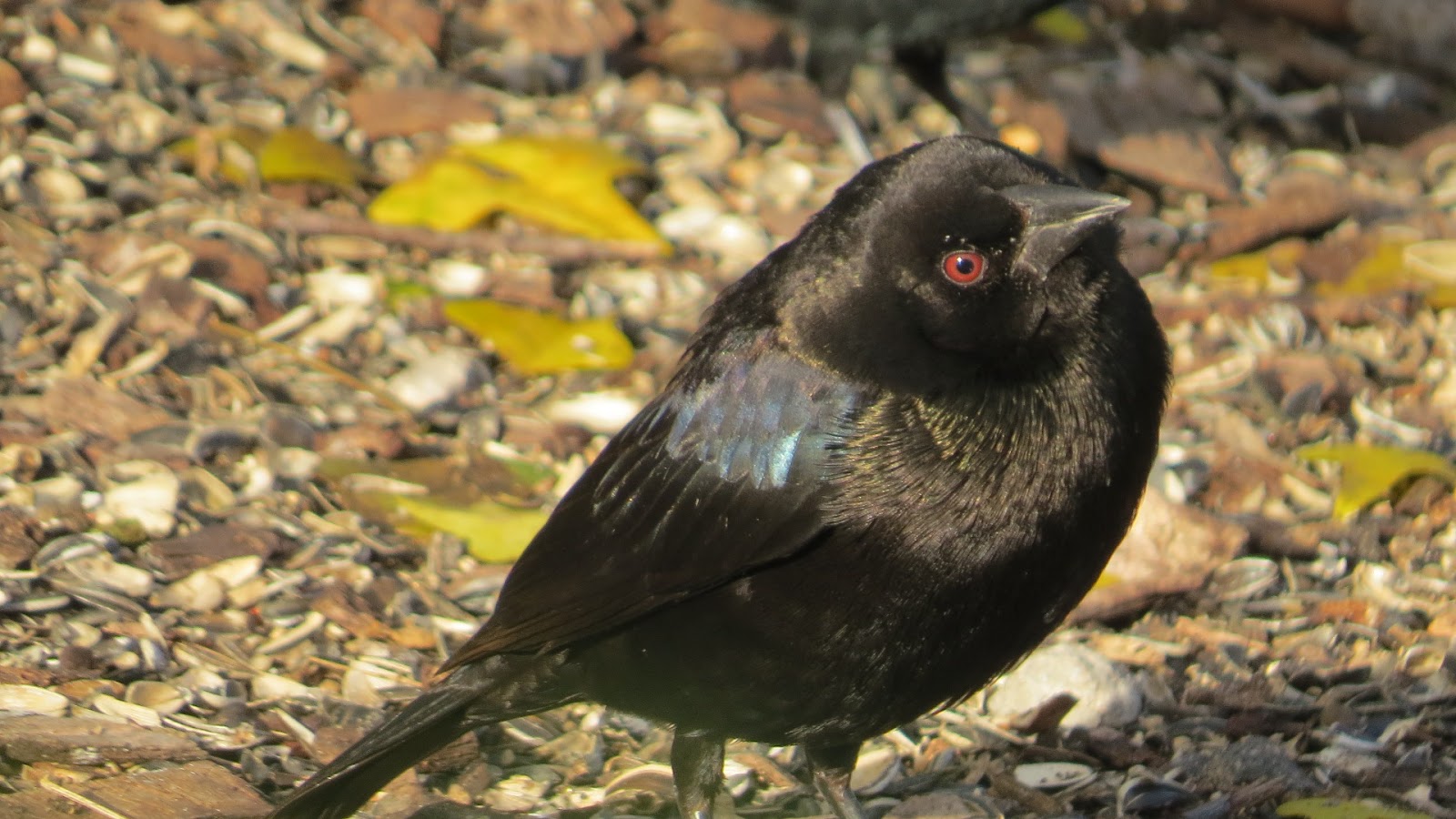
Bronzed Cowbird
The Celery Fields, a mult-purpose  Sarasota County managed property,  is a popular location for birders. The Sarasota Audubon Society is doing a great job in their support with their Purple Martin houses, bird feeders, butterfly garden, volunteer naturalists and more.

Bronzed Cowbird

Bronzed Cowbird is a rare bird here in Florida. It's a tropical species, which has been expanding its range, out of Mexico and into the U.S Southwestern stats and has arrived in Florida   Its numbers remain small compared the native Brown-headed Cowbird, buts seems a bit more numerous than another invasive cowbird species, the Shiny Cowbird


Male Brown-headed Cowbird
Arrived before dawn, I stacked out the barn owl spot on Center Road. No owls. Did hear killdeers and Gray Catbirds. Plus the occasional roar from the cats at the nearby Big Cat Sanctuary.
Male Brown-headed Cowbird

Bronzed Cowbird at the feeders
Moved onto the Raymond Road Boardwalk. It can be a good location for Bittern, Soras, Purple Gallinules, Marsh Wrens and other rails. Plus wading birds and water fowl.
But I had to be satisfied with just a calling Sora, Northern Harrier and Blue-winged Teal. A flock of Ring-necked Ducks did pass over headed.


Red-winged Blackbirds

Nanday Parakeet at the feeders
Over at the Nature Center on Palmer Road, there was a lot activity at the feeders and Purple Martin Houses

The Purple Martins are now returning from their winter vacations.  And the feeders are busy with a large number of Red-winged Blackbirds, European Starlings, Boat-tailed Grackles, Brown-headed Cowbirds and the more exotic Nanday Parakeets and Bronzed Cowbirds
Eastern Bluebird seen visiting the Nature Center - Butterfly Garden


Purple Martins

Purple Martins
Next went looking for the Ash-throated Flycatcher and Greater Scaups on the property west of the Hill.  Didn't find the flycatcher today, but the pair of Greater Scaups were seen in the company of a few Lesser Scaups and Pied-billed Grebes on the central lake. Was interesting that no Black-bellied Whistling Ducks are being seen here lately. They can still be seen, nearby, on the property of the Critter Ridge Landscapers at the corner of Fruitville and Tatum Roads.


Northern Shoveler have been 
locally uncommon this winter

Lastly, I was to check-out the berm that edges the western boundary of the property. Lots of Blue-gray Gnatcatchers and Palm Warblers, Plus a few Blue-winged Teal, Common Gallinules, Anhingas, Roseate Spoonbills and a lone Northern Shoveler and Hooded Merganser
Was a good visit today.  Got fifty-seven species and some nice pics.  Dipped on some of the expected and rarer species.  But that just creates an excuse to come on back

Saturday, March 10, 2012

Bronzed Cowbirds - Clewiston


Thursday, March 8th

Western Kingbird
My daughter, Katie and I headed to Hendry County to look for Scissor-tailed Flycatchers and Western Kingbirds before they moved migrated back westward.

Swallow-tailed Kites have returned to Florida and I have seen several carrying nesting materials.  Today several were seen during our travels.  Had three Crested Caracara today as well. Other raptors seen included Red-shouldered Hawks, Red-tailed Hawks, several American Kestrels, a couple of Northern Harriers and a Bald Eagle. Was hoping for a white-tailed kite but not seen today.

We did successed in locating four Western Kingbirds and a lone Scissor-tailed Flycatcher in the expected location along County Road 835 near Deer Fence Canal Road.  Other interesting sightings included Wild Turkey and a farm pond with a concentration of at least forty-five Greater Yellowlegs, plus three Lesser Yellowlegs, three Long-billed Dowitchers and four Cattle Egrets.

Bronzed Cowbird in Clewiston


Next headed up to Clewiston to look for bronzed cowbirds. At the boat ramp park we found lots of Laughing Gulls, Ring-billed Gulls, American Coots, DC Cormorants, Rock Pigeons, Grackles, Brownheaded Cowbirds and a pair of Bronzed Cowbirds.


A Common Myna found at Carnestown in Collier County the day before

An Anhinga found at Corkscrew Swamp Sanctuary the day before
Banded Watersnake at Corkscrew Swamp Sanctuary
Long-billed Dowitchers seen at Myakka River State Park on Tuesday

His Bronzed cowbird puffed-up for some reason
Burrowing Owls recently seen in Cape Coral

Florida Scrub-Jay seen in Festival Park in Cape Coral

Monday, March 28, 2011

Red-whiskered Bulbul - A Visit to Miami-Dade County

Tuesday March 23rd

Today I headed across the state to Miami-Dade County to look for exotics. First stop was in a restaurant parking lot in Miami to look for Bronzed Cowbirds.  Though not exotic they are an expanding, invasive species.

Bronzed Cowbirds in Miami
Found a flock of about fifteen of the cowbirds, plus other invasive/exotic species in European Starlings, House Sparrows, Eurasian Collared Doves and a lone Common Myna.
A few minutes south of the restaurant is the suburban town of Kendall, which is home to a large variety of exotic species. Two much sought after and countable exotics are the spot-breasted oriole, from south Mexico and Central America and the Red-whiskered Bulbul from India. These two are nemesis birds as I have searched for them several times. The neighborhood just north of the Kendall Baptist Hospital campus is a popular sight to check for the bulbul and finally today I spotted a pair on the telephone lines behind  a residence. LIFER!!! Also seen in the neighborhood were Loggerhead Shrike, White-winged Dove, Monk Parakeets, Mitred Parakeets, Fish Crows, Blue Jays and Northern Mockingbirds
Egyptian Goose in Kendall
On the campus of the hospital I got better looks at the the Mitred parakeets as well as Anhingas, Ring-billed Gulls, various domesticated waterfowl including Muscovy Ducks and another exotic in an Egyptian Goose. The Egyptians are slowly expanding in Florida, preferring sights like golf courses and parks, with short grasses and ponds.  I first saw this species on the golf course next to my Mom's condo in Pembroke Pines a few years ago.
My final stop was at Matheson Hammock County Park in Coral Gables. Was hoping to see hill mynas and any parrots, especially chestnut-fronted macaws.  The park was very quite. Found a Prairie Warbler and some Coots. I did here an occasional parrot, including the squawk of a macaw.  But none were seen. There
is a small flock of blue and yellow macaws that are found in the Coral Gables/University of Miami area.

A week earlier I was lucky to have spotted another Florida specialty and nemesis bird in a Smooth-billed Ani. I had returned to Glades County near LaBelle to look for Crested Caracara and Florida Scrub Jays, and on my way home had an ani fly across Rt 80 a couple of miles west of LaBelle. I have made several attempts at locating this bird at reported locations in Ft Lauderdale and the Everglades the past few years. Now I have one unexpectedly cross my path. Cool!! The smooth-billed ani is common bird in the Caribbean and South America and was once common in south Florida, but is now disappearing.

Monday, February 15, 2010

Cassin's Kingbird

Cassin's Kingbirds
Stormwater Treatment Area 5 - Hendry County
February 15, 2010

South Florida Water Management District (SFWMD) owns the Stormwater Treatment Area 5 (STA5), which is one of several huge properties used to filter surface water entering the Everglades. Hendry-Glades Audubon conducts monthly birding tours here on a reservation basis as SFWMD restricts access for safety and other concerns. And in February, during the Great Backyard Count weekend, STA5 is opened for three days, Saturday, Sunday and Monday.


Last year I attended the Presidents' Day birding tour and had a good time. So I was anxious for a repeat visit. My daughter, Katie and I arrived shortly before the 8:30 start time which kicked-off with great views of Fulvous Whistling-Ducks, Black-necked Stilts and a Purple Gallinule. From this start we traveled by caravan atop the levees surrounding the various cells. In the course of the four hours we had hits on Black-bellied Whistling-Ducks, American Wigeon, a Eurasian Wigeon (a very good hit) and several other waterfowl, including thousands of American Coots. Most of the wading birds were represented including Wood Storks, Roseate Spoonbills, Limpkins and an American Bittern. Hundreds of American White Pelicans were present. We saw four Crested Caracara before reaching the property and had observed several Snail Kites on the tour. Most of the non-local birders enjoyed the snail kites as well as great close-up looks at active Black Skimmers. We had hundreds of Tree Swallows and found a lone Swamp Sparrow. For me the best sighting was a lifer with sighting of a wintering resident Cassin's Kingbird ( rare to Florida ) in the company of a Western Kingbird.

Cassin's Kingbird
Photo courtesy of


American White Pelicans at STA5


American Coots are everywhere at STA5


 Bronzed Cowbird at Clewiston


Western Kingbird along CR835 -
Had a total of eight along this streach of road


We also found several Purple Swamphens which are exotics that had begun to gain a threshold in the Everglades after several escaped captivity during Hurricane Andrew. Wildlife management had tried to eradicate the exploding population over several years and has finally given up as a lost cause and the swamphens will probably be expected as ABA countable soon. Another escaped exotic, the sacred ibis, had also recently began to breed in the wild, but looks like wildlife management had been more successful with eradication of this species.

Following the tour we drove the twenty miles up to Clewiston in search of Bronzed Cowbirds and common mynas. found the a couple of the cowbirds at the Lake Okeechobee dike, but dipped on the mynas. On the way home watched the fences and wires along CR835 for any swallow-tailed flycatchers or Western Kingbirds. No flycatchers, but found eight of the kingbirds spreadout on the wires along the road
Black-necked Stilts at STA5
Roseate Spoonbills at STA5


My List - Black-bellied Whistling-Duck, Fulvous Whistling-Duck, Eurasian Wigeon, American Wigeon, Mottled Duck, Blue-winged Teal, Northern Shoveler, Ring-necked Duck, Lesser Scaup, Pied-billed Grebe, American White Pelican, Double-crested Cormorant, Anhinga, American Bittern, Great Blue Heron, Great Egret, Snowy Egret, Little Blue Heron, Tricolored Heron, Cattle Egret, Green Heron, White Ibis, Glossy Ibis, Roseate Spoonbill, Wood Stork, Black Vulture, Turkey Vulture, Osprey, Snail Kite, Red-shouldered Hawk, Red-tailed Hawk, Crested Caracara, American Kestrel, Sora, Purple Gallinule, Common Moorhen, American Coot, Limpkin, Killdeer, Black-necked Stilt, Greater Yellowlegs, Lesser Yellowlegs, Long-billed Dowitcher, Caspian Tern, Black Skimmer, Belted Kingfisher, Cassin's Kingbird, Western Kingbird, Tree Swallow, Blue-gray Gnatcatcher, Northern Mockingbird, Palm Warbler, Swamp Sparrow, Ring-billed Gull, Common Grackle, Boat-tailed Grackle, Bronzed Cowbird, Brown-headed Cowbird