Showing posts with label Indigo Bunting. Show all posts

Saturday, March 28, 2026

Buntings

 Saturday March 28th


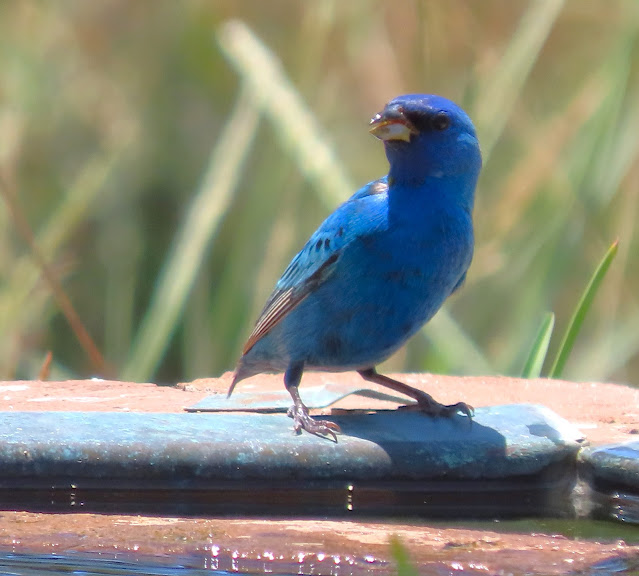
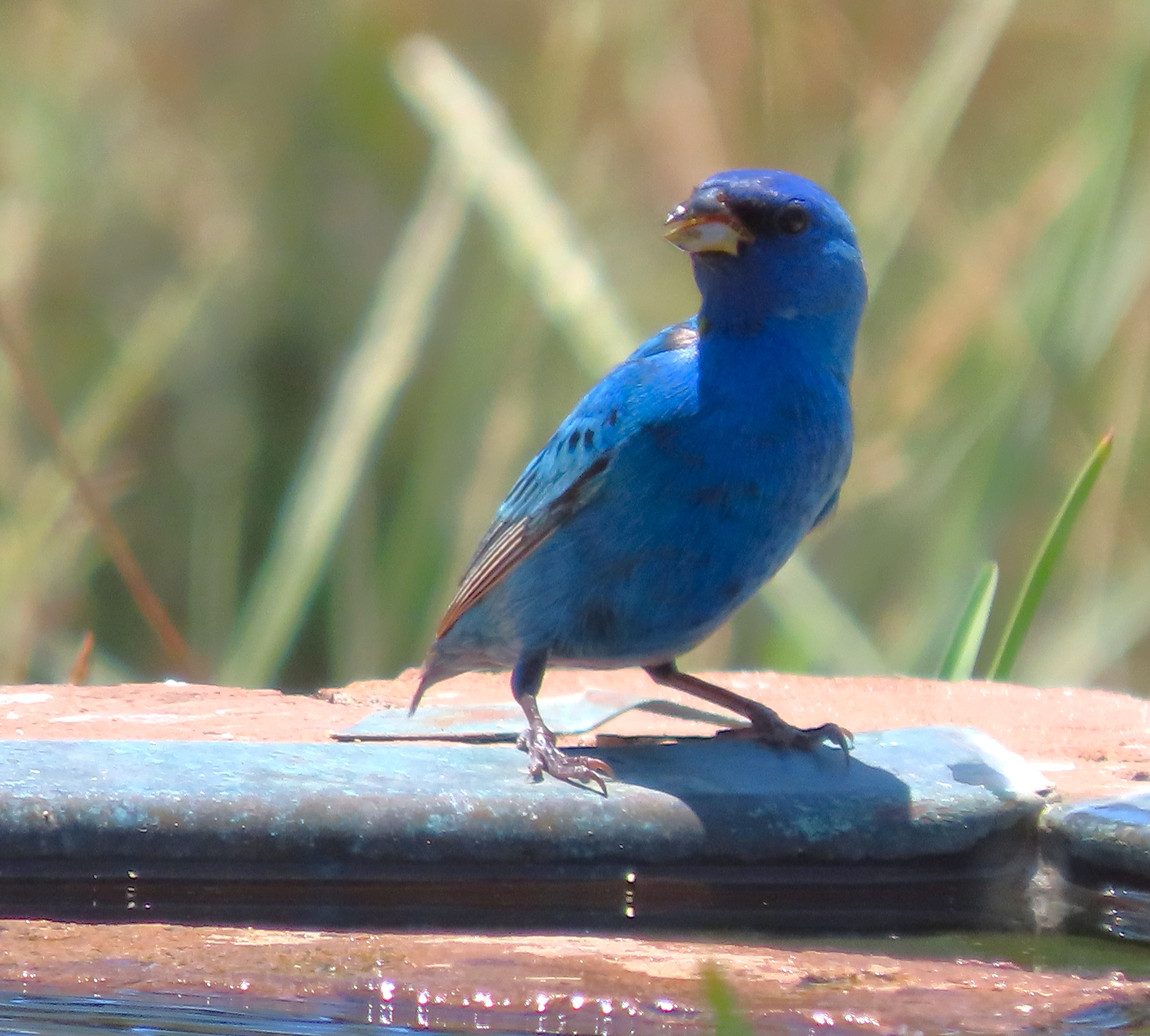
The wintering Indigo Buntings are molting into their beautiful blue color and will be migrating north soon. So will our wintering Painted Buntings


Thursday, May 18, 2023

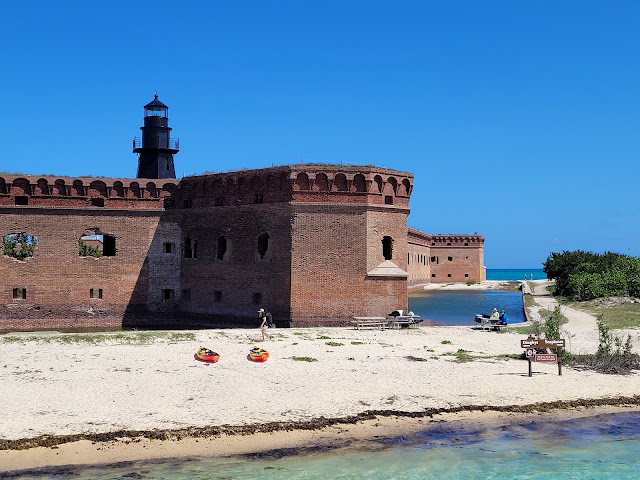
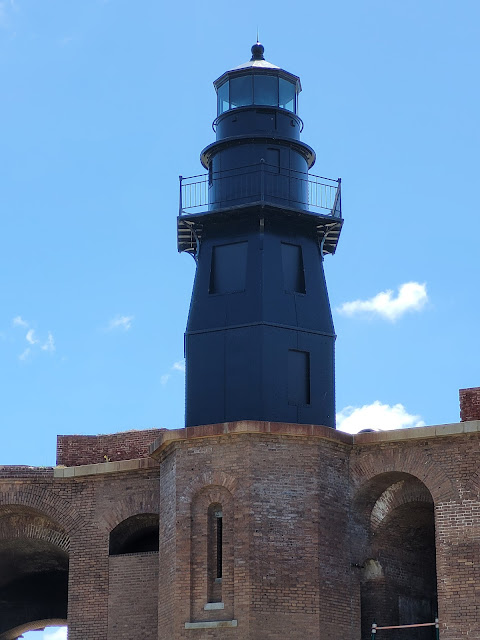
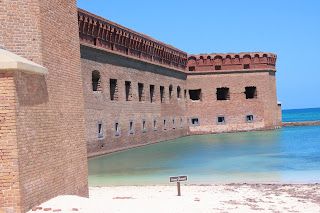
Fort Jefferson - Dry Tortugas National Park

 Thursday May 18th

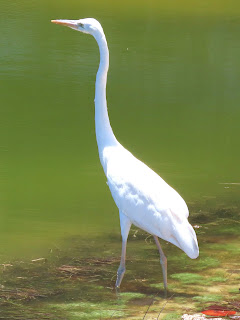
Great White Egret


The fully booked Yankee Freedom
left its mooring in Key West around 8am for the 70-mile sail to Garden Key in the Dry Tortugas. Today was Monday May 8th and like me there were several birders aboard heading to Fort Jefferson on Garden Key to enjoy some special birding opportunities.


eBird Checklist - 8 May 2023 - Dry Tortugas NP--Garden Key - 36 species


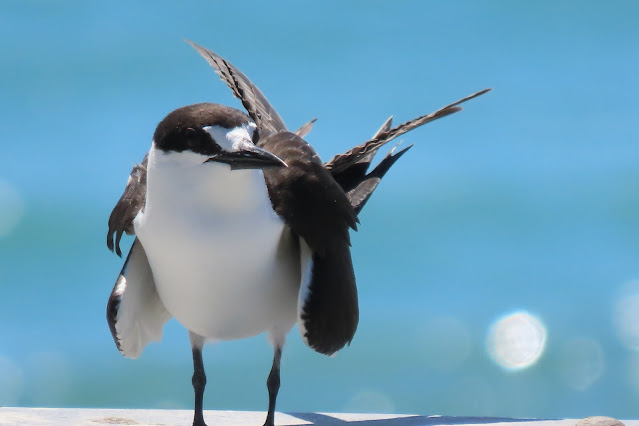
In April and May, the Tortugas can be a magnet for migrating birds seeking respite from the long flight across the Gulf of Mexico and nearby Keys are also hosting breeding colonies for Sooty Terns, Brown Noddies, Magnificent Frigatebirds and Masked Boobies. 
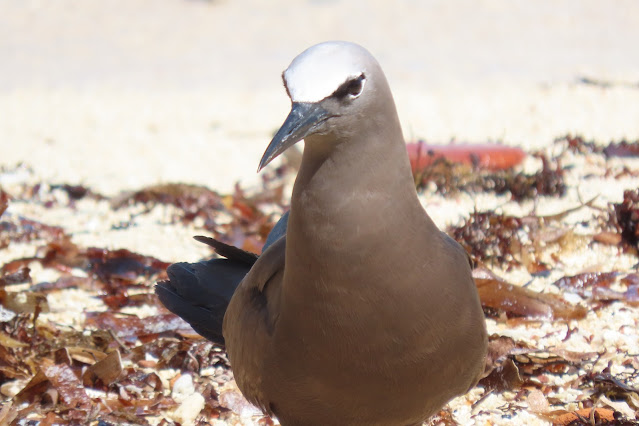

Brown Noddy

Sooty Tern

Other passengers are also finding the birdlife interesting, but we can add the fascinating history of the Civil War Era Fort Jefferson.  Then add the opportunities to do some snorkeling the waters around Garden Key. 

As the Yankee Freedom sailed west, we left Key West behind and would pass the Marquesa Islands and the waters were treasure hunter Mel Fisher had located the some of the wreak of the Nuestra Senora de Atocha and her riches.


On the sail to the Tortugas, I and several birds scanned the waters for any pelagic species. Dipped on spotted any of the expected Shearwaters. Mostly seen were frigatebirds and an unidentified jaeger. By 10:30 we had entered the boundary waters of the Dry Tortugas National Park and the boat's captain made a slow pass near to Hospital Key for the birders to get a look at and try to get photographs of the Masked Boobies nesting colony on the small sandy key. This small bit of sand is the only nesting site within the United States for the Masked Boobies. There were a few dozen present as well as around a dozen Brown Boobies. From here the air was filled with birds. Hundreds of Sooty Terns, Brown Noddies and Magnificent Frigatebirds have arrived here to nest on Bush Key.

We docked and exited the Yankee freedom to start our search for interesting birds. Had made acquaintance with some birders from Colorado, who were led by Nick Komar. Nick, I learned later was working on a Big Year and seemed to be having a great start. An interesting coincidence was that on my last visit here, I had made the acquaintance for with another pair of master birders from Colorado - John Vanderpoel and William Kaempfer, who had helped me with getting on my lifer view of a Black Noddy. 
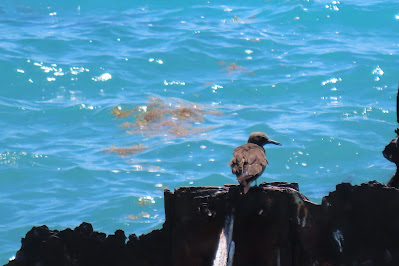

Black Noddy

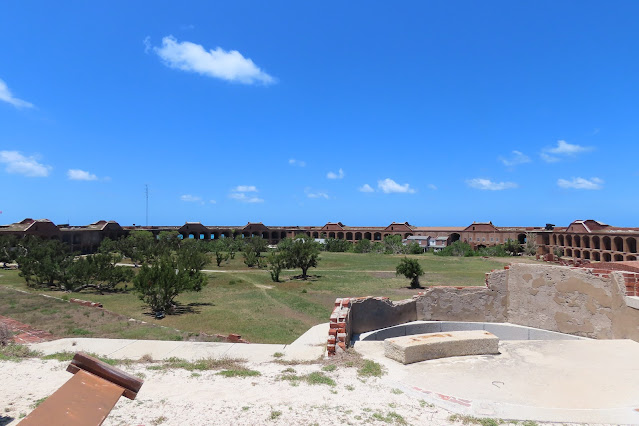
First headed toward the north coaling pilings looking for good shots of the Brown Noddies and sooty terns, plus the rare Black Noddies that rest on those pilings.  Got my tern and noddy pics but would have to go up to the top of fort to get the view needed to spot the Black Noddies. Which I was later able to do.
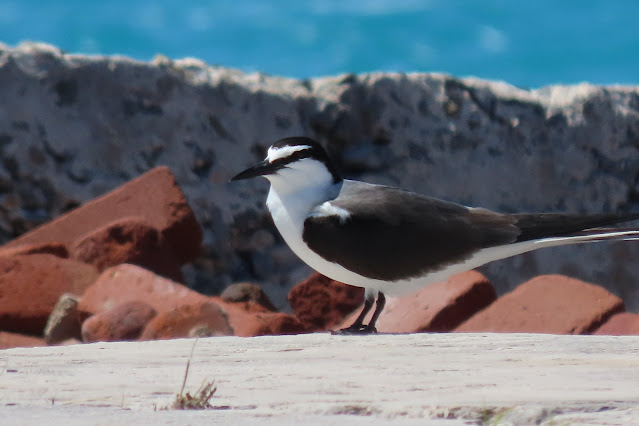

Bridle Tern


A trio of Bridle Terns were found near a closed off area at the concrete pad by the south pilings.  
Other sea birds seen included Rosette Terns, Royal Terns, Brown Pelicans and Laughing Gulls.

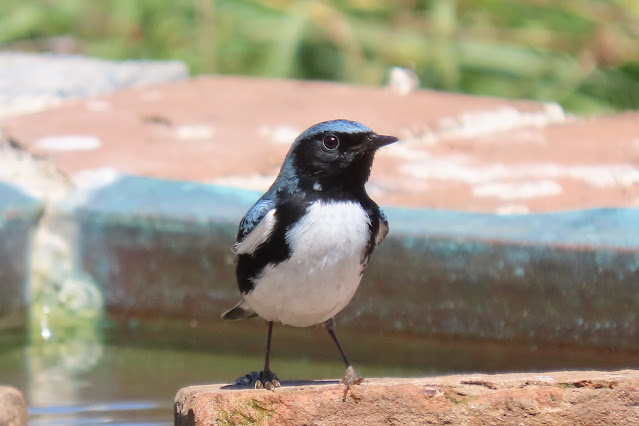
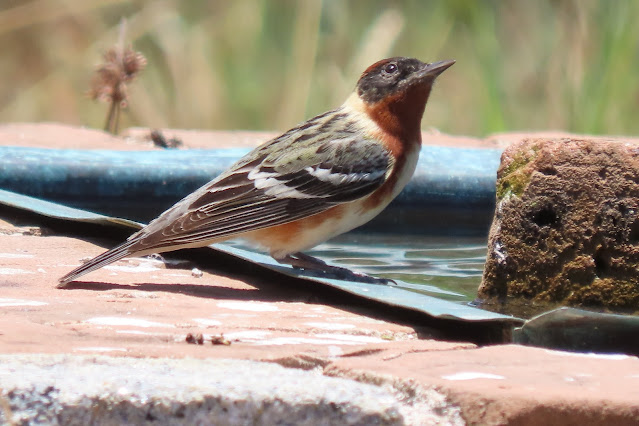
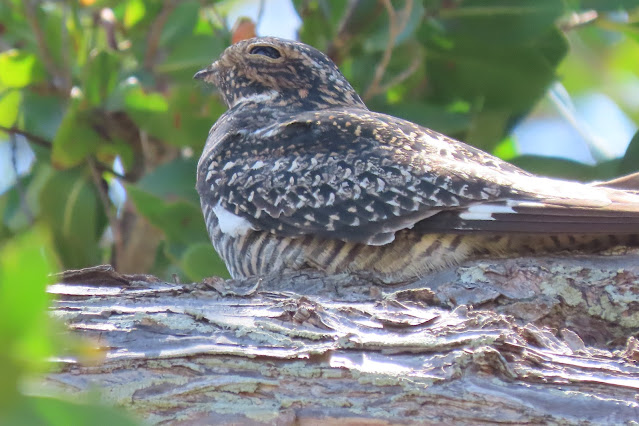
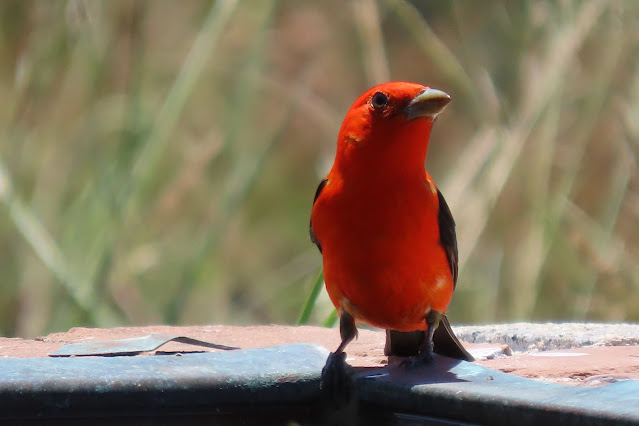
Inside the fort we found some of those interesting migrant birds. Common Nighthawk, Eastern Wood-Pewee, Eastern Kingbird, Gray Kingbird, Wood Thrush, Yellow-billed Cuckoo, a Great White Egret, Belted Kingfisher, Ovenbird, Cattle Egrets, a Green Heron, Bay-breasted Warbler, Indigo Buntings, Palm Warblers, Common Yellowthroats, Cape May Warbler, Northern Parula, American redstarts, Scarlet Tanager, Black-throated Blue Warbler, Blackpoll Warbler and Gray Catbirds. Had a few swallows too - Barn, Cliff and Bank were present.

We wrapped up our stay when the Yankee Freedom headed back to Key West around 3pm. Lots of tired folks after a day in the sun.


Eastern Wood-Pewee


Indigo Bunting

Black-throated Blue Warbler

Bay-breasted Warbler

Common Nighthawk


Scarlet Tanager

American Redstart

Ovenbird


Tuesday, January 25, 2022

A Few Pics

 Friday January 21st


White Peacock butterfly dining on Spanish Needles
at Babcock-Webb WMA, Charlotte County Florida

Glade Lobelia
at Babcock-Webb

Black-bellied Whistling Ducks
seen near RSW Airport

Agama Lizard
spotted at the drive-through at Popeyes Chicken in Labelle

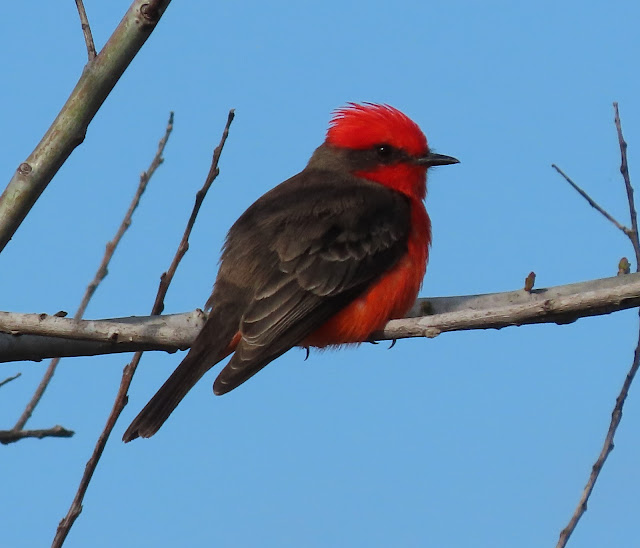
Vermilion Flycatcher
at Belle Glade Marin
a

Indigo Bunting
at Belle Glade Marin
a

Tricolored Munia
at Belle Glade Marin
a

Green Heron
Lakes Park, Fort Myers, Florida


White-tailed Deer
at Myakka River State Park

Hairy Shadow Witch
at Fakahatchee Strand State Park

Northern Cardinal
The Celery Fields - Sarasota, Florida

Red-shouldered Hawk
at Ding Darling NWR, Sanibel Island

Brown Pelican
Ding Darling NWR - Sanibel Island

Roseate Spoonbill
Myakka River State Park


Thursday, April 25, 2019

The Apex of Spring Migration

Thursday April 25th


Chestnut-sided Warbler
Spring migration is in full swing these days and this third week of April is usually the apex of activity. So many interesting birds are stopping over for rest on Sanibel, with the Sanibel Lighthouse being our Spring Migration Hot Spot. 


Northern Parula and a Summer Tanager
at the Sanibel Lighthouse


Many of our local birders had wisely purchased annual parking passes from the Town of Sanibel, to save money, as we have had such great birding activity at the lighthouse, that parking fees at the lighthouse add up quickly as we extend our time enjoying the day.  At $5.00 an hour the fees add up quickly.. And you will be ticketed with a hefty fine if you overstay your time. Not so long ago the parking was $2.00 hour, 


Great Crested Flycatcher at Rotary Park

Hooded Warbler
Sanibel Lighthouse, Sanibel Island - April 2019


Baltimore Oriole 

Bronzed Cowbird 
Have had a couple bronzed cowbird hanging around the neighborhood. 

Common Nighthawk
Was observed at the Sanibel Lighthouse

A flock of Orchard Orioles spent some time in this Black Olive Tree on Sanibel Island
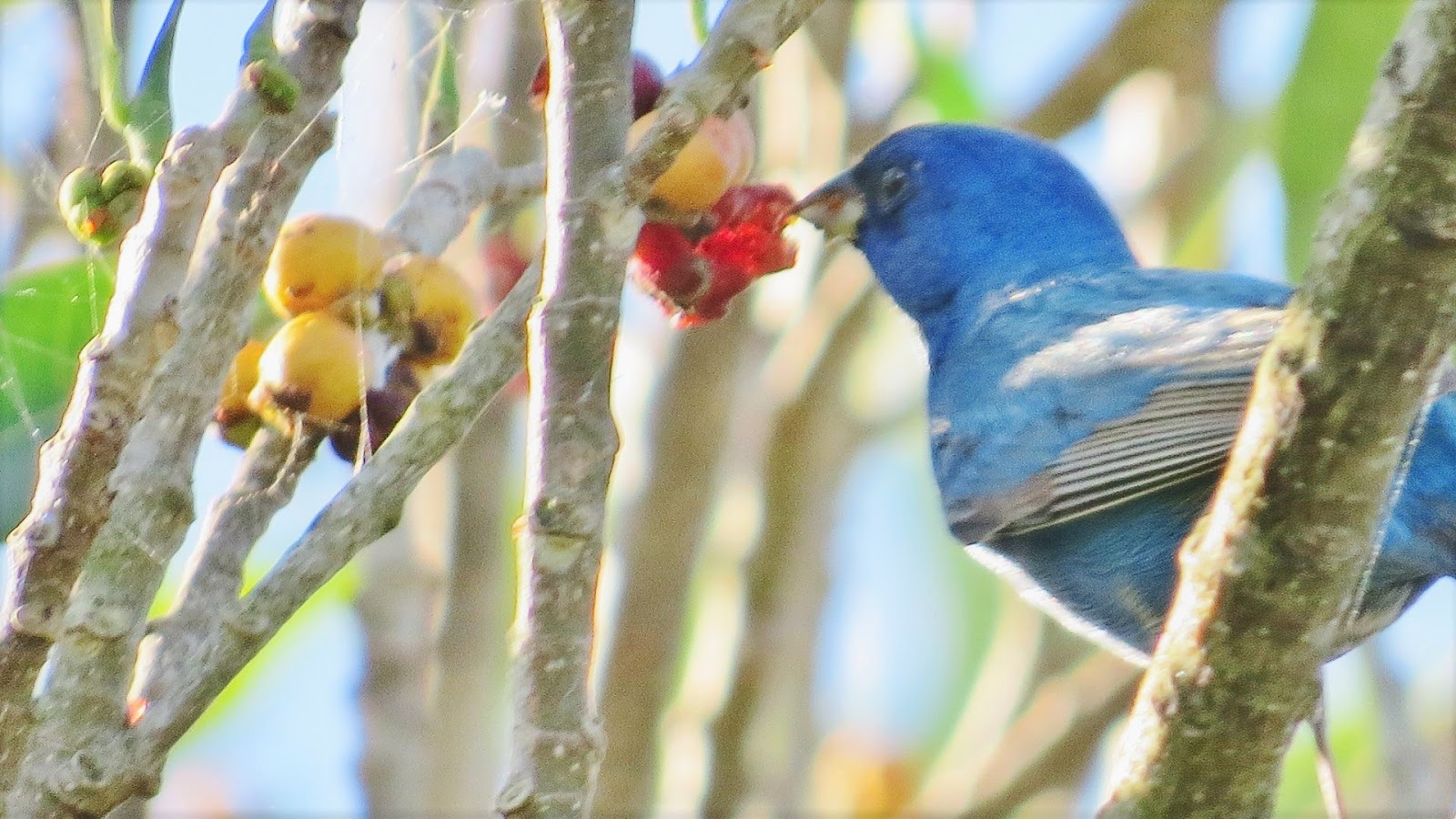
Indigo Buntings are recharging on figs


Monday, April 24, 2017

The Keys

Monday April 24th

Today's weather is warmer and dryer and the traffic on U.S. 1, heading toward Key West was very light. Started on Key Largo with stops at Crayfords Circle and Key Largo Hammock State Park. were very light on birds.  Mostly White-eyed Vireos, Palm Warblers and Cardinals. But did get ticks on two target birds - Black-whiskered Vireo and White-crowned Pigeon.

Gray Kingbirds were everywhere


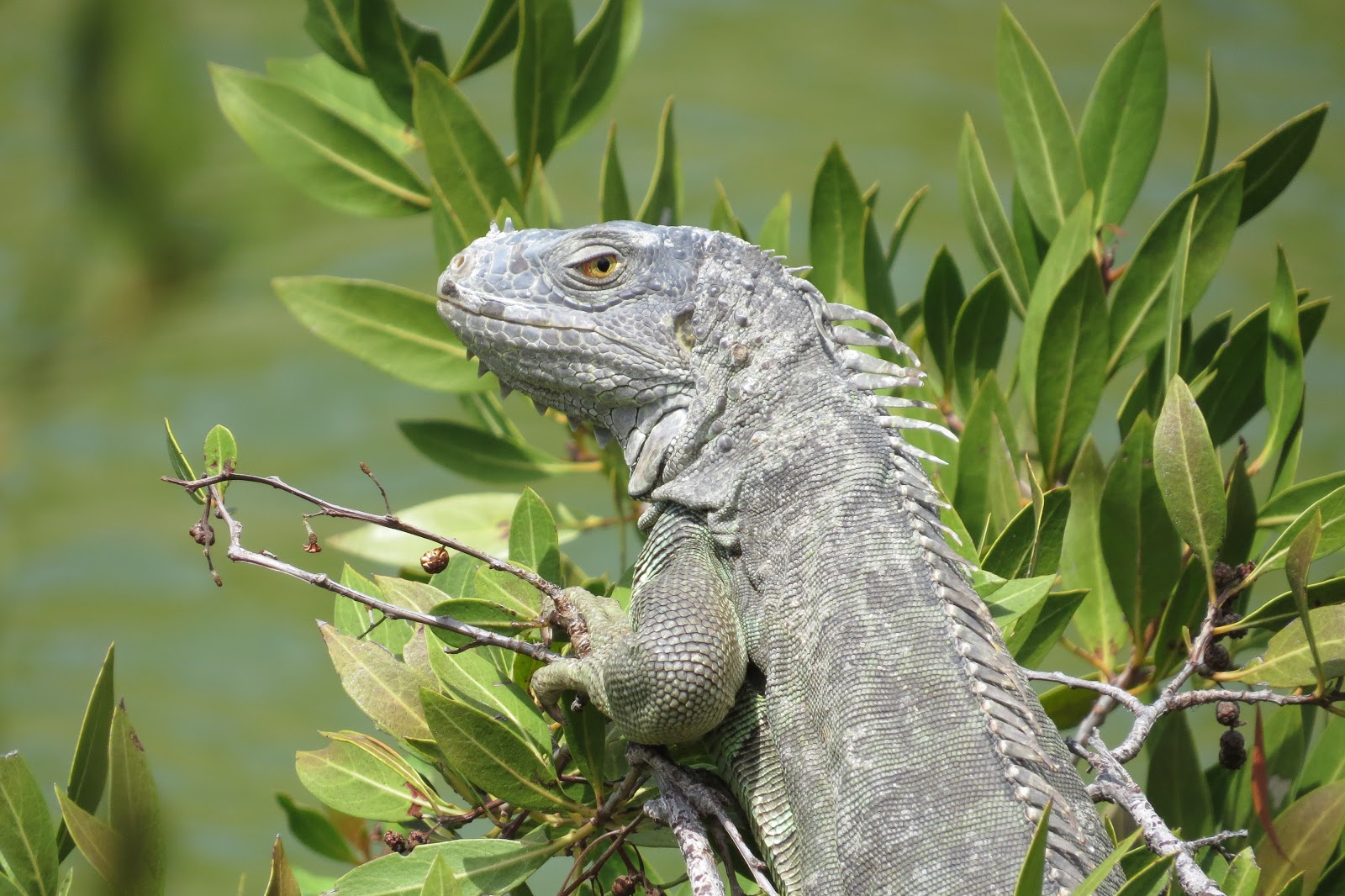
Green Iguana

Next target were the sightings of a Bahama Mockingbird and a Western Spindalis feeding in a particular ficus tree in the parking lot of Windley Key Fossil Reef State Park. Arriving at about 9:30 am, noticed that a crowd of birders were stacking out the site. Seems they were a no show today.
So its time to move on.
Yellow-billed Cuckoo

 Next stop was Long Key State Park, were a recent sighting of a LaSarga Flycatcher, a vagrant from the Caribbean, was reported.  Not much was on hand here though, but had an interesting sighting of a lizard called a Six lined Racerunner.


Finally arrived at Fort Zachary Taylor in Key West about 2 pm where a nice variety of migrants were on hand including Yellow-billed Cuckoo, a Dickcissel, Black-throated Blue Warblers, Cape May Warblers, Red-eyed Vireo, Ovenbird, Cape May Warbler, American Redstart, Blackpoll Warbler, Prairie Warbler, Northern Parula, Least Terns, Magnificent Frigatebirds, Indigo Bunting and Gray Kingbird. Green Iguanas were also common.

Indigo Bunting
From Key West I headed back toward Marathon, in the Middle Keys, because Roseate Terns are just now arriving here for nesting.  This is a pelagic species that basically are arriving from the Caribbean and few pairs will be nesting on the roof of the Marathon Government Buildings.  This afternoon, none were seen. Maybe too early.

The other reason to visit Marathon is to locate another off-shore species, the Antillean Nighthawk which can be seen at the Marathon Airport in the spring and early summer. Stacked out a spot near the northern end of the airport to wait on sundown for the nighthawk to become active. Around 8 pm its distinctive call could be heard, but this bird did not take flight over this end of the airport property.


This young bird maybe a Black-whiskered Vireo