Showing posts with label Yellow-Billed Cuckoo. Show all posts

Wednesday, October 7, 2020

Fall Migration

 Wednesday October 7th

Sighted this Whimbrel at Siesta Key 

Great Crested Flycatcher

So far Fall Migration, as we in beautiful SW Florida are experiencing it, has been a bit so.  No great fall outs, but there recently has been some fun birding at Rotary Park in Cape Coral.


Swainsons Thrush

Veery

Palm Warblers
are just now showing up with American Redstarts being the most commonly encountered migrating warbler.  Ovenbirds, Yellow-throated Warblers, Black-and-White Warbles, Summer Tanagers and Swainsons Thrushes have been reliable. For me personally, I can add Scarlet Tanagers, Red-eyed and Yellow-throated Vireos, Baltimore Orioles, Blackburnian, Black-throated Blue, Northern Waterthrush & Chestnut-sided Warblers, Eastern Wood-Pewees and Yellow-billed Cuckoo.

Eastern Wood-Pewee

Yellow-billed Cuckoo

Baltimore Oriole


Oh, and the Gray Catbirds have shown up.

Sunday, October 20, 2019

Migration has Picked Up

Sunday October 20th

Yellow-billed Cuckoo
We're finally having some fun 

as the birding activity in Southwest Florida has finally picked up. even as Fall Migration period is reaching its waning days

Till now our birding experience has been very weak and disappointing.  A question shared by many was 'Where are the birds?'


Red-eyed Vireo


Merlin
Rotary Park in Cape Coral has had a nice variety lately. The Blue-winged Teal have arrived. Other recent sightings at Rotary Park have included Acadian Flycatchers, Swainsons Thrush, Rose-breasted Grosbeak, Yellow-billed Cuckoo, Red-eyed Vireos, white-eyed Vireo, Yellow-throated Vireo, Gray Catbirds, Mangrove Cuckoo, plus Chestnut-sided, Black-throated Blue, American Redstarts, Black-and-white, Bay-breasted, Blackburnian, Cape May, Northern Parula, Yellow-throated,  Prairie, Ovenbirds, Tennessee & Common Yellowthroat Warblers. Also Scarlet Tanagers,  Indigo Buntings, House Wrens, Peregrine Falcons, Merlin and Belted Kingfishers. Even a Nashville warbler was seen a couple of days ago

Acadian Flycatcher
The past couple of  days I haven't needed to leave my yard as the huge ficus in the front yard is very birdy.  Baltimore  Orioles,  Bay-breasted,  Magnolias, Tennessee, Pine, Black-throated Blue, American Redstarts, Black-and-white Warblers, a Swanson's Thrush and White-winged Doves.

Plus Grackles, Crows ,Mockingbirds and Starlings are loading up on the fruit and bugs


A female Black-throated Blue Warbler

A White-eyed Vireo
A Scarlet Tanager munching on a berry
European Starlings are feasting on the fruit on the ficus tre

Monday, April 24, 2017

The Keys

Monday April 24th

Today's weather is warmer and dryer and the traffic on U.S. 1, heading toward Key West was very light. Started on Key Largo with stops at Crayfords Circle and Key Largo Hammock State Park. were very light on birds.  Mostly White-eyed Vireos, Palm Warblers and Cardinals. But did get ticks on two target birds - Black-whiskered Vireo and White-crowned Pigeon.

Gray Kingbirds were everywhere


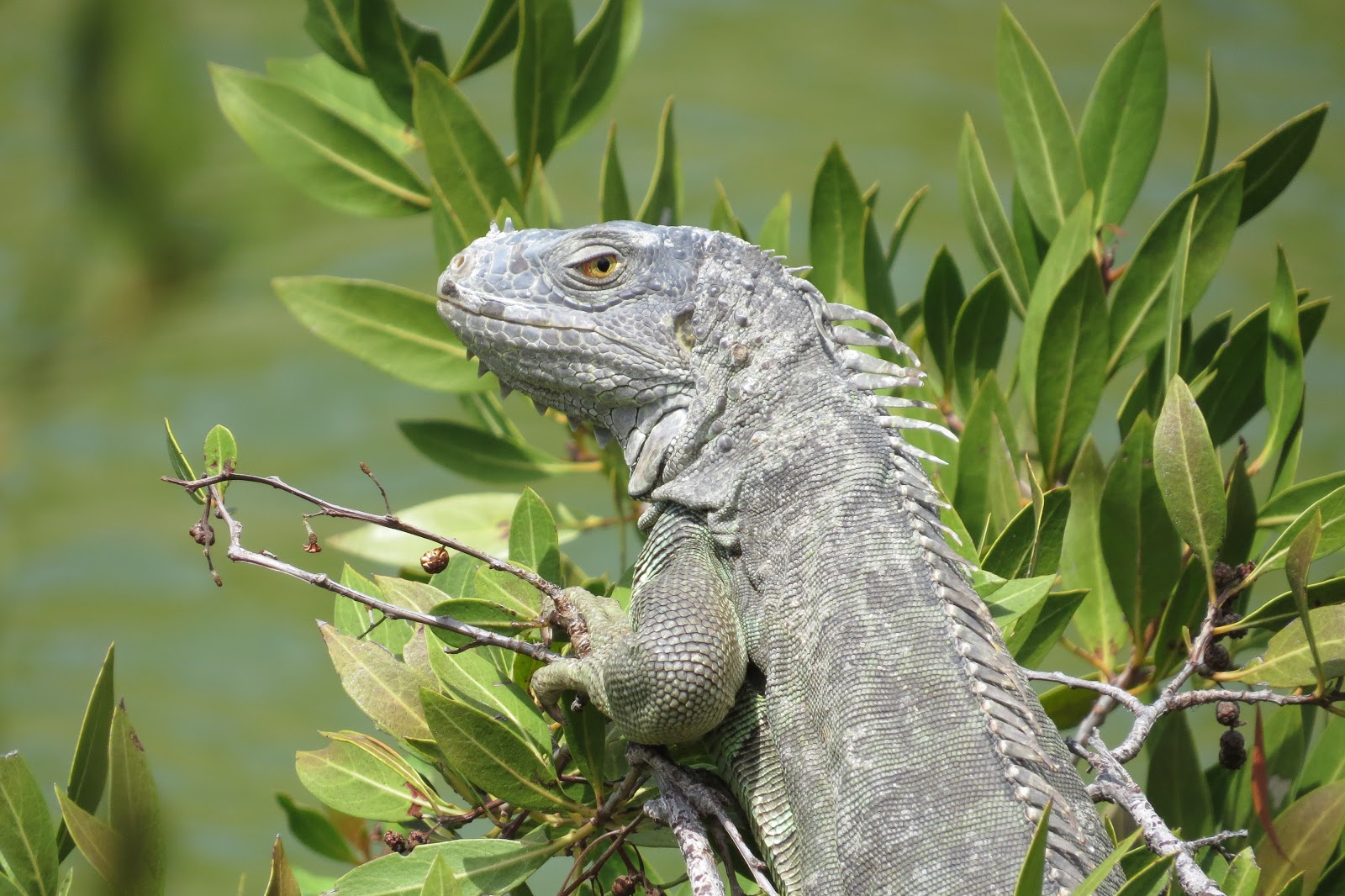
Green Iguana

Next target were the sightings of a Bahama Mockingbird and a Western Spindalis feeding in a particular ficus tree in the parking lot of Windley Key Fossil Reef State Park. Arriving at about 9:30 am, noticed that a crowd of birders were stacking out the site. Seems they were a no show today.
So its time to move on.
Yellow-billed Cuckoo

 Next stop was Long Key State Park, were a recent sighting of a LaSarga Flycatcher, a vagrant from the Caribbean, was reported.  Not much was on hand here though, but had an interesting sighting of a lizard called a Six lined Racerunner.


Finally arrived at Fort Zachary Taylor in Key West about 2 pm where a nice variety of migrants were on hand including Yellow-billed Cuckoo, a Dickcissel, Black-throated Blue Warblers, Cape May Warblers, Red-eyed Vireo, Ovenbird, Cape May Warbler, American Redstart, Blackpoll Warbler, Prairie Warbler, Northern Parula, Least Terns, Magnificent Frigatebirds, Indigo Bunting and Gray Kingbird. Green Iguanas were also common.

Indigo Bunting
From Key West I headed back toward Marathon, in the Middle Keys, because Roseate Terns are just now arriving here for nesting.  This is a pelagic species that basically are arriving from the Caribbean and few pairs will be nesting on the roof of the Marathon Government Buildings.  This afternoon, none were seen. Maybe too early.

The other reason to visit Marathon is to locate another off-shore species, the Antillean Nighthawk which can be seen at the Marathon Airport in the spring and early summer. Stacked out a spot near the northern end of the airport to wait on sundown for the nighthawk to become active. Around 8 pm its distinctive call could be heard, but this bird did not take flight over this end of the airport property.


This young bird maybe a Black-whiskered Vireo


Tuesday, August 30, 2016

Six Mile Cypress Slough Preserve Migration


Tuesday August 30th

Red-shouldered Hawk on the hunt


Yellow-billed Cuckoo

The past couple of days the migrant activity at Six-mile has really cooled off. For most of the past month the birding has been pretty good. Prothonotary were probably among the most commonly seen warblers along with Northern Parulas, Prairie Warblers, Yellow Warblers, Yellow-throated Warblers, American Redstarts, Black-and-White Warblers, Louisiana Waterthrushes, Ovenbirds, hooded Warblers and a few Common Yellowthroats. Yellow-billed Cuckoos have been seen daily as are Great Crested Flycatchers. A few Eastern Wood-pewees have around and an Acadian Flycatcher was present for a couple of days too. White-eyed Vireos are heard in the parking lot in the early mornings.  Red-eyed Vireos have been common, as have been Yellow-throated Vireos. Just yesterday at Black-whiskered Vireo was photographed here.

This Brown Cuban Anole is not bothered by the
 Prothonotary Warbler gleaning its cypress tree
The expected resident birds also continue to entertain including the Blue-gray Gnatcatchers, Tufted Titmice, Carolina Wrens, Red-tailed Hawks and Red-shouldered Hawks.


Prothonotary Warbler


Black-and White Warbler

White-eyed Vireo
Red-bellied Woodpecker sporting a bright red breeding plumage

Downy Woodpeckers are year-round residents to the slough


Eastern Swallowtail are commonly seen butterflies
 in the slough this time of year

As are Eastern Black Swallowtails

and Viceroy

Tuesday, June 9, 2015

A Visit to the Conch Republic and Vicinities - Part 3

Sunday May 24th
Ft Jefferson at Dry Tortugas National Park

Now Sunday was the cornerstone for this trip the sailing aboard the Yankee Freedom from Key West out to the Dry Tortugas National Park for a four hour visit.
Magnificent Frigatebird

As Bob Pelkey drove us southward through the Keys in the pre-dawn darkness back toward Key West, several Antillean Nighthawks could be heard. And as day broke, Gray Kingbirds, Eurasian Collard Doves, White-crowned Pigeons  and feral keys chickens were also greeting the day.

Arrived at the Key West terminal just as the crew were preparing to board today's passengers. The ride was a bit choppy and the sky was clear.  The Captain gave us a close pass by Hospital Key, were more than sixty Masked Boobies had a breeding colony.

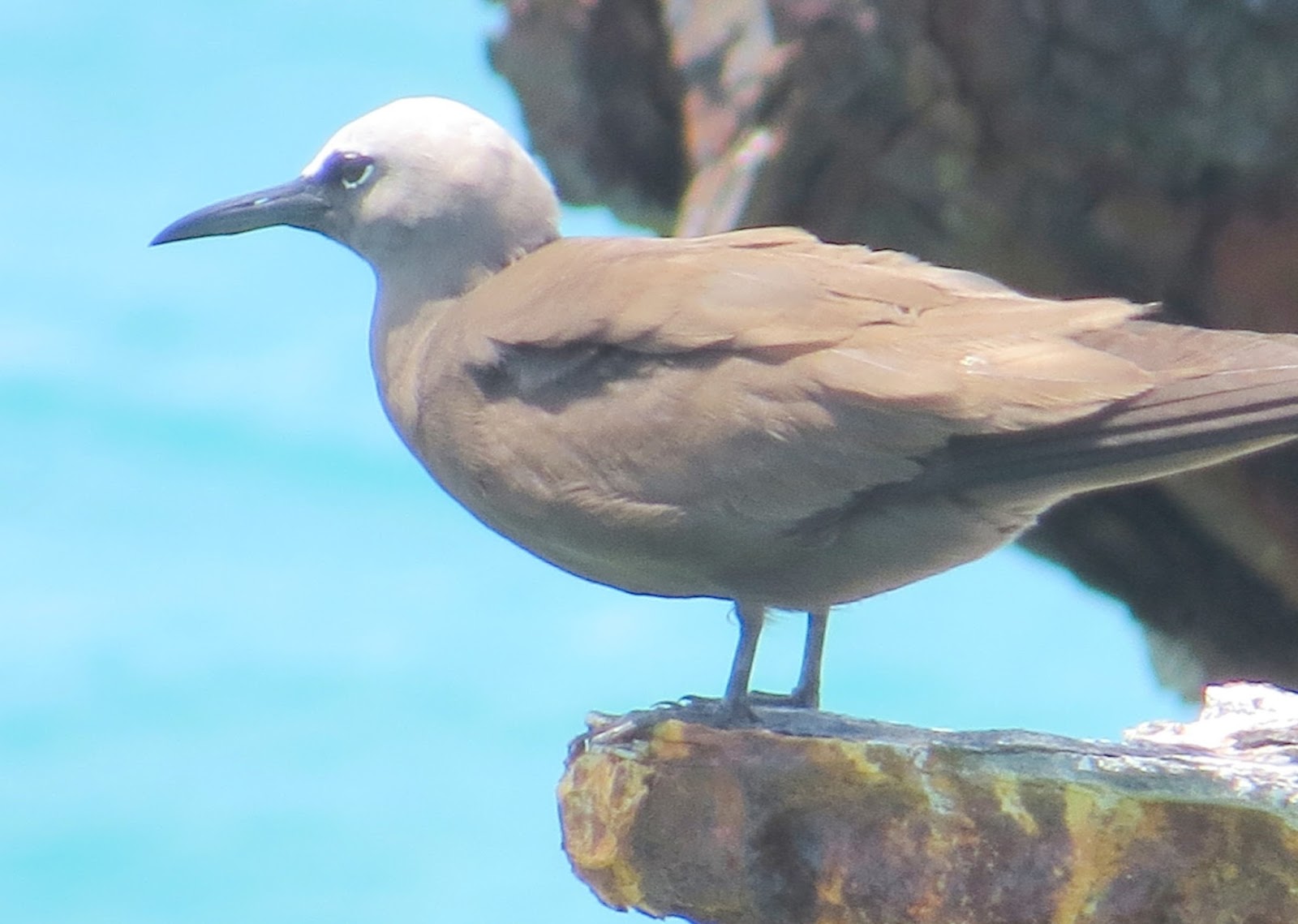
A few minutes later we landed at Bush Key and historic Ft Jefferson. A flotilla of Magnificent Frigatebird sat hovering in the wind above the fort.  They, along with many hundreds of Brown Noddies and Sooty Terns nest on adjoining Garden Key. The Noddies, Terns and any (very late) spring migrants were the reason we traveled here.

There a few migrants to be seen. A lone Cliff Swallow and a lone Bank Swallow were hawking outside the fort.  While a lone Yellow-billed Cuckoo, several American Redstarts, a lone Common Yellowthroat and Bob had a female Blackpoll.
Interior of the Fort


The vast majority of the passengers took advantage of the wonderful snorkeling in the waters around the fort. Understood the one couple had a close encounter with an American Crocodile.  One of the mates on the boat confirmed that a crocodile named Cletus has been calling the Tortugas home for a for some time now.  He's seen it before himself.  A video found on youtube
Brown Noddy

Sooty Tern

Yellow-billed Cuckoo
Back at Key West at bit after 5 PM, with that long drive to Florida City. But first we make a couple of stops. First were to find the accommodating and diminutive Keys Deer at the Florida Key Deer NWR on Big Pine Key.
This an endangered sub-species of White-tailed Deer seen only in the Keys.
A young American Redstart


Secondly was a stop at the Marathon Airport set before sundown to look for Antillean Nighthawks. We were joined by a couple of birders from Nashville, Tennessee. They had a lifer when the nighthawk made its appearance and shared with us a sighting of a Bobolink a couple a hundred yards down the airport fence line.  A nice ending for the day's birding.

Sunday's Bird List -- 
Bobolink at Marathon Airport
Magnificent Frigatebird
Masked Booby
Brown Booby
Double-crested Cormorant
Brown Pelican
Cattle Egret
Laughing Gull
Brown Noddy
Sooty Tern
Royal Tern
Eurasian Collared-Dove
Mourning Dove
Yellow-billed Cuckoo
Antillean Nighthawk
Red-bellied Woodpecker
Gray Kingbird
Bank Swallow
Cliff Swallow
Northern Mockingbird
Common Yellowthroat
American Redstart
Bobolink


Key Deer buck in velvet

Bob concentrating on a great shot of the Key Deer. Note the small size of the deer to Bob's right

Thursday, April 26, 2012

A Search for A Black-Billed Cuckoo

Thursday April 26th
Birding at Sanibel Lighthouse

Yellow-billed Cuckoo at Sanibel Lighthouse
The spring migration fall-out we are experiencing along Florida's Gulf Coast has benefited us for several days know. Today is day four of the many good sightings continuing at Lee County's Sanibel Lighthouse.

The birds are thinning out and will be probably be gone in a day or so with more favorable winds and full bellies.

 I returned both Wednesday and Thursday to the search for a rarely seen in southwest Florida  Black-billed Cuckoo. Well I dipped on the bird, but was able to tally some good migrants. I was able to add Yellow-billed Cuckoos, Blue and Rose-breasted Grosbeaks, Summer and Scarlet Tanagers, Baltimore and Orchard Orioles, Lincoln Sparrows, Indigo Buntings, Eastern Wood-Pewees, Verry, Swansen's Thrush, Magnolia warbler, Black-and White Warbler, Blackpoll Warbler, Yellow Warbler, Palm Warblers, Ovenbird, Common Yellowthroat, American Redstart, Hooded Warbler, Prairie Warbler, Red-eyed Vireo and Eastern Screech Owl.

Other additional sightings around the state include bay-breasted warblers, kentucky warblers, cerulean warblers, blackburian warblers and warbling vireos at Ft Desoto park in Tampa Bay and a varied thrush down in Naples in Collier County.

Toward sundown I caught-up with Bob Pelkey at the drying-up pond at Metro Parkway and Six-mile Cypress Parkway were we found several Black-necked Stilts, a Solitary Sandpiper, a few Semipalmated Sandpipers, a couple of dozen Least Sandpipers and at least one Western Sandpiper.  Other birds included Mottled Ducks, Blue-winged Teal, a Swallow-tailed Kite, Wood Storks and the usual waders. Its been a good week. 

There is also some anticipation that a repeat blow could happen this weekend and bring-in a fresh wave of migrants.  I will also be checking Harn's Marsh next week for any bobolinks as I had found them there in the first week of May these past two years.

Friday, November 12, 2010

Ghost Orchid - a Visit to Corkscrew Swamp Sanctuary

Thursday, November 11th

Corkscrew Swamp Sanctuary is a jewel, owned and operated by the Audubon Society in eastern Collier County. The lands were acquired at the time to save the last stand of ancient bald cypress as well as preserve an important nesting rookery for the endangered wood stork.
Currently the storks are away, but nesting should began, as long as conditions are favorable, around January. But another treasure is to be found here in one of the rarest orchids to be found in Florida.  The Ghost Orchid.
On my visit the orchid was in bloom. A single blossom. When the plant was first discovered, here at Corkscrew a few years ago, people were coming here from all over the US and abroad to see this rare plant. This rare species was also the subject of a non-fiction book called 'The Orchid Thief' by Susan Orlean.  The book was later is adopted in Meryl Streep's film Adaptation (2002).
Yellow-billed Cuckoo
 My visit was not to see the orchid but to see what birds could be found.  Warblers, vireos and buntings were my targets on the day. Also Yellow-billed Cuckoos were being reported.  The water level was to high for there to be a lot of wading birds.  But I was more interesed in the little birds.
Red-Shouldered Hawks are common here
 Started out about 8:30 in the morning and spent some time waiting on any hummingbirds at the gardens at the front of Blair House. But none appeared as I watched.  So onto the boardwalk. First checked the feeders at the back porch for painted buntings. No buntings at this time. Then checking for brown-headed nuthatches in the pines at the start of the boardwalk.  But not on this day. Did find several Blue-Gray Gnatcatchers though.  The days most common bird. Several Gray Catbirds were also heard.  The first of several Red-Shouldered Hawks was seen.
The beginning of the walk was frustrating as so many birds could be heard, but not seen. Especially Common Yellowthroats. But at about half way things improved when Yellow-billed Cuckoo flew into a small tree within a few feet of the boardwalk. Following this, were a couple of mixed feeding flocks featuring more gnatcatchers and Tufted Titmice.  A pair of Great Crested Flycatchers were active and was able to add five more warblers imcluding Palm, Prairie, Black-and-White, Northern Parula and Pine Warblers. Also found White-Eyed and Blue-Headed Vireos.
A huge Alligator basking in the morning sun
At the Lettuce Lakes was found a pair of Anhingas resting in the trees, plus a sleeping Black-Crowned Nightheron. Also here was a huge alligator basking in the sun on a island on the lake. It was disappointing to miss the buntings and hummingbirds, but the cuckoo made up for it.  A family of three Sandhill Cranes was also seen along Immokolee Road just prior to the turn onto to Sanctuary Road on the way into Corkscrew Swamp.
My List - (28)
Anhinga, Great Blue Heron, Little Blue Heron, Black-crowned Night-Heron, Turkey Vulture, Red-shouldered Hawk, Sandhill Crane, Yellow-billed Cuckoo, Belted Kingfisher, Red-bellied Woodpecker, Pileated Woodpecker, Eastern Phoebe, Great Crested Flycatcher, White-eyed Vireo, Blue-headed Vireo, Tree Swallow, Tufted Titmouse, Carolina Wren, Blue-gray Gnatcatcher, Gray Catbird, Northern Parula, Pine Warbler, Prairie Warbler, Palm Warbler, Black-and-white Warbler, Common Yellowthroat, Northern Cardinal, Boat-tailed Grackle