Showing posts with label Sanibel Lighthouse. Show all posts

Wednesday, October 14, 2015

Some Birding on Sanibel

Sunday, October 11th

Peregrine Falcon
The Audubon Society of Southwest Florida hosts an annual Hawk Watch at the Sanibel Lighthouse each October, which is always lead by master birder Vince McGrath. Lately the event has featured few raptures. 

This year was no exception. The only raptor to make an appearance, aside from the local Osprey was a Peregrine Falcon that greeted all of as we approached the parking lot. The early sighting of the falcon was considered a good omen for the day, but apparently the winds would be against us. Other birds seen today included lots of migrating Palm Warbler, several Northern Rough-winged Swallows, a Scarlet Tanager and the usual waders and shore birds.
Snowy Egret near the fishing pier

In 2008 we had a very good day. The American Kestrel count exceeded 100,  plus several Merlins, Peregrines, Osprey and Sharp-shinned Hawks. 

The next year, 2009, we had sixteen American Kestrels, a dozen Sharp-shinned Hawks a pair of Broad-winged hawks, six Merlins and a few Osprey.

White Ibis near the fishing pier

The next good event was in 2011 with a pair of American Kestrels, three Merlins, a pair of Sharp-shinned Hawks, a Red-tailed Hawk, a pair of Northern Harriers, a Broad-winged Hawk some Osprey, plus a Scissor-tailed Flycatcher, a Pin-tailed Whydah, an Audubon Warbler and Baltimore Oriole. 

Eastern Phoebe seen at the Bailey Tract

Bob Pelkey elected to visit the Ding Darling NWR Bailey Tract. Here we added a Blue-winged Teal, more Palm Warblers, a FOS Eastern Phoebe and a Red-shouldered Hawk. Maybe next year would be better.

Marsh Rabbit seen at the Bailey Tract

Sunday, May 3, 2015

Migration Continues to be Slow

Monday May 4th

Our little corner of Florida continues to be quite slow for local birders as the migrants take advantage of favorable winds and fly past us. Even the migrant hot spot at Ft DeSoto Park in Tampa Bay has been very slow. Its good for the birds and not so much for us.


Rose-breasted seen at Sanibel Lighthouse


But a recent bout of weather has contributed a few interesting spring migrants. In the past few days I was able to add samplings of neotropicals to include Yellow-billed Cuckoo, Rose-breasted Grosbeak, Scarlet Tanager, Blackpoll Warbler, Cape May Warbler,  Magnolia Warbler, Red-eyed Vireo, Eastern Kingbird, Northern Waterthrush, American Redstart and Orchard Oriole.

Other folks have found Blue-winged Warblers, Yellow-throated Vireo, Summer Tanagers, Bobolinks, Wilson's Phalarope, and White-rumped Sandpiper.

Black-and-White Warbler at Six-Mile Cypress Slough Preserve
Other species are arriving in the area to take up summer residence, such as the much appreciated and popular Swallow-tailed Kites. They arrive just as February gives way to March and will be gone about the end of July. The Common Nighthawks are just arriving now and will be around till about the end of August. Purple Martins are already fledgling there broods and will soon be free-ranging. A few Chimney Swifts have pasted through and some will spend the summer with us. Gray Kingbirds have also arrived and the Least Terns that nest on our beaches should be increasing their local population soon.  A good place to see many of these species during the summer is down at the River District in Ft Myers.
Orchard Oriole at Sanibel Lighthouse

Cape May Warbler at Ding Darling NWR

Wednesday, April 8, 2015

Spring Migration

Wednesday April 8th
Hooded Warbler at Sanibel Lighthouse,
 Photo courtesy of Tammy McQuade

Spring migration has arrived here in Southwest Florida. The waterfowl, sparrows, harriers and yellow-rumped warblers have departed. The dunlins, dowitchers and piping plovers will be gone soon.  And the neo-tropics are now passing through.

Weather conditions dictate what, if any, migrants passing through will stop here for a rest. A week ago we had a very nice land-fall of warblers and swallows. The lighthouse on Sanibel Island is the spring hot spot for birding these resting birds. I visited there this morning and most of our earlier visitors had already moved on. Was able to see my FOS sightings of Magnificent Frigatebird and Barn Swallows, plus a Worm-eating Warbler, a single Palm Warblers and a gorgeous Prairie Warbler.
But that earlier land-fall was very rewarding.  I couldn't participate till the third day when I was able to see a Swainson's Warbler, several Hooded Warblers, a Worm-eating Warbler, many White-eyed, Blue-headed and Red-eyed Vireos. Also saw Prothonotary, Northern Parulas, Black-and-White, Prairie and Palm Warblers. A beautiful Swallow-tailed Kite was hunting the tree tops as well. Dipped on the Kentucky Warbler and Oven Bird observed by others.
A rare to our area cave Swallow at Sanibel Lighthouse.
Photo courtesy of Tammy McQuade
On the first couple of days of this land-fall exhausted Barn, Tree, Cliff and even a rare to our area Cave Swallow were observed. All of the previously mentioned warblers and vireos were reported. Gray and Eastern Kingbirds, Indigo Buntings and a suspected Lazuli Bunted have also been reported. I had a suspected first season female cerulean warbler at Six-mile Cypress Preserve.
Swainson's Warbler at sanibel Lighthouse,
 Photo courtesy of Tammy McQuade

Hopefully we'll be treated to more colorful migrants passing through. Another interesting spring migrant are a hand full of Greater Flamingos that have been returning to an isolated and off-limits sight in western Palm Beach county. Seem that varying numbers of these birds have been visiting in the spring for the last several years. The word got last year about this population and the Miami Herald posted an article about a count of 143 at that time.  So far this year only eight have been reported.  Limited access has been made available by reservation, but quickly filled up. My friends Dr Jose Padilla and Dave and Tammy McQuade managed to participate in the first tour of the sight and were successful.
Greater Flamingos seen at STA 2 in  Palm Beach County
 Photo Courtesy of David McQuade

So many visitors to Florida think that they have seen a flamingo, by misidentified the much more common Rosette Spoonbill. But they can be seen, rarely,  even on occasion in our area.
 The best bet is a winter visit to Snake Bight. This is a shallow section of Florida Bay abutting Everglades National Park. Access here is either walking the Snake Bight Trail to its terminus or kayaking to the location from the marina at Flamingo.

Saturday, May 4, 2013

Spring Migration - II

So far, weather conditions in Southwest Florida have been very favorable for migrants passing over Florida on their way north. Few had cause to visit our locale as the winds pushed them along. Last Spring we experienced some great birding as a weather front held the migrants here for several days. We have seen some migrants who stopped by, but their numbers were very thin.
Screech Owl nesting at Sanibel Lighthouse

Gopher Tortoise seen along the trail at
Caloosahatchee Regional Park near Alva
Sanibel Lighthouse has been a popular migrant trap and I did visit a couple of times, but I almost daily visited Six-mile Cypress Slough Preserve. Had no grosbeaks, orioles or tanagers. Did have one Worm-eating Warbler, several Black-and white Warblers, several American Redstarts, a few Black-throated Blue Warblers, a few Cape May Warblers, a single Tennessee Warblers, one Magnolia Warbler, a few Blackpoll Warblers, an Ovenbird, a Prothonotary Warbler and a Yellow-billed Cuckoo. But we do have tons of Bobolinks passing through right now. So did have a nice variety but it took a lot of work
Some migrants seen by others included Blue Grosbeak, Cliff Swallow, Blue-winged Warbler, Hooded Warbler, Orchard Oriole, Scarlet Tanager, Summer Tanager, Eastern Kingbirds and a Gray-cheeked Thrush.

Friday, January 25, 2013

Razorbills Snowbirding in Florida

Thursday January 24th

Photo by Bob Pelkey - Razorbill seen at Captiva Island, Lee County, Florida

Sometime around December 10th, Florida birders started reporting an irruption of Razorbills in both the Atlanta coast and into the Gulf shore regions of the state. The influx of the species is unprecedented and has been quite astir. This cold water species has only had a hand-full of reports into Florida waters. But this year large flocks were reported off shore and a number were being seen around fishing piers and beaches. 

E-bird Razorbill Report - Provides an excellent description on what has been happening here.

Sadly the long trip to these waters sapped the strength of many of the birds, with several dozen ending up in seabird rehab facilities.  Most were too far gone to survive, but a few managed to hang on.  According to the papers the survivors can not be returned to the wild because of concern by wildlife management officials that there is potential of introducing illnesses or parasites to the healthy populations. Technically they would have to be destroyed if they can not be released. But I sure that some institution would love to have them.

My first attempt to spot one locally involve a two mile chase traveling north along the beach at Captiva Island starting from Blind Pass. Bob Pelkey already had spotted and was photographing the bird through the race.  But I  had arrived about twenty minutes late and never could catch-up. The photo of the razorbill was taken by Bob on this trek. I struck-out as the bird was lost but was able to add a juvenile Northern Gannet, a Common Loon, several Red-breasted Mergansers, plus all the expected shore birds, gulls and terns.  One interesting experience was watching a Peregrine Falcon attempt to catch a Royal Tern.  It would approached a bird from above and try to drive it into the water. As we watched, the terns would manage to escape.

I did succeed shortly before the New Year with great views at the Sanibel Lighthouse fishing pier. Also was able to add Bonaparte's Gull and a Great Black-backed Gull. On my way home was able spot a second razorbill hunting along the Sanibel Causeway. But now, in 2013, they are thinning out and becoming more difficult to find. I did manage to see on in flight a week ago at Bunche Beach. You never know what you'll encounter. 

Thursday, April 26, 2012

A Search for A Black-Billed Cuckoo

Thursday April 26th
Birding at Sanibel Lighthouse

Yellow-billed Cuckoo at Sanibel Lighthouse
The spring migration fall-out we are experiencing along Florida's Gulf Coast has benefited us for several days know. Today is day four of the many good sightings continuing at Lee County's Sanibel Lighthouse.

The birds are thinning out and will be probably be gone in a day or so with more favorable winds and full bellies.

 I returned both Wednesday and Thursday to the search for a rarely seen in southwest Florida  Black-billed Cuckoo. Well I dipped on the bird, but was able to tally some good migrants. I was able to add Yellow-billed Cuckoos, Blue and Rose-breasted Grosbeaks, Summer and Scarlet Tanagers, Baltimore and Orchard Orioles, Lincoln Sparrows, Indigo Buntings, Eastern Wood-Pewees, Verry, Swansen's Thrush, Magnolia warbler, Black-and White Warbler, Blackpoll Warbler, Yellow Warbler, Palm Warblers, Ovenbird, Common Yellowthroat, American Redstart, Hooded Warbler, Prairie Warbler, Red-eyed Vireo and Eastern Screech Owl.

Other additional sightings around the state include bay-breasted warblers, kentucky warblers, cerulean warblers, blackburian warblers and warbling vireos at Ft Desoto park in Tampa Bay and a varied thrush down in Naples in Collier County.

Toward sundown I caught-up with Bob Pelkey at the drying-up pond at Metro Parkway and Six-mile Cypress Parkway were we found several Black-necked Stilts, a Solitary Sandpiper, a few Semipalmated Sandpipers, a couple of dozen Least Sandpipers and at least one Western Sandpiper.  Other birds included Mottled Ducks, Blue-winged Teal, a Swallow-tailed Kite, Wood Storks and the usual waders. Its been a good week. 

There is also some anticipation that a repeat blow could happen this weekend and bring-in a fresh wave of migrants.  I will also be checking Harn's Marsh next week for any bobolinks as I had found them there in the first week of May these past two years.

Monday, April 23, 2012

Spring Migration at Sanibel Lighthouse

Monday April 23rd

The past two days the spring migration birding along the Florida Gulf Coast has been awesome. All the migrant traps along the coast have hosted many of the warblers, tanagers, orioles, grosbeaks etc. that have usually just fly past us.  But weather conditions brought them in on Saturday night and the projected winds for tomorrow should carry them away.

Sunday I had some time to bird and was not sure if we want any fall-out from the weather. I had already a had a couple of unsatisfying attempts on Sanibel Island in the past week, which can get expensive to make extensive visits, with all of the tolls and parking fees. So I first tried Bunche Beach for any interesting pelagics that may have blown in. Found a very high tide and heavy surf and few birds. My best find was an FOS Semipalmated Sandpiper and a Marbled Godwit. Next tryed Six-mile Cypress Slough Preserve which was also very quite save for a Scarlet tanager that showed up just as I was leaving.

Rose-breasted Grosbeak at Sanibel Lighthouse. Photo by Dr Jose Padilla-Lopez
Called Dr Jose to report my find, but he and about every other local birder were at the Sanibel Lighthouse and at Ding Darling Refuge. He reported an awesome assortment of birds were on-hand. I was there in about 20 minutes. To bad my camera was out-of-order as there several photo opportunities such as a male Summer Tanager posing right off the trail.  Would have been a great shot. Indigo Buntings were everywhere and lots of Rose-breasted Grosbeaks, Baltimore Orioles, Orchard Orioles, Scarlet Tanagers and FOS Eastern Kingbirds. Other sights included a Gray-cheeked Thrush, Swainsen's Thrush, Northern Waterthrushs, Black-and-White Warblers, American Redstart, a Blue Grosbeak, Tennessee Warbler, Red-eyed Vireo, Dickcissel, a Black-throated Green Warbler, a female Painted Bunting ( the males have already left), Barn Swallows and Chimney Swifts.

Additional species witnessed by other birders on Sunday and Monday included  a scissor-tailed flycatcher, verry, wood thrush, yellow-billed cuckoos, bank swallows, northern rough-winged swallows, ruby-throated hummingbirds, cedar waxwings, blue-winged warblers, ovenbird, magnolia warbler, yellow warbler, black-throated blue warbler, hooded warbler and Lincoln sparrow.

Tuesday, April 10, 2012

Spring Migration Begins - Sanibel Lighthouse

Tuesday, April 10th

Pileated Woodpeckers are nesting at the lighthouse
Spring migration has begun here in beautiful Southwest Florida. We are not located on one of the major spring migration routes through the state, but sometimes we can have a real good day.  Last spring most of the migrants had favorable winds and just shot right past us to points north. It's possible that we'll have a repeat this season, but usually our best results are at the Sanibel Lighthouse. A couple of years ago I visited  day as large numbers of birds did stop here with the telephone wires packed with exhausted Purple Martins and Barn Swallows.
Exhausted purple martins in 2010

Great Crested Flycatcher
Today I stopped by in the afternoon and found zero migrants after a two hour search. But on Easter Sunday we did have a few good hits. We had plenty of eyes as several birders were on hand including several friends like Dr Jose Padilla, Vince McGrath, Wes, Gary Lee and others like Don and Lillian Stokes. Best bird was a continuing Blue-winged Warbler first reported by the Stokes a few days ago.  We also had Black-and White Warbler, Palm Warbler, Hooded Warbler, Worm-eating Warbler, Red-eyed Vireo, White-eyed Vireo, Blue Grosbeak, Indigo Bunting, Pine Warbler, Northern Parula, Coopers Hawk, Cliff Swallow, Northern Rough-winged Swallow, Purple Martin, Barn Swallow, Fish Crow, Cedar Waxwings, Gray Catbirds and a late Common Loon.

Young gator looking for a safe place to grow up
April is also the time that the local reptile population starts becoming active as the temps rise and the wetlands dry up.  Snakes and lizards are more active, turtles are looking for nesting sites and the larger gators are forcing the smaller gators to look for new digs as the ponds shrink. Just last night I found a displaced yearling baby gator wandering the property at work.  In years past much larger  gators had managed to enter the property.  So we are bit more cautious when working about the property at night this time of year..

Thursday, December 1, 2011

Horned Grebe at Sanibel Island

Horned Grebe at Sanibel Lighthouse
December 1st

Missed out on lots of birding lately and  even,  reluctantly, had to cancel participating in the Tropical Audubon Society's Exotic Bird Tour this Saturday in Miami.  Had looked forward to this event for months. I had Bob Pelkey physiced up for it too

Yellow-crowned Nightheron
But today I managed to take some time to bird on Sanibel Island. Started at Ding Darling NWR. The tide was very low and we had a lot of wading birds on hand. Most common were White Ibis, Great Egrets, Snowy Egrets and a lot of Little Blue Herons. Counted about a dozen Roseate Spoonsbills and nine Yellow-crowned Nightherons. Had several Great Blue Herons, included a Great White Heron. Reddish and Tricolored Herons were on-hand. American White Pelicans were plentiful and several Laughing Gulls were busy harassing any wader to get it's newly caught meal. Lots of Dunlins, Short-billed Dowitchers, Willets and Sanderlings. Located three Spotted Sandpipers and only was able to identify a couple of Least Sandpipers. Double-crested Cormorants were much more numerous than Anhingas today. Ospreys were were numerous and had a Red-shouldered Hawk too. Found a couple of Blue-gray Gnatcatchers, a couple of Yellow-rumped Warblers and a Prairie Warbler too. No red-breasted mergansers had been yet here this season.


Juvenile Yellow-crowned Nightheron

Anhinga

Tri-colored Heron

Snowy Egret

Great Egrets, White Ibis, Snowy Egrets and a Little Blue Heron


Ruddy Turnstone
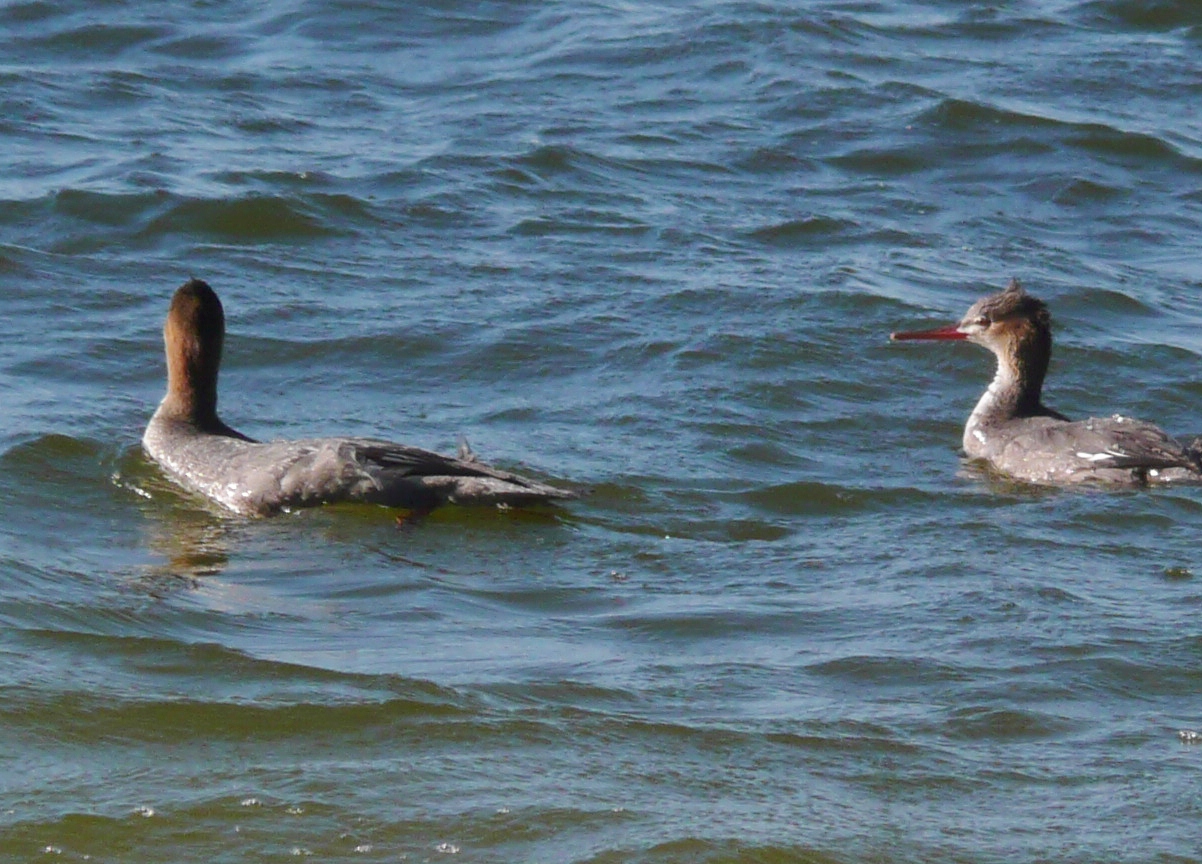
Next I stopped at the Sanibel Lighthouse with the idea of perhaps locating indigo or painted buntings. But actually there were virtually no birds around aside from the beach. But the beach was active. Brown Pelicans, Forster's and Sandwich Terns, Red-breasted Mergansers and an unexpected Horned Grebe were feeding with feet of the shore. Several Ring-billed and Herring Gulls were here too. This was only the second sighting of a horned grebe and the first for Lee County. This makes 198 birds for Lee County for the year. Just need two more.


Snowy Egret

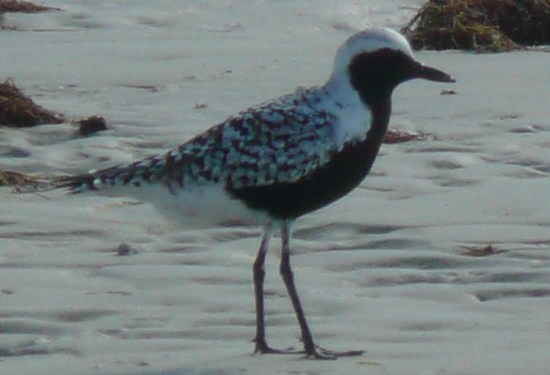
Black-bellied Plover

Red-breasted Merganser

Red-breasted Mergansers

Ring-billed Gull

Herring Gull

Sandwich Tern and Sanderling

Forster's Tern
.
Sanderling


Saturday, October 29, 2011

Hawk Watch at Sanibel Lighthouse

Sunday, October 23rd

Sanibel Lighthouse


Today we had the hawk watch at the Sanibel Lighthouse, sponsored by Audubon of SW Florida. It kicked-off at 8 am on a brisk, clear morning, with Vince McGrath as leader of our group of about fourteen birders.

Right off the bat, Gayle Schmidt reporting sighting a Scissor-tailed Flycatcher and as we moved up the path we come up with our FOS Yellow-rumped Warbler.  But it wasn't a Myrtle race, it was a rare to south Florida Audubon's Warbler. So we started out with two western birds uncommon in Lee County. Then we found the recently reported male Pin-tailed Whydah.  No doubt an escapee, but it did put on a good show.
Audubons Warbler, photo by Stan Damen
Pin-tailed Whydah

Scissor-taled Flycatcher

Over the course of four hours we did not get big numbers of hawks, but did have a good variety - a couple of Kestrels, three Merlins, a pair of Sharp-shinned Hawks, a juvenile Red-tailed Hawk, two Northern Harriers, a Broad-winged Hawk and at least three Osprey.

As for our non-raptor finds we had Baltimore Oriole, Scarlet tanager, Blue-gray Gnatcatchers, Yellow-throated Vireo, White-eyed Vireo, Tennessee Warblers, Blue-throated Blue Warbler, lots of Palm Warblers, a Prairie warbler, a late Cerulean Warbler, American Redstarts, Bay-breasted Warblers, Indigo Bunting , a female Painted Bunting, several Chimney Swifts and a sole Northern Rough-winged Swallow.

American White Pelicans at Ding Darling


Following the hawk watch, I headed over to Ding Darling National Wildlife Refuge for a quick drive trough.  Was able to see a large number of American White Pelicans, Roseate Spoonbills, Snowy Egrets, Great Egrets, Willets, Short-billed Dowitchers, Pied-billed Grebes, a hand-full of Black-bellied Plovers, Least Sandpipers and Western Sandpipers. A good day to bird on Sanibel.

Tuesday, May 17, 2011

Magnolia Warbler at Sanibel Lighthouse

Tuesday, May 17th

Small Gopher Tortoise at Sanibel Lighthouse


Vince McGrath posted on Birdbrains about finding several interesting migrants at Sanibel Lighthouse. I could not get there till the following afternoon and did not know what to expect. I was only able to locate a single warbler, a beautiful male Magnolia Warbler. He was located several times in the area of the beach parking lot near to the owl tree. Other sightings included several Red-eyed Vireos, a trio of Eastern Kingbirds, and my first sighting of year of a Yellow-billed Cuckoo. A Bank Swallow was seen as I was leaving the island. Lots of colorful butterflies and the a small gopher tortoise too.

Black-belled Plover
On the way home made a quick stop at Bunche Beach.  I had joined up with the Lee County Bird Patrol walk here last Sunday evening and had noted a big drop-off in numbers and it was the same today.  Most have left for their breeding grounds up in northern Canada and Alaska. Mostly seen were a few Black-bellied Plovers, a Wilson's Plover, several Semipalmated Plovers, a few Willets, Dunlins, Ruddy Turnstones and Semipalmated Sandpipers. Several Least Terns were seen and a lone Royal Tern, a few Laughing Gulls and Brown Pelicans.Totaly missing were short-billed dowitchers, piping plovers, american oystercatchers and marbled godwits.


Sanderling

Semipalmated Sandpiper

Ruddy Turnstone