Having failed to post anything for about the past four weeks, I thought I'd put together a summary of some of my birding activities. For example, I was fortunate to come across a resting Chuck-Will's Widow on three occasions in the same week. Before the time-change, it was still dark in the morning as I was leaving work for home, and I was lucky to discover the chuck-will's-widow resting atop a fence post. I was able to repeat our visit with the same bird on the same post a couple more times on mornings with low road traffic. No doubt it is now resting somewhere in Costa Rica or there abouts tonight. Photography

efforts only produced the red glow of its eyes. Sightings noted on October 21 and 24
My October list (160) -
Muscovy Duck
Canada Geese
Wood Duck -
Mallard
Mottled Duck
Blue-winged Teal -
Pied-billed Grebe
American White Pelican
Brown Pelican
Double-crested Cormorant
Anhinga
Magnificent Frigatebird
Great Blue Heron
Great Egret
Snowy Egret
Little Blue Heron
Tricolored Heron
Reddish Egret
Cattle Egret
Green Heron
Black-crowned Night-Heron
White Ibis
Glossy Ibis
Roseate Spoonbil
Wood Stork
Black Vulture
Turkey Vulture
Osprey
White-tailed Kite
Snail Kite
Bald Eagle
Northern Harrier
Sharp-shinned Hawk
Cooper's Hawk
Red-shouldered Hawk
Broad-winged Hawk
Short-tailed Hawk
Red-tailed Hawk
Crested Caracara
American Kestrel
Merlin
Peregrine Falcon
Clapper Rail
Common Moorhen
American Coot
Limpkin
Sandhill Crane
Black-bellied Plover
Snowy Plover
Wilson's Plover
Semipalmated Plover
Piping Plover
Killdeer
American Oystercatcher
Spotted Sandpiper
Greater Yellowlegs
Willet
Lesser Yellowlegs
Marbled Godwit
Ruddy Turnstone
Red Knot
Sanderling
Semipalmated Sandpiper
Western Sandpiper
Least Sandpiper
Pectoral Sandpiper
Dunlin
Short-billed Dowitchers
Long-billed Dowitchers
Wilson's Snipe
Laughing Gull
Ring-billed Gull
Herring Gull
Lesser Black-backed Gull
Great Black-backed Gull
Caspian Tern
Forster's Tern
Royal Tern
Sandwich Tern
Black Skimmer
Rock Pigeon
Eurasian Collared-Dove
Mourning Dove
Common Ground-Dove
Monk Parakeet
Yellow-billed Cuckoo
Burrowing Owl
Chuck-will's-widow
Chimney Swift
Ruby-throated Hummingbird
Belted Kingfisher
Red-headed Woodpecker
Red-bellied Woodpecker
Downy Woodpecker
Hairy Woodpecker
Northern Flicker
Pileated Woodpecker
Eastern Wood-Pewee
Eastern Phoebe
Great Crested Flycatcher
Western Kingbird
Gray Kingbird
Loggerhead Shrike
White-eyed Vireo
Yellow-throated Vireo
Blue-headed Vireo
Red-eyed Vireo
Blue Jay
Florida Scrub-Jay
American Crow
Fish Crow
Purple Martin
Tree Swallow
Northern Rough-winged Swallow
Cliff Swallow
Barn Swallow
Carolina Chickadee
Tufted Titmouse
Carolina Wren
House Wren
Blue-gray Gnatcatcher
Eastern Bluebird
Swainson's Thrush
Hermit Thrush
Gray Catbird
Northern Mockingbird
Brown Thrasher
Tennessee Warbler
Nashville Warbler
Northern Parula
Magnolia Warbler
Yellow-rumped Warbler
Black-throated Green Warbler
Yellow-throated Warbler
Pine Warbler
Prairie Warbler
Palm Warbler
Black-and-white Warbler
American Redstart
Ovenbird
Northern Waterthrush
Common Yellowthroat
Hooded Warbler
Summer Tanager
Scarlet Tanager
Eastern Towhee
Northern Cardinal
Rose-breasted Grosbeak
Indigo Bunting
Painted Bunting
Bobolink
Red-winged Blackbird
Eastern Meadowlark
Common Grackle
Boat-tailed Grackle
Brown-headed Cowbird
Baltimore Oriole
House Sparrow
European Starling
Common Myna
November 2nd Trip to Lake County (42) - My Nemeses Bird was the Say's Phoebe, which is a rare bird in Florida. Seems a single individual Say's Phoebe has been wintering in the same field on Ranch Road outside Astatula in lake County, a four drive from my home. Twice last winter I went up to Lake County seeking - twitching- the Say's as a life count and with making three visits to the site on each trip and struck-out. The sad thing here is that a great number of birders had basically driven up to the location and quickly sited the bird for there tick.
So My daughter Katie and I headed north, birding along the way. We started at Harns Marsh with a FOS Savannah Sparrow, Limplin and Snail Kites, - Mottled Duck, Double-crested Cormorant, Great Blue Heron, Great Egret, Snowy Egret, Little Blue Heron, Tricolored Heron, Osprey, Snail Kite, Common Moorhen, Limpkin, Palm Warbler, Savannah Sparrow, Red-winged Blackbird, Boat-tailed Grackle. Then made a stop in Alva to locate the Red-Headed Woodpeckers - Mourning Dove, Red-headed Woodpecker, Loggerhead Shrike, Blue Jay, Northern Mockingbird, Eastern Meadowlark We located a pair of Creasted Caracaras in Gladys County - Great Egret, Black-crowned Night-Heron, White Ibis, Black Vulture, Turkey Vulture, Red-shouldered Hawk, Crested Caracara, American Kestrel, Sandhill Crane, Pileated Woodpecker, Eastern Phoebe, American Crow. Arrived at Ranch Road and did have a brief, distant view of the Say's Phoebe, which was not too satisfing, but finally took care of my nemesus bird - Cattle Egret, Glossy Ibis, Bald Eagle, American Kestrel, Eastern Phoebe, Say's Phoebe, Blue-gray Gnatcatcher, Eastern Bluebird, Yellow-rumped Warbler, Pine Warbler, Palm Warbler, Eastern Meadowlark. Before heading for home we checked the nearby Lust Road, which has been a good source for locating western kingbirds, various sparrows and an ash-throated Flycatcher, which is another western bird that seems to like this area. But again, not today. Red-shouldered Hawk, Red-tailed Hawk, Sandhill Crane, Mourning Dove, Common Ground-Dove, Eastern Phoebe, Loggerhead Shrike, American Crow, Gray Catbird, Palm Warbler, Northern Cardinal, Red-winged Blackbird
November 5th Bunche Beach - A sundown visit to Bunche Beach was rewarded with a fly over of a Caspian Tern. I had gone down to the beach with the idea of perhaps locating the Caspian tern that had been reported earlier on Ft Myers Beach, as we rarely find them in our locality. My List - Brown Pelican, Double-crested Cormorant, Snowy Egret, Little Blue Heron, Reddish Egret, White Ibis, Wood Stork, Osprey, Black-bellied Plover, Wilson's Plover, Semipalmated Plover, Piping Plover, Willet, Marbled Godwit, Sanderling, Western Sandpiper, Least Sandpiper, Dunlin, Short-billed Dowitcher, Laughing Gull, Ring-billed Gull, Caspian Tern, Forster's Tern, Royal Tern, Sandwich Tern, House Wren, Gray Catbird, Northern Cardinal
November 8th Harns Marsh - Another visit to Hans Marsh in Lehigh Acres found it very busy even with the heavy winds that day. But most of the activity was not on the eastern marsh area because of the winds, rather on the other side off of the Harns Marsh Elementary School site. Found hits on Blue-Winged Teal, FOS Green0Winged Teal, Snail Kites, Limpkins, Northern Harriers and Sandhill Cranes. Lots of vultures. My List - Mottled Duck, Blue-winged Teal, Green-winged Teal, Pied-billed Grebe, Double-crested Cormorant, Anhinga, Great Blue Heron, Great Egret, Snowy Egret, Little Blue Heron, Tricolored Heron, Cattle Egret, White Ibis, Glossy Ibis, Roseate Spoonbill, Wood Stork, Black Vulture, Turkey Vulture, Osprey, Snail Kite, Northern Harrier, American Kestrel, American Coot, Limpkin, Sandhill Crane, Solitary Sandpiper, Mourning Dove, Common Ground-Dove, Belted Kingfisher, Red-bellied Woodpecker, Blue-gray Gnatcatcher, Gray Catbird, Yellow-rumped Warbler, Palm Warbler, Common Grackle, Boat-tailed Grackle
November 9th Collier County (71) - Started the day at Corkscrew Swamp Sanctuary in Collier County, then to Eagle Lakes in east Naples and back into Lee County at Bunche Beach to see if T.S. Ida was blowing in any pelagic species toward shore.
*Corkscrew Swamp offered

its usually waders and fall warblers. Did attempt to locate painted Buntings, which I apparently just missed near the Bunting House feeder. Was lucky to spot a Ruby-Throated Hummingbird at the butterfly garden by Blair House.
My list -
Anhinga, Great Egret, Little Blue Heron, Black-crowned Night-Heron, White Ibis, Wood Stork, Black Vulture, Red-shouldered Hawk, Sandhill Crane, Mourning Dove, Ruby-throated Hummingbird, Red-bellied Woodpecker, Downy Woodpecker, Great Crested Flycatcher, White-eyed Vireo, Tufted Titmouse, Carolina Wren, House Wren, Blue-gray Gnatcatcher, Gray Catbird, Yellow-rumped Warbler, Palm Warbler, Black-and-white Warbler, Common Grackle *Eagle Lakes is were I had located a pair of Wood Ducks back in July. Did not find them on this day but did find lots of American Coots, FOS pair of Ring-Necked Ducks, several Mottled ducks and few Blue-Winged Teal. My best bird was a Merlin. My list - Mottled Duck, Blue-winged Teal, Ring-necked Duck, Pied-billed Grebe, Double-crested Cormorant, Anhinga, Great Blue Heron, Great Egret, Snowy Egret, Little Blue Heron, Tricolored Heron, Cattle Egret, Green Heron, Black-crowned Night-Heron, White Ibis, Glossy Ibis, Wood Stork, Osprey, Bald Eagle, Red-shouldered Hawk, American Kestrel, Merlin, Common Moorhen, American Coot, Eastern Phoebe, Blue Jay, Fish Crow, Tree Swallow, European Starling, Palm Warbler, Red-winged Blackbird, Common Grackle, Boat-tailed Grackle
*Bunche Beach did not offer any pelagics, but did see most of the usual peeps, waders and shore birds. The most interesting sighting was a lone female Lesser Scaup sitting in the surf near shore, but was uncooperative for any closer view as it paddled out into the bay. My list - Lesser Scaup, Brown Pelican, Double-crested Cormorant, Great Egret, Snowy Egret, White Ibis, Glossy Ibis, Black-bellied Plover, Semipalmated Plover, Willet, Marbled Godwit, Sanderling, Western Sandpiper, Dunlin, Short-billed Dowitcher, Laughing Gull, Ring-billed Gull, Herring Gull, Forster's Tern, Royal Tern, Sandwich Tern, Black Skimmer
November 9th & 10th T.S. Ida - Tropical Storm Ida was churning in the Gulf of Mexico on its way to landfall in Alabama and sometimes these storms especially the hurricanes can push pelagic species toward shore. In September 2008 had some luck on Bunche Beach with three Bridled Terns. This storm, though it did create some winds, did not seem to offer up anything special at the beach. I checked Bunche Beach on the 9th and early on the 10th I was checking Little Estero Lagoon on Ft Myers Beach. Most interesting were the nine or so Magnificent Frigatebirds that were soaring above the shore and a count of 50 (counted them twice) American Oystercatchers huddling out of the winds. My list - Brown Pelican, Double-crested Cormorant, Magnificent Frigatebird, Great Egret, Snowy Egret, Osprey, Black-bellied Plover, Snowy Plover, Wilson's Plover, Semipalmated Plover, American Oystercatcher, Willet, Ruddy Turnstone, Red Knot, Sanderling, Western Sandpiper, Short-billed Dowitcher, Laughing Gull, Herring Gull, Forster's Tern, Royal Tern, Sandwich Tern, Black Skimmer
November 16 Dade County Visit (72) - Left home in San Carlos park at 3:30 am with a goal of arriving at Lucky Hammock at sun rise, the rest of the day included stops in The Everglades, Culter Wetlands and Cutler Marsh, plus any sighting in Florida City and Homestead. For me. I enjoy spotting any of Florida's established exotic species, and anytime I am in South Florida I am looking for parrots and other species. While gassing up the car for my drive home for the day I was able watch a flock of Common Mynas wire sitting and bathing in puddles along a busy intersection. earlier at another nearby

intersection I had a flock of six or seven long-tailed green
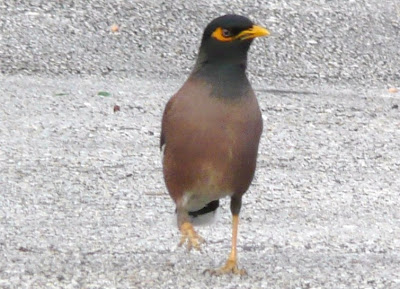
parrots fly by. Sadly I was able to get any better notes on the parrots, but I do not think that they were monk parakeets. Made a point of checking a site in Florida City that often yielded western kingbirds and scissor-tailed flycatchers last year, but were not evident on this day. Understand that they have finally moved back in December.
*Lucky Hammock & The Annex - Arrived just at sun rise and checked the road for whipper-poor-wills or any nighthawks. But it started out a bit quite. Was hoping to find western kingbirds as I had last month, plus white-tailed kites and to see if any swainsen's hawks were on hand. Well none of any of these were found today. Did find a young Peregrine Falcon resting on a low bush in the field as well as several American Kestrel and a couple of hunting Northern Harriers. Sandhill Cranes and dozens of Wood Storks flew over head. The Hammock and adjacent bushy area yielded a female Ruby-Throated Hummingbird, a Least Flycatcher, several Eastern Phoebes, a Northern Waterthrush, a solo Tree Swallow, Great Crested Flycatcher and White-eyed Vireo. The fields yielded several sparrows. I had figured that most were Song Sparrows and the rest were Savannah Sparrows. But I was put straight immediately when I had posted finding Song Sparrows on the TAS message board. As the following comment was a sent to me. "It's a common mistake anywhere in South Florida. SOSPs are exceedingly rare below Lake Okeechobee. . . ." Others also commented on the TAS site. Seems that some savannah sparrows sport similar breast markings as song sparrows. But who is to say that I had not actually located six song sparrows well south of there normal range. Misplace birds are located all of the time. But I do not have any cred with the birding world, at this point. So, without evidence may claim is rejected. My list - Double-crested Cormorant, Anhinga, Great Blue Heron, Great Egret, Cattle Egret, White Ibis, Wood Stork, Turkey Vulture, Osprey, Northern Harrier, Red-shouldered Hawk, American Kestrel, Peregrine Falcon, Sandhill Crane, Mourning Dove, Common Ground-Dove, Ruby-throated Hummingbird, Belted Kingfisher, Red-bellied Woodpecker, Least Flycatcher, Eastern Phoebe, Great Crested Flycatcher, White-eyed Vireo, Blue Jay, American Crow, Tree Swallow, Blue-gray Gnatcatcher, Gray Catbird, Northern Mockingbird, European Starling, Yellow-throated Warbler, Prairie Warbler, Palm Warbler, Northern Waterthrush, Savannah Sparrow, Eastern Meadowlark, Common Grackle, Boat-tailed Grackle
*Everglades National Park was not too special on my visit. Checked out the Anhinga Trail but it was mostly a few waders and anhingas. American Crows and Black Vultures dominate the parking lot. Hiked the Snake Bight Trail which was not too troubled with mosquitoes or birds. The best viewing was a flock of American White Pelicans flying over-head and Broad-Winged Hawk soaring above the boardwalk at the Florida Bay terminus.. At Mrazak Pond we had Blue-Wing Teal, a female Northern Shoveler, a couple of Pied-Billed Grebes, and all the waders. At Flamingo we had the usual Ospreys, Bald Eagle and a lone Red-Breasted Merganser.
My list - Blue-winged Teal, Northern Shoveler, Red-breasted Merganser, Pied-billed Grebe, American White Pelican, Brown Pelican, Double-crested Cormorant, Anhinga, Great Blue Heron, Great Egret, Snowy Egret, Tricolored Heron, Reddish Egret, Cattle Egret, Green Heron, White Ibis, Roseate Spoonbill, Wood Stork, Black Vulture, Turkey Vulture, Osprey, Bald Eagle, Red-shouldered Hawk, Broad-winged Hawk, Common Moorhen, American Coot, Willet, Laughing Gull, Mourning Dove, Common Ground-Dove, Belted Kingfisher, Eastern Phoebe, American Crow, Fish Crow, Tree Swallow, Barn Swallow, Ruby-crowned Kinglet, Blue-gray Gnatcatcher, Northern Mockingbird, Yellow-rumped Warbler, Palm Warbler, Eastern Meadowlark, Common Grackle
*Cutler Wetlands had a lot of ducks, mostly American Coots, Mottled Ducks and Blue-winged Teal. Might have ID'd more, but needed a scope. Hoping for american avocets, but settled for Long-Billed Dowitchers My list - Mottled Duck, Blue-winged Teal, Pied-billed Grebe, Great Egret, Tricolored Heron, Cattle Egret, White Ibis, Northern Harrier, Common Moorhen, American Coot, Long-billed Dowitcher, Eurasian Collared-Dove, Red-winged Blackbird, Common Grackle
Cutler Dump Marsh is a location that featured a tropical kingbird in residence last year and had read that it had returned. But not today. Best sighting was a FOS Yellow-Bellied Sapsucker.
My list - Blue-winged Teal, Lesser Scaup, Great Blue Heron, Great Egret, Little Blue Heron, Tricolored Heron, Black Vulture, Turkey Vulture, Red-shouldered Hawk, Red-tailed Hawk, American Coot, Belted Kingfisher, Yellow-bellied Sapsucker, Loggerhead Shrike, Palm Warbler


