Showing posts with label Gray-headed Swamphen. Show all posts

Thursday, June 1, 2023

Harns Marsh

Thursday, June 1st


Made my monthly
visit to Harns Marsh as a part of my Lee County Bird Patrol assignment. Even with some recent heavy rain, the water levels were still very low. The canals were almost dry. Won't be long till the rains of summer fill them up.


It was fun getting watch a trio of river otters as they were fishing for their breakfast.  

Had several Florida Sandhill Cranes including an adolescent colt. A female Snail Kite was hanging out near the start of the trail. As I was leaving researchers from the University of Florida were on hand to do a survey on the kites.

Other sightings included Little Blue Herons, Mottled Ducks, Black-crowned Night-heron, Gray-headed Swamphens, Black-bellied Whistling Ducks, Common Gallinules, Limpkins and Anhingas 


Little Blue Heron


Gray-headed Swamphen


Black-crowned Night-heron

Common Gallinule

Anhinga

Limpkin

Snail Kite

Snail Kite


Monday, January 9, 2023

Week One of the New Year

 Monday January 9th

In the first week of this new year did a little birding in Palm Beach and Dade Counties.  Checked out some of the rural areas in the Everglades Ag Area looking for Raptors and Barn Owls. Spotted dozens of American Kestrels, three White-tailed Kites, several Northern Harriers, Red-shouldered Hawk, an Eastern Red-tailed Hawks, Short-tail Hawk, Crested Caracara and a Barn Owl. 

Came across some flooded fields with Blue-winged and Green-winged Tea, Mottled Ducks, Greater and Lesser Yellowlegs, Least Sandpipers and Long-billed Dowitchers. Other sightings included Tree and Northern Rough-winged Swallows.


Chipping Sparrow
seen at Lucky Hammock - Frog Pond WMA
 

Checked out the Sem-Chi Rice Mill and was disappointed that no blackbirds or cowbirds were present and not much of interest seen at the nearby wetlands.

Glossy Ibis
seen at Wakodahatchee Wetlands at Delray Beach

Visited the Wakodahatchee Wetlands in Delray Beach were waking the boardwalk noticed that the rookeries of wading birds hadn't starting nesting yet. Lots of Wood Storks and various wading bird species were present. Had Black-belled Whistling Ducks, Gray-headed Swamphens and Green Iguanas


Palm Warbler
seen at Harns Marsh, Lehigh Acres, Florida


Gray-headed Swamphen
seen at Harns Marsh, Lehigh Acres

Tricolored Heron
seen at Wakodahatchee Wetlands at Delray Beach

Wood Stork
seen at Wakodahatchee Wetlands at Delray Beach

Cattle Egret
seen in Palm Beach County

Red-shouldered Hawk
seen at Lucky Hammock - Frog Pond WMA


Down in Dade County, west of Florida City briefly walked along the L31W Canal.  Not much spotted aside from a resting Broad-winged Hawk. At the Souther Gladys Trail 111 Canal/ Pumping Station, saw the Vermilion Flycatcher, a couple of Brown-headed Cowbirds, Eastern Phoebes and a White-tailed Kite.


Scissor-tailed Flycatcher
seen at Lucky Hammock - Frog Pond WMA
 

Then at Lucky Hammock, I had run into a very large birding group from Tropical Audubon Society. Best sighting here was a Swainson's Hawk, plus a couple of Short-tailed Hawks. Also added were some Chipping Sparrows and a Scissor-tailed Flycatcher. Spotted a bright Great Crested Flycatcher but would have liked to have spotted the brown-crested flycatcher seen by the Audubon birders..

Sunday, February 21, 2021

Wakodahatchee Wetlands

 Sunday February 21st

Neotropic Cormorant

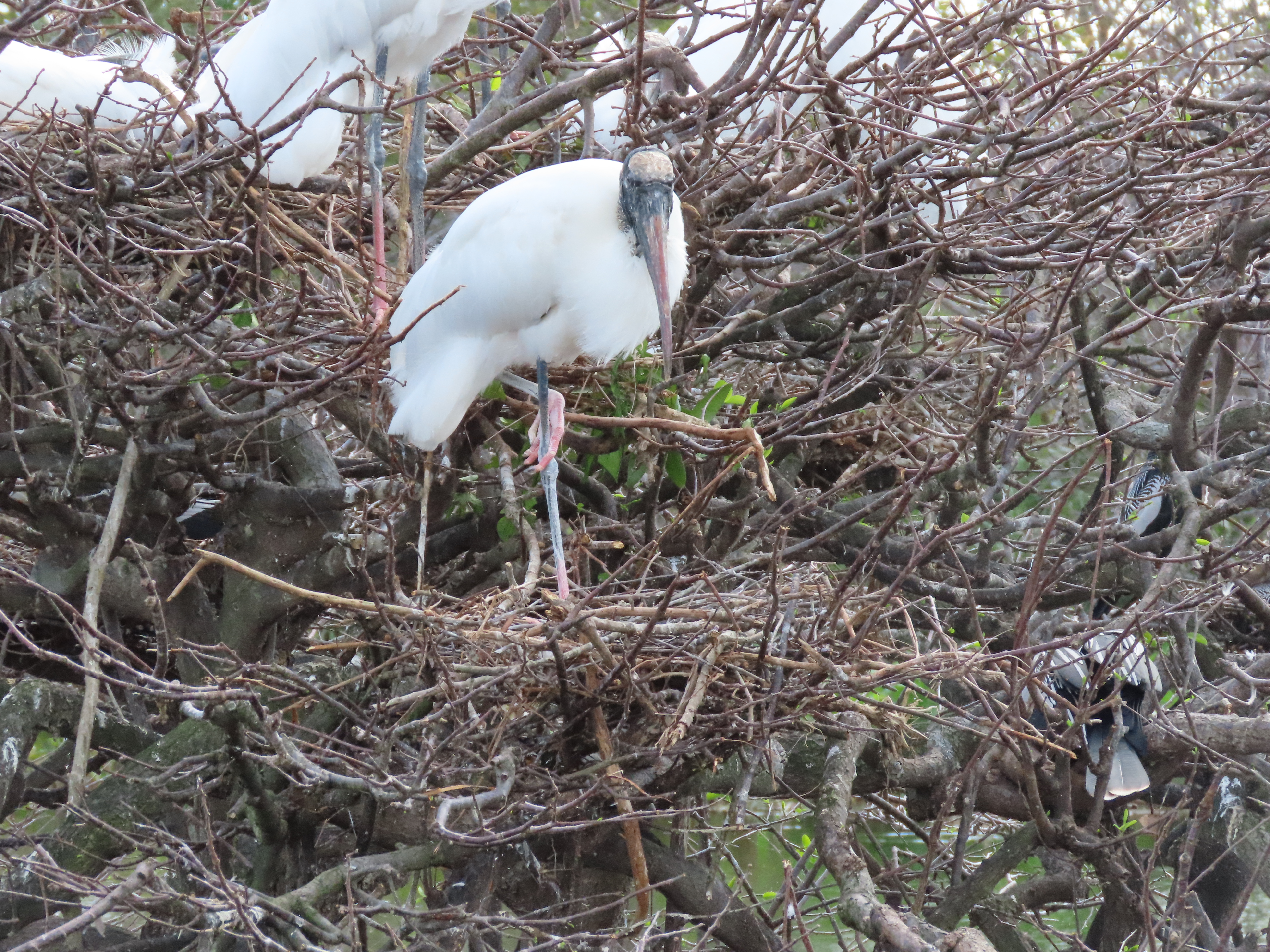
For several years now, the only reliable venue to look for Neotropic Cormorants is at Wakodahatchee Wetlands in Delray Beach in Palm Beach County. The bird is nested here and has young in the nest.

This venue is owned and operated by the Palm Beach County Utilities as a water reclamation project for the processing of treated waste water. The marsh they created acts a natural filter as these waters are returned to the environment. It is also open to the public to enjoy the great array of Florida wetland wildlife attracted to the marsh. Gators, turtles and green iguanas are common and the huge numbers of wading birds are on present and nesting within feet of curious visitors.


Believe this is an offspring of the Neotropic and a Double crested Cormorant

Nesting Wood Stork

Nesting Wood Stork

Nesting Wood Stork

Double-crested Cormorant on the nest

Male Anhinga sporting his breeding plumage

Male Anhinga sporting his breeding plumage

Female Anhinga

Green Iguana

Black-bellied Whistling Ducks

Gray-headed Swamphen

Black-bellied Whistling Ducks

Purple Gallinule

Glossy Ibis

Sailfin Mollies are a food source for many species here

Purple Martins have arrived

Great Blue Herons on a nest


Saturday, June 6, 2020

Harns Marsh

Saturday June 6th

White Checkered-Skipper
The water levels at Harns Marsh were still low on my visit, but recent rains have begun and are going to fill up the wetlands and canals very soon.  These current conditions are concentrating Limpkins on the shallow lake.  Counted over forty Limpkins, plus a half dozen Roseate Spoonbills and Little Blue Herons.  Only a few of the other expected waders were seen - Tricolored and Great Herons, Great and Snowy Egrets and only one White Ibis. 


Snail Kite

Didn't notice any roosting Swallow-tailed Kites, but as we move into summer this should be a good location when then start to congregate prior to their migration south.

Snail Kites are also much harder to locate at Harns Marsh. Was able to have numerous sightings here in the past, but they have spread out these days.  Did seen a female roosting in a tree along Sunshine Parkway just before the Able Canal bridge.

No Purple Gallinules either.  They have become rare lately, perhaps because of the increase of the Gray-headed Swamphens. Not unusual to have 10 or more Swamphen counts.

Gray-headed Swamphen

Most unusual find was a land snail called a Ghost Bulimulus.  This is an invasive species having arrived here from Argentina.

Ghost Bulimulus


So what's blooming here today - Southern Bee Blossoms, Marsh Fleabane, Marsh Pink, Black Jack and Trailing Daisy

Tuesday, January 22, 2019

Harns Marsh Preserve

Saturday, January 19th


Gray-headed Swamphens have become quite common.


Savannah Sparrow
Made several trips out to Harns Marsh this month. Thought I would comment on what is happening at the Marsh lately and share some pics.

There aren't really a lot of wading birds on hand lately.  A nice sampling.  the same with the wintering water fowl.  A few Ring-necked Ducks, Blue-winged Teal and Hooded Mergansers. The resident Mottled Ducks are not really that numerous as well.  Black-bellied Whistling Ducks have disappeared from the area all together.  Wood Ducks are occasionally seen.

Limpkins, Common Gallinule, American Coots, Sandhill Cranes, Anhingas, Pied-billed Grebes and Double-crested Cormorants are expected

Tri-colored Heron

A Little Blue Heron

Loggerhead Shrike
                                                                                  
Gray-headed Swamphens are easy to find and American Bitterns can be seen. Much harder sightings would be the Least Bitterns, Sora, King Rail and Purple Gallinules. Need to be on site at day break for a chance to hear or maybe even spot one. I've dipped on these  species this month so far. 

Still looking for any Wild Turkeys, Swamp Sparrows or a Grasshopper Sparrow.


A female Common Yellowthroat

Snail kites were a for-sure sighting here once, but not anymore. Seems Harns Marsh isn't suiting them lately. Quite probably,  what is happening here is that changes have been to how the water is held  for storm water control. These changes may have effected the snail kites ability to successfully hunt the apple snails that make up most of their diet. There is diffidently a lack of empty, apple snail shells, once commonly seen here, that are discarded by the feeding kites and Limpkins leave behind. Perhaps the snail population has crashed?


Ring-necked Duck

Pied-billed Grebe


Harns Marsh Preserve eBird Hotspot reports
https://ebird.org/hotspot/L830108


Palm Warbler
Raptor numbers are over-whelming lead by the large concentration of roosting Black and Turkey Vultures.  Bald Eagles, wintering Northern Harriers, resident Red-shouldered Hawks, the occasional Snail Kite, and soaring Red-tailed and Short-tailed Hawks. American Kestrels, in the winter, are seen.  Sometimes a Merlin, Peregrine Falcon, Sharp-shinned hawk or Coopers will make an appearance


A Whirly Bird
The nearby Buckingham Airfield hosts Lee County Mosquito Control
 and other local agencies
This corner of Lee County was once a part of the Buckingham Army Airfield,
 a training base during WW2


A male Anhinga


Crested Caracara


American Kestrel

Wilson's Snipe

Hooded Merganser

Glossy Ibis
Sandhill Crane

Purple Gallinules have become hard to find lately. 
 My last observation was back in October


Least Sandpiper