Thursday, April 22, 2010

Red-Eyed Vireo - Corkscrew Swamp Sanctuary

Corkscrew Swamp Sanctuary
Tuesday April 20th

  After taking care of some business I headed over to Corkscrew Swamp Sanctuary in Collier County to see if there was any interesting warbler activity. Could not get there till 10:30 am and found the number of visitors to be way down since my last visit. Reason being that so many snowbirds have already headed back north.
  At the butterfly garden, at the entrance to Blair House, I was informed that I had just missed a hummingbird. After a short wait, I can always try again when later, on the hummer I went inside to pay. Here I was rewarded with a male painted bunting at the feeders behind the building. Grackles and Red-bellied Woodpeckers soon took over and ran it off.  Waited at the feeder for a reappearance of the pair of Shiny Cowbirds, that I had just missed. Pushed on,  as I could try again on my way out, for the cowbirds.
   At the feeders I met up with Jeff, an ex-patriot Brit and snow-birder from New Jersey, whom I had walked with on a prior visit. Later on we were joined by a lady from Michigan, who had just flown-in to search for property in Cape Coral (residential property here are at fire sale values with the collapse of the local housing market). She was a very experienced birder and had plans to attend a birding festival at the migrant trap at McGee Marsh in Ohio in a couple of weeks.

Gray Catbirds were very abundant


 We found the water level to be very high today, so few waders were to be expected.  Had hoped for some nightherons, but only a sole Little Blue Heron and a sole Great Egret were seen. Noisy and soaring Red-Shouldered Hawks were very evident as were calling Gray Catbirds, White-eyed Vireos and Carolina Wrens.  A scope was set up at a Blue Gray Gnatcatchers nest for visitors to use and where we were able watch the gnatcatcher harrass a Red-Bellied Woodpecker that was much to close for the vigilant gnatcatcher. A couple of Great Crested Flycatchers were seen and heard. As for the warblers they were found high up in the canopy of these ancient cypress trees.  Heard several Northern Parulas and actually could only locate a beautiful singing male as the emerging foliage did make the birding more challenging. One warbler we found as Black-throated Green Warbler.  We were able to add a Black-and White Warbler and a calling Pine Warbler. A suspected tennessee warbler, only seen from directly below, I am now convinced was the similarly looking Red-Eyed Vireo. Several FOY Chimney Swifts were seen and heard. It was a good day with a few interesting birds, but not a great variety of warblers. One very interesting observation was a white-tailed fawn and doe grazing right next to the boardwalk.  They were very tolerant of the walkers. Left at 2PM without the shiny cowbirds or hummer, but was satisfied with an enjoyable walk in great weather. Won't be long till the daily 90+ degree temps, high humidity and afternoon showers reappear.
 
The Fawn


The Doe


My List - Great Egret, Little Blue Heron, Black Vulture, Turkey Vulture, Red-shouldered Hawk, Chimney Swift, Red-bellied Woodpecker, Pileated Woodpecker, Great Crested Flycatcher, White-eyed Vireo, Red-eyed Vireo, Carolina Wren, Tufted Titmouse, Blue-gray Gnatcatcher, Gray Catbird, Northern Parula, Black-throated Green Warbler, Pine Warbler, Black-and-white Warbler, Northern Cardinal, Painted Bunting, Boat-tailed Grackle

Tuesday, April 13, 2010

Great Crested Flycatcher

Babcock-Webb
April 13th

Headed over early to Babcock -Webb Wildlife Management Area for the trifecta - Red-Cockaded Woodpecker, Backman's Sparrow and Brown-Headed Nuthatch. The woodpeckers were very cooperative at the first colony on Oil Well Road.  Had three active woodpeckers included a young bird picking throuh the gravel on the road. Also had a Bachman's Sparrow present by the colony. Found a a singing male later on that morning. The Brown-Headed Nuthatch has much harder to locate.  Several other birders I talked with were also dipping on the nuthatch. But I managed to locate one shortly before heading to home.  For some reason this little bird was stalking a Red-Bellied Woodpecker.  Following him from limb to limb. Eastern Towhees and Great-Crested Flycatchers were plentifull. A young Bald Eagle was observed setting in a snag. Missed on any warblers and northern bobwhites.


Great Crester Flycatcher at Babcock-Webb

My List - Anhinga, Great Blue Heron, Great Egret, Little Blue Heron, Tricolored Heron, White Ibis, Turkey Vulture, Osprey, Bald Eagle, Common Moorhen, Sandhill Crane, Mourning Dove, Red-bellied Woodpecker, Red-cockaded Woodpecker, Pileated Woodpecker, Great Crested Flycatcher, Loggerhead Shrike, Blue Jay, Fish Crow, Brown-headed Nuthatch, Gray Catbird, Northern Mockingbird, Eastern Towhee, Bachman's Sparrow, Northern Cardinal, Red-winged Blackbird, Eastern Meadowlark, Common Grackle, Boat-tailed Grackle, Brown-headed Cowbird

Monday, April 12, 2010

Willets - Bunche Beach and 6-Mile Slough

Saturday - April 10th
Bunche Beach
Hooked-up with the Lee County Bird Patrol event this morning at Bunche Beach.  These walks are very informative and with Charlie Ewell leading the group you will learn your shorebirds.  I know that I did.


Beach at low tide


The tide was low and the air was a bit chilly. However, the bird density was very light for low tide.  Obviously much of our shore birds have headed north. We still had some variety though. A lone American White Pelican made a flow over as did a couple of Roseate Spoonbills. Dozens of Brown Pelican were in a feeding frenzy at the south end of the beach when we started out.  A few Double-crested Cormorants were busy diving for breakfast.  The loons and red-breasted mergansers were already gone for the season. A couple of spotted sandpipers of worked the sandy area at the north inlet. The usual waders were all present included White Ibis, Reddish Egrets, Great Egrets, etc.  Further north on the exposed mud flats were a good sized flock of Black Skimmers. A few Laughing Gulls and  lone Ring-billed Gull were flying as were three Least Terns, new arrivals for the season, plus a couple of Royal Terns and  a one Sandwich Tern. A few Black-bellied Plovers and Semipalmated Plovers were present.  Sanderlings were probably the most numerous shorebirds on hand.
Eastern or Western Willet ?

 But the time was spent concentrating on the Willets.  Both Eastern and Western Willets. Charlie enjoys teaching on the subject. This time of the year Eastern Willets are showing up as the Western Willets are moving on to their breeding grounds out west. So both breeds are present and can be confusing to separate, especially as they are in various stages of molt.


The following link is to a blog called SHOREBIRDER by Nick Bonomo, with his description on the difference between eastern and western willets. Western Willet vs. Eastern Willet

Six-Mile Cypress Slough
Sunday & Monday
Revisited the I-75 rest-stop to see if the Black-Necked Stilts were stll there


After work on Sunday headed over to Six-Mile Cypress to look for any migrants.  But first checked out the rest stop on daniels road and I-75 for Black-Necked Stilts any other waders. Did find a few a few stilts presents but no ther waders were there this morning.
The parking lot at  Six-Mile was empty of people and birds.  As for the weather we were in-between morning rain showers. The boardwalk had lots of Northern Cardinals and Gray Catbirds. A couple of Carolina Wrens were very vocal as was a busy Pileated Woodpecker. As for migrants I was lucky to get excellent looks at a male Black-Throated Blue Warbler and a very brief look at a Chestnut-sided Warbler. I have not really heard of chestnut-sided warblers traveling through here before, but I am pretty confident that it an accurate siting.

Gray Squirrels are very abundent


Came back on Monday to try and relocate the black-throated blue warbler and chestnut-sided warbler. Spent a couple of hours on the boardwalk, but the only warbler seen today was a sole Black-and-White Warbler. Other observations included the resident Red-shouldered Hawks seem to be nesting, lots of Gray Catbirds are still present and a Barred Owl became very vocal.

Tuesday, April 6, 2010

Peregrine Falcon - Little Estero Lagoon

White-Morphed Reddish Egret at Little Estero Lagoon on Ft Myers Beach


As a county employee, I was required to take a furlough day, which is today. So I chose to visit Ft Myers Beach's Little Estero Lagoon to seek out snowy plovers. Arrived early to avoid the day's heat and the spring break crowds. The birding started out slowly. Just a few waders and no shorebirds. As I reached about midway the numbers increased, but still not very birdy. The skies were clear and only a few gulls and terns were about.  A pair of Ospreys kept busy hunting for breakfast. Had about six, high flying, but noisy Least Terns. These were the first that I had come across this season.  The beach was already prepped with demarcated zones for nesting seabirds including the least tern, snowy plovers and Wilson's plovers. So several hundred least terns should be arriving soon.
Found Sanderlings, Semipalmateed Plovers, Wilson's Plovers, Black-bellied Plovers and about six Piping Ploves.  But no snowy plovers today. Had been hearing a serinadeing Prairie Warbler and a couple of Palm Warblers were active. 
I have wondered if sedge wrens were found here. Seems that there is some suitable habitate, but I am no expert on this subject.  I have never found one to date.
The reason for the title to this article was that the Peregrine was my last siting before heading for home. Another birder had it spotted high up on the ledge of one tall condo buildings that line shore.

My List - Mottled Duck, Brown Pelican, Double-crested Cormorant, Great Blue Heron, Great Egret, Snowy Egret, Little Blue Heron, Reddish Egret, White Ibis, Osprey, Peregrine Falcon, Black-bellied Plover, Wilson's Plover, Semipalmated Plover, Piping Plover, Willet, Ruddy Turnstone, Sanderling, Least Sandpiper, Dunlin, Laughing Gull, Least Tern, Royal Tern, Mourning Dove, Common Ground-Dove, Loggerhead Shrike, Blue Jay, European Starling, Prairie Warbler, Palm Warbler, Northern Cardinal, House Sparrow

Great Horned Owls - Ft DeSoto Park

It's spring migration time and sometimes birding can be fun. It's just a matter of right place at the right time. One good spot is Ft DeSoto Park in Tampa Bay. Headed up there on Monday arriving about 8:30am.  Could only stay for a couple of hours.
The resent news was about the hundreds of Hooded Warblers that had descended on the island. Other visitors included Worm-eating warblers, Prothonotary Warblers and a Blue-winged Warbler among the reported sightings. A brown-crested flycatcher had been reported regularly for about the past two weeks. But with the nice weather, I had already figured the migration counts would have shrunk. And so it was. 
Still found several Hooded Warblers, plus a couple of Palm Warblers, a Prairie Warbler, a Black-and-White Warbler, a lone Northern Parula and had great looks at a Prothonotary Warbler. A nice male Summer Tanager was in the Ranger's yard.  Lots of Cedar Waxwings. Several White-eyed vireos and a single Blue-headed vireo were busy too. A flotilla of 28 American White Pelicans came in off the bay, probably heading north to Montana. Was able to look at the Great Horned Owl and her chick in there nest, and I also got a brief look at the Long-billed Curlew before it flew off. Not bad for a couple of hours. Missed on the brown-crested flycatcher though. I'll be back in a couple of weeks
Checking the Terra Vierde ponds showed that almost all of the ducks are gone.  Just a few Ruddy Ducks, Lesser Scaups and a few Coots. Had fly-overs of Black-hooded Parakeets at the ponds and twice within the park. Don't know if it was single flock following me around or several flocks.

My List - American White Pelican, Brown Pelican, Double-crested Cormorant, Great Egret, Snowy Egret, Reddish Egret, White Ibis, Wood Stork, Black Vulture, Osprey, Black-bellied Plover, Killdeer, American Oystercatcher, Willet, Long-billed Curlew, Ruddy Turnstone, Sanderling, Least Sandpiper, Dunlin, Laughing Gull, Ring-billed Gull, Forster's Tern, Sandwich Tern, Mourning Dove, Common Ground-Dove, Great Horned Owl, White-eyed Vireo, Fish Crow, Gray Catbird, Northern Mockingbird, European Starling, Cedar Waxwing, Northern Parula, Prairie Warbler, Palm Warbler, Black-and-white Warbler, Prothonotary Warbler, Hooded Warbler, Summer Tanager, Northern Cardinal, Boat-tailed Grackle, Brown-headed Cowbird, Black-hooded Parakeets, Lesser Scaup, Ruddy Duck, Pied-billed Grebe, American Coot


Sunday, April 4, 2010

Hooded Warblers - A Look at March

Put a few miles on the car and several hours in, in search of birds. Had a bit of  luck in twitching after rarities, but seemed to have missed out on most.  Missed the smooth-billed ani, twice in the Everglades, and the laSagre Flycatcher at Key Biscayne.  My best find was the Harlequin Duck that had wintered in Sebastian Inlet.
The beginning of March is a time to seek out the wintering specialties here in Florida and at the conclusion of the month begins the spring migration. Gone are the large numbers of Yellow-Rumped Warblers, American Robins and most of the wintering ducks. And was exciting to see the arrival of the beautiful Swallow-tailed Kites
American Coot at Green Cay


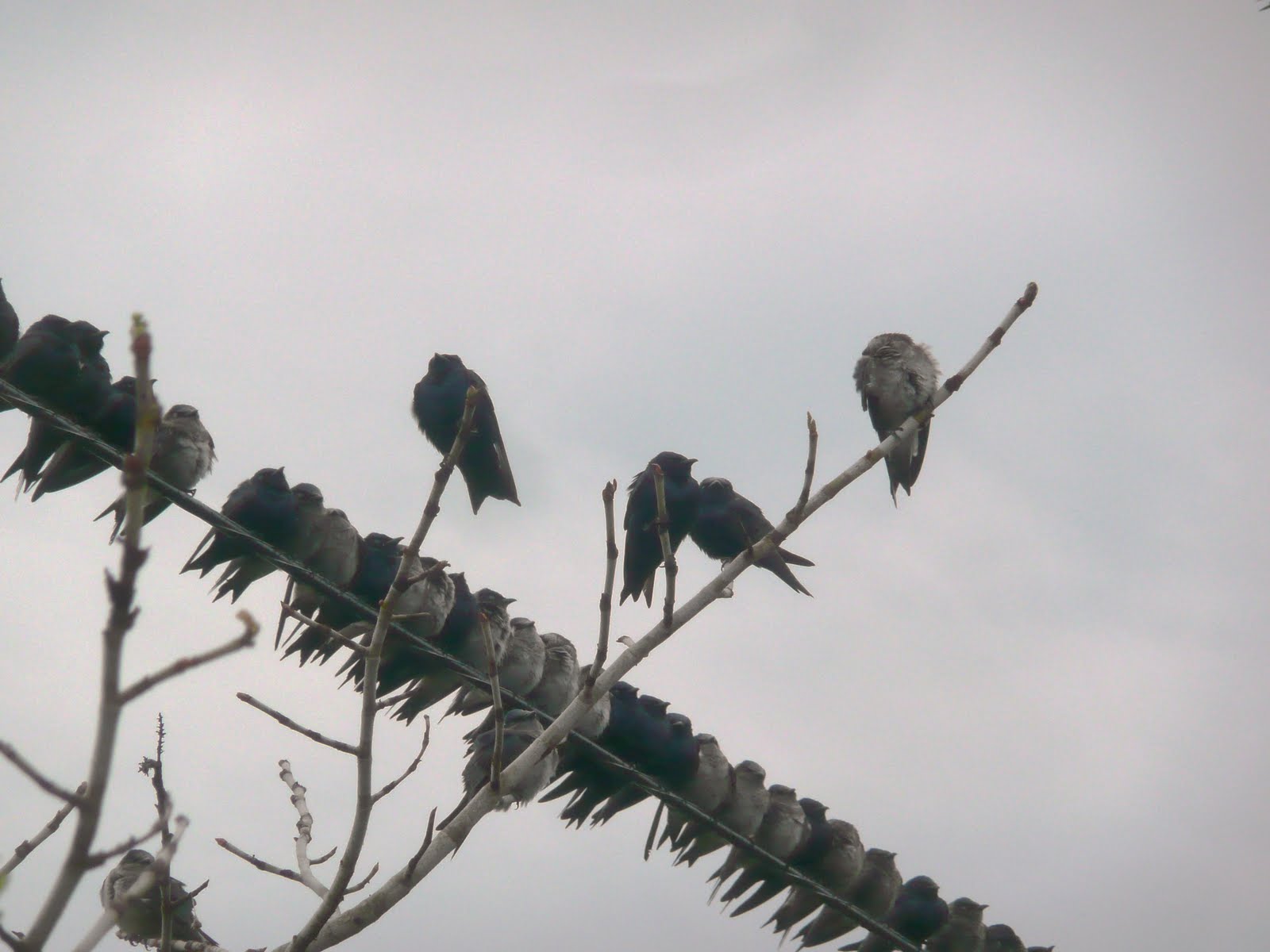
Just last week, at Sanibel Lighthouse, we were able to find several Northern Parula, Hooded Warblers and even a Worm-eating Warbler. So the migration has begun. We even found very large numbers of exhausted Purple martins and Barn Swallows.

Monk Parakeet at Cape Coral


Other fun sitings included the Cedar Waxwings in my neighbors tree, the Swamphens and Purple Gallinules at several of our wetlands, and the different kinds of parrots I can locate. The best siting for the month was noted as I was crossing the Sanible causeway on my way home last Monday after checking the lighthouse. It was extremely windy and I could see a large flock of shorebirds circling and circling as they tried to fight against the wind. They would finally give up and settled onto the water. They were to far out for a good photo, but with my binoculars I was am to identify them as American Avocets, most in breeding plumage. It is also cool to locate avocets, but the count I got off of the photo, I did managae to take, numbered around 85 birds. That was the most unusal part of the scene. You just never know what you will Find


Harlequin Duck at Sebastion Inlet


Yellow-Throated Warbler at Corkscrew Swamp


Red-Cockaded Woodpecker colony site at Babcock-Webb


A Gray Catbird on a chilly morning at Six-Mile Cypress Slough


A Mourning Dove at Six-Mile Cypress Slough

Exhausted Purple Martins at rest upon arrival at Sanibel Lighthouse


My List for March - (163)
  1. Black-bellied Whistling-Duck
  2. Muscovy Duck (Domestic type)
  3. Wood Duck  
  4. Mottled Duck
  5. Blue-winged Teal
  6. Northern Shoveler
  7. Green-winged Teal
  8. Ring-necked Duck
  9. Lesser Scaup
  10. Harlequin Duck - a lifer
  11. Hooded Merganser
  12. Red-breasted Merganser
  13. Ruddy Duck
  14. Wild Turkey
  15. Common Loon
  16. Pied-billed Grebe
  17. Northern Gannet
  18. American White Pelican
  19. Brown Pelican
  20. Double-crested Cormorant
  21. Anhinga
  22. Great Blue Heron
  23. Great Egret
  24. Snowy Egret
  25. Little Blue Heron
  26. Tricolored Heron
  27. Reddish Egret
  28. Cattle Egret
  29. Green Heron
  30. Black-crowned Night-Heron
  31. Yellow-crowned Night-Heron
  32. White Ibis
  33. Glossy Ibis
  34. Roseate Spoonbill
  35. Wood Stork
  36. Black Vulture
  37. Turkey Vulture
  38. Osprey
  39. Swallow-tailed Kite
  40. Snail Kite
  41. Bald Eagle
  42. Northern Harrier
  43. Cooper's Hawk
  44. Red-shouldered Hawk
  45. Broad-winged Hawk
  46. Short-tailed Hawk
  47. Red-tailed Hawk
  48. Crested Caracara
  49. American Kestrel
  50. Merlin
  51. Peregrine Falcon
  52. Sora
  53. Purple Swamphen
  54. Purple Gallinule
  55. Common Moorhen
  56. American Coot
  57. Limpkin
  58. Sandhill Crane
  59. Black-bellied Plover
  60. Wilson's Plover
  61. Semipalmated Plover
  62. Piping Plover
  63. Killdeer
  64. American Oystercatcher
  65. Black-necked Stilt
  66. American Avocet
  67. Spotted Sandpiper
  68. Solitary Sandpiper
  69. Greater Yellowlegs
  70. Willet
  71. Lesser Yellowlegs
  72. Marbled Godwit
  73. Ruddy Turnstone
  74. Sanderling
  75. Semipalmated Sandpiper
  76. Western Sandpiper
  77. Least Sandpiper
  78. Dunlin
  79. Short-billed Dowitcher
  80. Wilson's Snipe
  81. Laughing Gull
  82. Ring-billed Gull
  83. Herring Gull
  84. Caspian Tern
  85. Common Tern
  86. Forster's Tern
  87. Royal Tern
  88. Sandwich Tern
  89. Black Skimmer
  90. Rock Pigeon
  91. Eurasian Collared-Dove
  92. White-winged Dove
  93. Mourning Dove
  94. Common Ground-Dove
  95. Black-hooded Parakeet
  96. Monk Parakeet
  97. Mitred Parakeet 
  98. Red-masked Parakeet
  99. Great Horned Owl 
  100. Burrowing Owl
  101. Whip-poor-will
  102. Ruby-throated Hummingbird
  103. Belted Kingfisher
  104. Red-headed Woodpecker
  105. Red-bellied Woodpecker
  106. Yellow-bellied Sapsucker
  107. Downy Woodpecker
  108. Hairy Woodpecker
  109. Red-cockaded Woodpecker
  110. Northern Flicker
  111. Pileated Woodpecker
  112. Eastern Phoebe
  113. Great Crested Flycatcher
  114. Eastern Kingbird
  115. Loggerhead Shrike
  116. White-eyed Vireo
  117. Blue-headed Vireo
  118. Blue Jay
  119. American Crow
  120. Fish Crow
  121. Purple Martin
  122. Tree Swallow
  123. Northern Rough-winged Swallow
  124. Barn Swallow
  125. Tufted Titmouse
  126. Carolina Wren
  127. House Wren
  128. Ruby-crowned Kinglet
  129. Blue-gray Gnatcatcher
  130. Eastern Bluebird
  131. American Robin
  132. Gray Catbird
  133. Northern Mockingbird
  134. Brown Thrasher
  135. European Starling
  136. Common Myna
  137. Cedar Waxwing
  138. Northern Parula
  139. Yellow-rumped Warbler
  140. Black-throated Green Warbler
  141. Yellow-throated Warbler
  142. Pine Warbler
  143. Prairie Warbler
  144. Palm Warbler
  145. Black-and-white Warbler
  146. American Redstart
  147. Worm-eating Warbler
  148. Ovenbird
  149. Common Yellowthroat
  150. Hooded Warbler
  151. Savannah Sparrow
  152. Northern Cardinal
  153. Indigo Bunting
  154. Painted Bunting
  155. Red-winged Blackbird
  156. Eastern Meadowlark
  157. Common Grackle
  158. Boat-tailed Grackle
  159. Shiny Cowbird
  160. Brown-headed Cowbird
  161. Orchard Oriole
  162. American Goldfinch
  163. House Sparrow

Rapters in Migration

Came across a couple of interesting sites while reading through the Illinois Brding messge board.

* Hawk Migration Association of North America  Much valuable information on the identification and distribution of raptures in North American. Check out thier rapture identification presentation.

* A live video cam on Molly, a nesting Barn Owl. Her eggs have hatched. Very cool!!!