Saturday, August 3, 2013

Everglades Ag Area

Wednesday July 31st

Common Nighthawk

 
Last year, almost to the day, several of us birded the agricultural area south of Belle Glade for a great day exploring the sod farms, flooded sugar cane fields and rice fields for migrant birds. We had a lot of success with a count of about eighteen upland plovers and a great many other shorebirds, peeps, terns, whistling ducks and swallows.
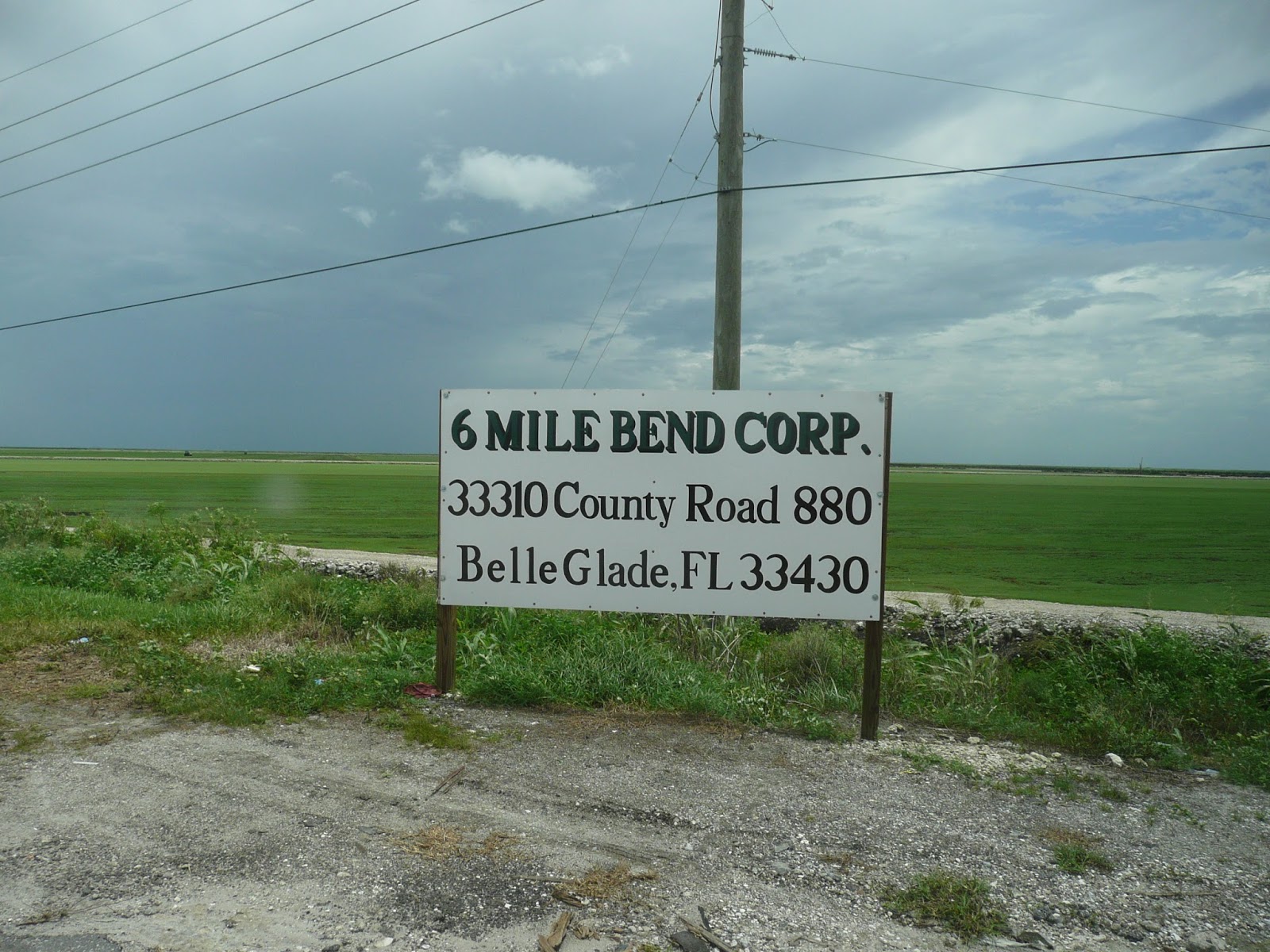
So far,  this year the migrants have been slower relocating here, them we say in 2012. But, in the company of Stan Damen, we left Ft Myers by six in the morning to see what was available.  Experiencing very light traffic we arrived at 6-Mile Bend Sod Farm on Rt 880 south of Belle Glade. We scanned the sod fields and could only come up with Killdeer, Grackles, a calling Common Yellowthroat and Barn Swallows. Tom Smith stopped by as he was birding the area as well. Tom gave us some in sights to current conditions, which did not seem very promising.
 
Next was to check for any flooded fields along nearby Brown's Farm Road.  Our info was that there was only one productive field so far. We find it about three mile south and found a nice variety and a few hits for Florida Challenge. We started with a family of Black-bellied Whistling Ducks and single Fulvous Whistling Duck.  There was alone American White Pelican, lots of Mottled Ducks, White Ibis, Glossy Ibis and a couple of Roseate Spoonbills. Had at least 25 Black-necked Stilts, a hand-full of Stilt Sandpipers (256), Greater and Lesser Yellowlegs, several Dowitchers and Killdeer. Was able to identify a single Semipalmated Plover as well.  A single Laughing Gull, Black Tern and Gull-billed Tern (257) showed up too.  Barn Swallows were seen everywhere and a single Northern Rough-winged Swallow and several early Tree Swallows were seen near a pumping station. Many Common Nighthawks were encountered resting on open ground and atop telephone lines.

Sod field
We rechecked the 6-Mile Sod Farm and again found only Killdeer, but Stan did locate a single Uplands Sandpiper (258) a couple of fields away using his scope. We felt lucky to get the uplands as the sod fields were so barren of birds. This fact was true was we checked out the Kings Ranch Sod Farm on Rt 27. Last year we a lot of success here, but the birds were not here yet, except we did get a few Cliff Swallows (259).
 
Probably the most productive flooded field we checked on was along CR 827, west of Rt 27 and on the other side of the Boles Canal from were we could make observations.  It was just too far away to identify the smaller shorebirds. But we found dozens of Spoonbills, a couple of Wood Storks, several American White Pelicans and all of the expected waders. Yellowlegs and Dowitchers could be seen, but most of the other shorebirds were, frustratingly, too distant to. Hundreds of Brown-headed Cowbirds also seen today.
 
Plan on returning in two weeks expecting more grass 'pipers and other migrants.  Will need to return in early September to look for any buff-breasted sandpipers, which are not too commonly seen here and would be a lifer too, Wilson's phalaropes should be found by then as well.
 
Bird Count for the Day - (61)
Black-bellied Whistling-Duck, Fulvous Whistling-Duck, Mottled Duck, Wood Stork, Double-crested Cormorant, Anhinga, American White Pelican, Great Blue Heron, Great Egret, Snowy Egret, Little Blue Heron, Tricolored Heron, Cattle Egret, Green Heron, Yellow-crowned Night-Heron, White Ibis, Glossy Ibis, Roseate Spoonbill, Black Vulture, Turkey Vulture, Osprey, Coopers Hawk,  Swallow-tailed Kite, Red-shouldered Hawk, Common Gallinule, Semipalmated Plover, Killdeer, Black-necked Stilt, Greater Yellowlegs, Lesser Yellowlegs, Stilt Sandpiper, Short-billed Dowitcher, Long-billed Dowitcher, Laughing Gull, Least Tern, Gull-billed Tern, Black Tern, Rock Pigeon,  Eurasian Collared-Dove, Mourning Dove, Common Ground-Dove, Common Nighthawk, Crested Caracara, Loggerhead Shrike, Fish Crow, Northern Rough-winged Swallow, Tree Swallow, Barn Swallow, Cliff Swallow, Northern Mockingbird, European Starling, Common Yellowthroat, Red-winged Blackbird, Eastern Meadowlark, Common Grackle, Boat-tailed Grackle, Brown-headed Cowbird

Tuesday, July 30, 2013

Back to Payne's Prairie

Thursday July 25th

Today, as I was taking the dogs out for a walk, a trio of Barn Swallows made an appearance above my home. These were the first Barn Swallows to visit us in some time and marked the end of the summer birding doldrums here in southwest Florida. I can also  add several shorebirds - Piping Plover, Marbled Godwits, Least & Western Sandpipers and Spotted Sandpipers -  as recent arrivals  seen this morning at Bunche Beach.

Barn Swallows were a common theme yesterday  as I had been invited to return to Payne's Prairie by noted wildlife photographer Bob Pelkey. Barns were the only swallow species observed on the day with nesting birds seen under I-75 overpasses in Alachua County and dozens seen at Power Line Road.
Black-crowned Night-heron at Alachua Sink. Photo by Bob Pelkey

The day started at three in the morning with our departure from Ft Myers so that we could arrive at the La Chua Trail in Payne's Prairie Preserve when the gates were opened. Our arrival was greeted by lots of bird song and we had a nice mixed flock at the trail head. Here we started with Northern Bobwhite, White-eyed Vireo, Blue Gray Gnatcatcher, Red-bellied Woodpecker, Tufted Titmouse, Carolina Wrens, Carolina Chickadee, Black-and-White Warbler, Northern Parula, Osprey, American Crow, Black Vultures, Blue jays, Eastern Wood-Pewee (253) and Orchard Oriole.

From here we entered the trail, with our target bird-of-the-day being the Mississippi Kites. t I had dipped on them  my  visit back on the 4th. 

After passing through the horse barn we entered the boardwalk, which curves around  the Alachua Sink. Here we saw their herd of Spanish Horses with Cattle Egrets hitching rides on their backs. Bison and cracker cattle also roam the prairie. Several waders and large alligators were active and Black-crowned Night-herons and Green Herons were observed in flight. Checked the nearby snags for roosting kites, but just found more vultures, Great Blue Herons, Great Egrets and Anhingas in the trees. 
Mississippi Kite at Alachua Sink. Photo by Bob Pelkey
As we progressed along the trail we added Blue Grosbeaks (253), Eastern Towhee and Indigo Buntings. Near the observation tower we added a skulking King Rail (254) and Common Moorhens. The whooping cranes have not been reported here for over a month, probably because of rising water from our above-average rainfall, have relocated them. No sandhill cranes seen as well.

By ten o'clock the day was heating up and we finally caught sight of the soaring birds we had been searching for. We had our Mississippi Kites (255) which put on a very nice show. We actually had eight of them soaring overhead with a single Swallow-tailed Kite in their company. Also had a surprise here when a hummingbird zoomed past us as we watched the kites.

Back at the trail head we relocated the mixed flock seen earlier. Here we added a posing Yellow-billed Cuckoo and Downy Woodpeckers to our list. 
 
Swallow-tailed Kite at Power Line Road. Photo by Bob Pelkey
Heading back toward  home we added a stop at Power Line road near Brooksville.  This location had been good for Mississippi and swallow-tailed kites, but the Mississippi kites have not been using the area lately. We did see several Swallow-tailed Kites including a family of four, which Bob was able to photograph an adult feeding a frog to a juvenile.  We also had the Barn Swallows, Redheaded Woodpeckers, Eastern Meadowlarks, American Kestrels, Mourning Doves and a lone juvenile Brown-headed Cowbird.
 
Redheaded Woodpecker seen at Power Line Road. Photo By Bob Pelkey
Lastly we stopped at Ft DeSoto in Tampa Bay to try to photograph the Brown Booby that has been observed here lately. Bob had tried for it a couple of days ago and  had dipped on it then, just  as we did today. we did see most of the expected shorebirds and waders, Some of these included Western, Least and Semipalmated Sandpipers, Marbled Godwits, Short-billed Dowitchers, Laughing Gulls, Willets, Ruddy Turnstones Cormorants, Brown Pelicans, Sanderlings, Sandwich Terns, Royal Terns, Foster's tern, Least Terns and a suspected common tern. We also added another juvenile Brown-headed Cowbird.
On the way out of the park we made a stop at the Terra Verdi ponds were we saw the pair of Redhead ducks that has been summering here. Also lots of Magnificent  Frigatebirds overhead, Fish Crows, Rock Pigeons, White Ibis, Cormorants, Laughing Gulls, and a pair of Nanday Parakeets.

In all it was a hot, exhausting day with some very good results. Bob got some great shots and I got some good counts and we tally about 80 birds for the day. 

Day's List - (81)


Black-bellied Whistling-Duck, Redhead, Northern Bobwhite, Wild Turkey,   Wood Stork, Magnificent Frigatebird, Double-crested Cormorant, Anhinga, Brown Pelican, Great Blue Heron,  Great Egret, Snowy Egret, Little Blue Heron, Tricolored Heron, Cattle Egret,  Green Heron,  Black-crowned Night-Heron, White Ibis, Glossy Ibis, Roseate Spoonbill, Black Vulture, Turkey Vulture,   Osprey, Swallow-tailed Kite, Mississippi Kite,  Red-shouldered Hawk, Red-tailed Hawk, King Rail, Common Gallinule, Black-bellied Plover, Wilson's Plover, Semipalmated Plover, Willet,  Marbled Godwit, Ruddy Turnstone, Sanderling,  Semipalmated Sandpiper, Western Sandpiper, Short-billed Dowitcher,  Laughing Gull, Least Tern, Forster's Tern, Royal Tern, Sandwich Tern,  Rock Pigeon, Eurasian Collared Dove,  Mourning Dove, Common Ground-Dove, Yellow-billed Cuckoo, Ruby-throated Hummingbird, Red-headed Woodpecker, Red-bellied Woodpecker, Downy Woodpecker, American Kestrel, Nanday Parakeet, Eastern Wood-Pewee, Loggerhead Shrike, White-eyed Vireo, Blue Jay, American Crow, Fish Crow, Barn Swallow, Carolina Chickadee, Tufted Titmouse, Carolina Wren, Blue-gray Gnatcatcher, Eastern Bluebird, Northern Mockingbird, European Starling, Black-and-white Warbler, Northern Parula, Eastern Towhee, Northern Cardinal, Blue Grosbeak, Indigo Bunting, Red-winged Blackbird, Eastern Meadowlark, Common Grackle, Boat-tailed Grackle, Brown-headed Cowbird, Orchard Oriole
Reptiles - American Alligator, Water Moccasin, Black Racer, Peninsula Mole Skink, Green Anole

Friday, July 12, 2013

Long-billed Curlew

Thursday, July 11th

 
A very bad phone camera shot
of the Long-billed Curlew at Bunche Beach

I haven't been to Bunche Beach for  sometime, especially as so many of the birds have departed for there breeding grounds. However, some of the species will have already returned south in July.  Today I was lucky to find the Long-billed Curlew, assuming it is the same individually we have been seeing here for a some time, that has been a resident on this beach. Bunche Beach and Ft Desoto Park in Tampa had been the most reliable locations for seeing this species in Florida.
 
As I arrived a pair of Snowy Plovers were departing the area. Did not see too many species on this visit, but did find a Laughing Gull, a couple of Brown Pelicans and lots of Short-billed Dowitchers and Willets. Ospreys were hunting from overhead and Prairie Warblers were calling from the brush.
 
From Bunche Beach I moved onto Bodwitch Point Park on Ft Myers Beach. Here a nesting colony of Least Terns has been roped off along with a couple of turtle nest sites. Again there was not a lot of variety. Brown Pelicans, Double-crested Cormorants and Laughing Gulls were occupying  buoys and other features. Had a few Willets, Ruddy Turnstones, Wilson's Plovers and a lone Sanderling. Gray Kingbirds and Eurasian Doves sat on the wires outside of the park. So basically the Least Terns were dominate species here on my visit.

Thursday, July 11, 2013

Birding the Fourth of July

Thursday July 4th
I have set a birding goal of finding at least 300 species in Florida before the end of the year. To accomplish this goal, a birder in Florida will need to travel to various corners of the state. I had envisioned trekking up to the Tallahassee area in search for several species that nest in the panhandle, such as Kentucky and Hooded Warblers, Summer Tanagers, White-breasted Nuthatch, Mississippi Kite, Yellow-breasted Chat (one of my nemesis birds), Yellow-throated Vireo and Acadian Flycatcher. Was going to use the Fourth of July weekend for the overnight trip, but reality required a change in plans. Instead the trip was limited to a day trip up to the Gainesville area. Were many of the species are being reported.
Was on the road by 5 AM and made my first stop for birds on a rural road near Plant City to check-out a pond on  Bethlehem Road. My brief stop found a pair of Canada Geese, Chimney Swifts, Moorhens, White Ibis and a Sandhill Crane. The Canadians were my 250th species for the year. Seems that it was a good start.
One of many gators found along the La Chua Trail
By 10 am I reached the LA Chua Trail at Payne's Prairie Preserve south of Gainesville. Mississippi Kites are regularly seen here and recent reports of Blue Grosbeak, Yellow-breasted Chat and Whooping Crane were also targets for the day. But on my visit none of the above were located. I did add Carolina Chickadee, Indigo Buntings and Least Bitterns.
By noon I had reached a new venue for me. Gum Root Park in eastern Gainesville. Again, resent reports named Acadian Flycatchers, Yellow-throated Vireos and Summer Tanagers. And again I strike out on the target species. But I did add Whited and Red-eyed Vireos and a Pileated Woodpecker.
Swallow-tailed Kite
Had a bit of time left before meeting family in Tampa for dinner so I made an added stop at Power Line Road, which borders Hernando and Pasco County. This is an excellent spot for Swallow-tailed and Mississippi Kites.  Before reaching Power Line Road I came upon nesting Barn Swallows using an underpass under I-75 at Micanopy. 
Mississippi Kite seen in 2012
Photo by Bob Pelkey
So I explored Power Line Road for about an hour hoping to sight a Mississippi Kite, but again would dip on a targeted species. This proved to be the theme of the day.  Did find, FOS for me, Eastern Kingbirds which were #251 for the year.  Also added several American Kestrels. At time of the year the wintering Kestrels had returned north, except for a sub-species called Southeastern American Kestrels, which are Florida's resident kestrels.  Other species seen here included several Swallow-tailed Kites, Red-shouldered Hawk, Red-tailed Hawk, Eastern Bluebirds, Red-headed Woodpeckers, Eastern Meadowlarks and Cattle Egrets.
It was a long day, dipped on almost all of my targets, but I did find several good birds for this trip. I'll need to try again soon.

Day Total (51) -
Canada Goose, Mottled Duck, Anhinga, Least Bittern, Great Blue Heron, Great Egret, Snowy Egret, Little Blue Heron, Tricolored Heron, Cattle Egret,  Green Heron, White Ibis, Glossy Ibis, Black Vulture, Turkey Vulture, Osprey, Swallow-tailed Kite, Red-shouldered Hawk, Red-tailed Hawk, Common Gallinule, Sandhill Crane, Mourning Dove, Rock Pigeon, Chimney Swift, Red-headed Woodpecker, Red-bellied Woodpecker, Pileated Woodpecker, American Kestrel, Eastern Kingbird, Loggerhead Shrike, White-eyed Vireo, Red-eyed Vireo, Blue Jay, American Crow, Fish Crow, Barn Swallow, Carolina Chickadee, Tufted Titmouse, Blue-gray Gnatcatcher, Eastern Bluebird, Northern Mockingbird, European Starling, Northern Parula, Eastern Towhee, Northern Cardinal, Indigo Bunting, Red-winged Blackbird, Eastern Meadowlark, Boat-tailed Grackle, Common Grackle, House Sparrow


Friday, June 21, 2013

Down to Key West

June 20th and 21st


Roseate Tern seen in Marathon
Photo by Bob Pelkey
Day One

Bob Pelkey and I headed down to The Keys to look for several specialities that make a home in the Keys. Also hoping that we could come across any vagrants from the West Indies. Like the Antillean Short Eared Owl or the Bahama Mockingbird recently sighted in Key West. 

 Actually we are at least a month late for the best spring-time birding. But logistics delayed us till late June. One positive was that June is a slow time for tourism making travel a lot easier. 


We arrived in Key West at sunrise to the sounds of crowing chickens and calling White-eyed Vireos. Ft Zachary Taylor State Park was our first stop were we quickly tally White-crowned Pigeons, Magnificent Frigatebirds and a Great White Heron ( the white morphed form of the Great Blue Heron).  A short-eared owl had recently spent some time here was now long gone and a recently reported Bahama Mockingbird was also not located.  Just saw a report that the day following our visit a smooth-billed ani was seen. 

We then made several stops in the lower Keys to find and photograph several Black-whiskered Vireos, Gray Kingbirds, more White-crowned Pigeons and the famous diminutive Key Deer, a sub-species of the white-tailed deer.

At Bahia Honda State Park we added Least Terns, Black-bellied Plovers, Wilson's Plovers, Semipalmated Plovers Ruddy Turnstones and a trio of Killdeers.

By the early afternoon we had arrived in Marathon and located a flock of a least twenty beautiful Roseate Terns in their best breeding colors. Bob noted in his photography that several were banded. I noticed a strange little lizard that I found was a Northern Curly-tailed Lizard which originally came from the Bahamas.

After a muched needed break we later regrouped at the Marathon Airport to await the arrival of a pair of Antillean Nighthawks. Before their arrival we watched several birds working the wet areas at the west end of the air strip.  They included Laughing Gulls, Black-bellied Plovers, a dozen Short-billed Dowitchers, a trio of Black-necked Stilts, White Ibis, a Glossy Ibis, Grackles and Starlings.

Day Two

From Marathon we headed back toward home with stops at Long Key State Park, John Pennekamp Coral Reef State Park and Dagny Johnson State Park. Not much new was added with these stops except for Bob's success in photographing a Mangrove Cuckoo, which later review turned into a Yellow-billed Cuckoo, at Dagny.  I dipped on the cuckoo as it flew of before I could get a look.

We tried to investigate the mangroves at the Card Sound Road tollbooth for cuban yellow warblers, but the deer flies drove us to quickly  retreat to Bob's car. In Homestead we added Mynah birds. At this point we bailed on heading over to the University of Miami campus for parrots and other exotics.  Instead we took a quick run over to the Lucky Hammock area outside of the entrance to Everglades National Park. Here we added Swallow-tailed Kite, a sleeping Common Nighthawk resting on a telephone line and a calling Northern Bobwhite sitting in a tree.

Here we ended the trip and headed back to Ft Myers. Our over-all count, as expected for this time of year, was low, but we did find all but one of our target birds on this trip. Plans are to repeat again next year in May and to add a trip out to the Dry Tortugas. 

Monday, May 20, 2013

The Red-eyed Birders and the White-tailed Tropicbird


Sunday May 19th

Today, Bob Pelkey and I,  participated in the pelagic trip sponsored by  the Marine Science Center in Ponce Inlet, Florida.  The event was lead by Michael Brothers, director of the Marine Science Center and is a fund raising function as well as a great opportunity to go out into the Atlantic after pelagic bird species we rarely see near land. Today's trip would take us across the Gulf Stream, to about 100 miles out, to the  deep water canyons in an area they called the tuna grounds.


The Pastime Princess
This was a long, long day with the boat, The Pastime Princess,  leaving the dock at  three in the morning.  Bob and I left Ft Myers at eight o'clock and arrived at the dock by midnight. Extra travel time had been allotted to avoid any possibility of missing the departure. With this spare time,  we attempted to grab a bit of sleep. 

It looked like we had forty-nine participants.  Some folks I was familiar with, including Bob Hargrove from North Ft Myers., but most  were not familiar faces. Like Bob's friend and fellow bird photographer Robert Doiron of New Brunswick, Canada.

The first leg of our trip really was challenging. Three hours of rain as we headed east  into the Atlantic. Ended up soaked to the skin as did Bob. Robert was lucky as he ended-up in a cozy spot in the cabin, which was already full before the rains started.. The misery would be abated hours later after clearing the weather, having our clothes dry off in the sun and passing a long bird-free stretch of ocean. We did have a few land birds check out the boat early-on in the darkness and rain. A small flock of Red-necked Phalorope - lifer approached twice as did a warbler, probably a blackpoll, and a thrush.

In the following hours we had some nice contacts with some good birds. They were not  numerous but a nice variety. The star was a fly-by of an adult White-tailed Tropicbird. Lifer!!


White-tailed Tropicbird
photo courtesy of  Michael Brothers

Other birds seen were Arctic Terns - Lifer, Sooty Terns, Bridled Terns, Audubon Shearwater - Lifer, a single Cory Shearwater,  Wilson's Storm-Petrels - Lifer,  several  Black-capped Petrels, a Brown Booby and a Pomarine Jaeger.  I see that other participants reported a sooty shearwater, red phalaropes, and leach's & band-rumped storm-petrels. We're checking Bob's photos to see if we captured these as well.


Black-capped Petrel
photo by Bob Pelkey
Other sightings included the mates landing a wahoo and had earlier hooked and lost a blue marlin. A leatherback turtle was sighted but few of us actually saw it. We missed on any pelagic dolphins or whales, but one interesting sight was seeing a large ray breech and leap three times.  Not sure what species it was. Maybe a manta or an eagle ray.

Arrived at the dock just before 9 pm. Very tired and feeling the effects of bouncing on the waves for eighteen hours in the rain and sun. Would I do it again.  Maybe next year.

Mr Brothers Birdbrain report-

49 stalwart adventurers joined us for a pelagic trip out of Ponce de Leon Inlet in Volusia County that started out at 3:00 a.m. in rain. Eventually the rain left us and we began to find a great assortment of pelagic birds.  At about 90 miles out, we began to find a lot of action, with Black-capped Petrel, Band-rumped Storm-Petrel, Arctic Tern, then the show-stopper of a fabulous adult White-tailed Tropicbird!
Despite times of no bird activity, we found a good assortment of pelagic species:

Black-capped Petrel  12
Audubon's Shearwater  15
Cory's Shearwater  2
Sooty Shearwater  1
Wilson's Storm-Petrel  6
Leach's Storm-Petrel 1
Band-rumped Storm-Petrel  5
Brown Booby   1
Arctic Tern  5
Bridled Tern  8
Sooty Tern  74
Pomarine Jaeger  1
Laughing Gull  2
Red-necked Phalarope  12
Warbler sp.  1
Thrush sp. 1
Loggerhead Turtle 1
Leatherback Turtle 1
Sailfish  1
Wahoo  1

Special thanks to all of the great leaders that helped me out:
Mark Berney
Wes Biggs
Dave Goodwin
Sea McKeon
Mitchell Harris
Ed Kwater
John Murphy
Roberto Torres
Murray Gardler

The next trip will be in July.

Michael

Michael Brothers
Marine Science Center
Ponce Inlet, FL


Saturday, May 4, 2013

Spring Migration - II

So far, weather conditions in Southwest Florida have been very favorable for migrants passing over Florida on their way north. Few had cause to visit our locale as the winds pushed them along. Last Spring we experienced some great birding as a weather front held the migrants here for several days. We have seen some migrants who stopped by, but their numbers were very thin.
Screech Owl nesting at Sanibel Lighthouse

Gopher Tortoise seen along the trail at
Caloosahatchee Regional Park near Alva
Sanibel Lighthouse has been a popular migrant trap and I did visit a couple of times, but I almost daily visited Six-mile Cypress Slough Preserve. Had no grosbeaks, orioles or tanagers. Did have one Worm-eating Warbler, several Black-and white Warblers, several American Redstarts, a few Black-throated Blue Warblers, a few Cape May Warblers, a single Tennessee Warblers, one Magnolia Warbler, a few Blackpoll Warblers, an Ovenbird, a Prothonotary Warbler and a Yellow-billed Cuckoo. But we do have tons of Bobolinks passing through right now. So did have a nice variety but it took a lot of work
Some migrants seen by others included Blue Grosbeak, Cliff Swallow, Blue-winged Warbler, Hooded Warbler, Orchard Oriole, Scarlet Tanager, Summer Tanager, Eastern Kingbirds and a Gray-cheeked Thrush.