Monday, December 22, 2014

St Marks

Monday, December 8th
Day Two - North Florida Trip

St Mark's Lighthouse


While camping at the yurt in Torreya State Park Bob Pelkey and I found that our smart phones clocks were bouncing back and forth between CST and EST. Seems we were sitting near t to the border of these time zones. The confusion got us a late start so that we didn't arrive  St Marks till 9:30.


Lesser Scaup at Lighthouse Pool
The day was overcast, chilly and drizzly. But we still found good birds. We would dip on a few targets that had been recently reported such as Ross's goose, Virginia rail, vermilion flycatcher and white-faced ibis

Started off with Eastern Phoebe and yellow-rumped warblers at the visitor center. Further down lighthouse road we added green-winged teal, coots, common gallinule, red-breasted merganser, swamp and savannah sparrows, eastern towhee, pied-billed grebes, belted kingfishers, northern harrier, red-shouldered hawk and the expected waders.


Reaching Stone Bayou we found a quartet of American avocet, a single black-necked stilt, and also willets, greater yellowlegs, more coots, least & western sandpipers, sb & lb dowitchers, wilson's snipe, eastern meadowlarks, least Scaup and bufflehead.
Drake Northern Shoveler


At the headquarters pond we had at least a dozen black-crowned night-herons, American wigeons, blue-winged teal, gadwall, ring-necked ducks, a sora, a bald eagle. purple and common gallinule and more waders.


Onto the lighthouse pool. There were hundreds of ducks including more a wigeons, northern shovelers, canvasbacks, redheads, lesser Scaup, and ruddy ducks.  At the sea grass zone along the beach we found nelsons sparrows, a suspected salt marsh sparrow. swamp sparrow, and a brief look at a sparrow sporting yellow head and breast markings. Heard clapper rail in the salt marsh east of the lighthouse. Off shore were common loons, horned grebes, bufflehead, least scaup, brown pelicans, ring-billed gulls, a royal tern and an active dolphin.
Eastern Phoebe


On the way out, we found the numbers of shorebirds had greatly increased at Stone Bayou. Hiked the dike road to the back of the bayou and added wood stork and american white pelicans

St Marks NWR is an awesome birding venue and a real jewel for birding in Florida.
American Wigeon

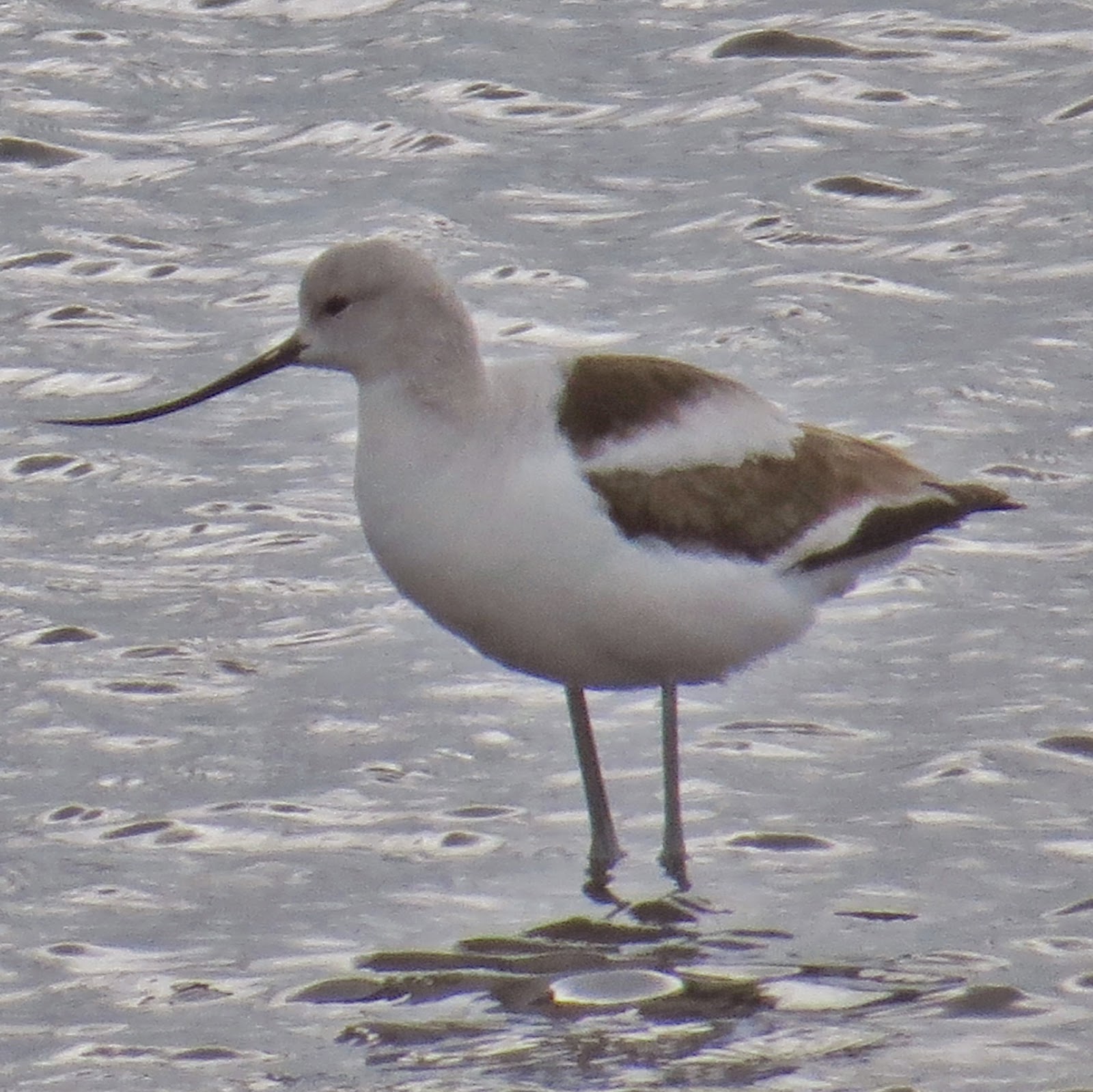
American Avocet

Nelson's Sharptail Sparrow

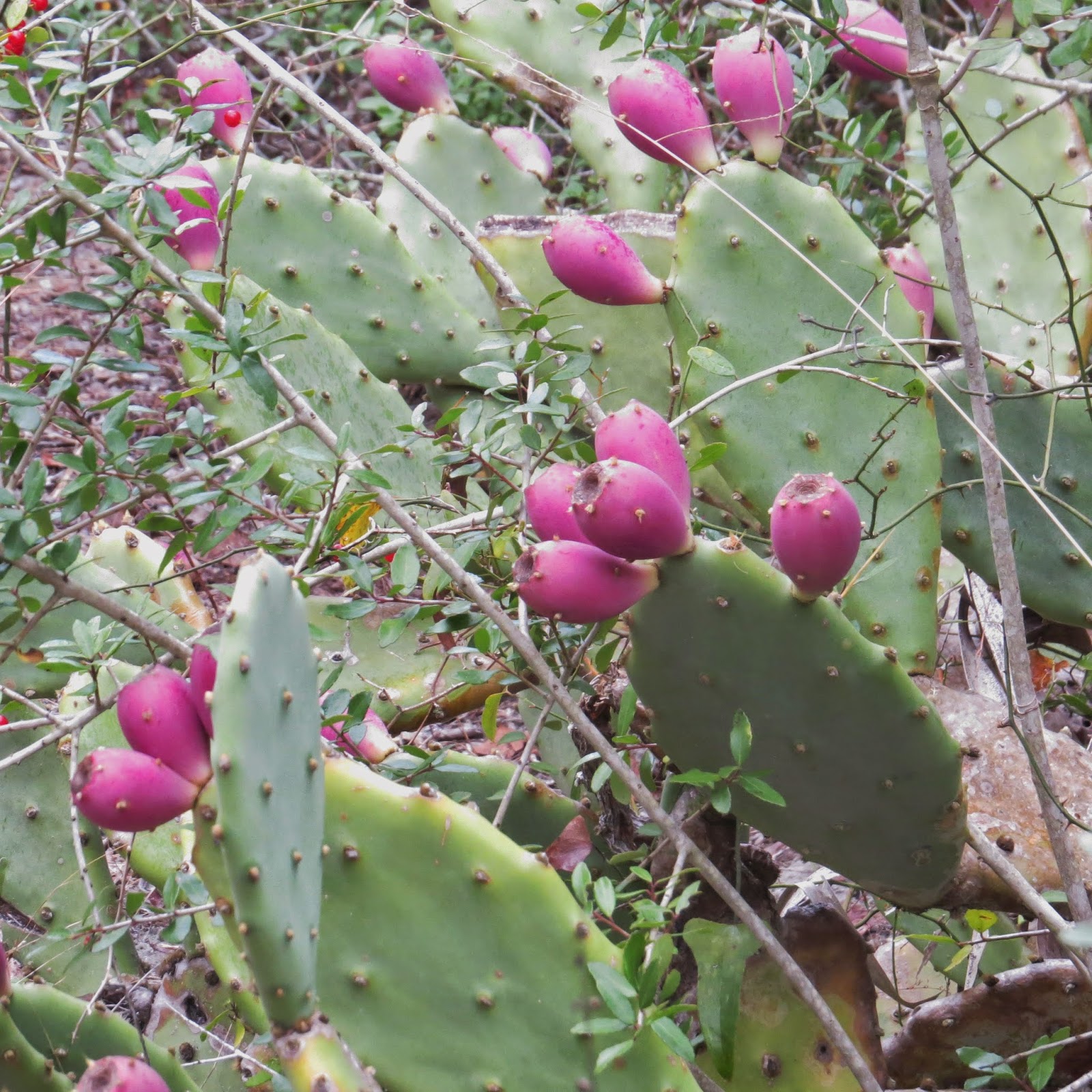
Fruiting Prickly Pear seen near the lighthouse boat launch

Sunday, December 14, 2014

Florida Caverns State Park

Sunday, December 7th
Day One - North Florida Trip

Winter Wren at Florida Caverns State  Park
Photo provided courtesy of Bob Pelkey


I have been anticipating making this trip to Florida's Panhandle for some time. Have been looking forward to birding here for several wintering birds that normally only migrate to this corner of the state. They include horned lark, golden-crowned kinglet, brown creeper and winter wren.  To find these you need to visit Jackson County, primarily Florida Caverns State Park in the winter season.
Vesper Sparrow on Concord Road


Therefore, after a long overnight drive with Bob Pelkey at the wheel we arrived at Florida Caverns a bit early as the gates were still closed.  So being early be elected to visit a sight on Concord Road, east of Malone, to shirt-tail reports of horned lark and purple finches.  Both of these birds rarely venture any further south than this point. We scoped the barren peanut and cotton fields along Concord. No larks or finches at the time, but had several Killdeer, Savannah Sparrows, a Vesper Sparrow a Kestrel and American Crows


So onto Florida Caverns State Park. The site is  fascinating and very unique to Florida. Though the Karst topography that creates the cave system is found throughout half of Florida, its climate/ecology is the most southern point for the temperate forests of the Appalachian chain. Besides the avian species that are a part of this ecology we find rare to Florida  flora like some personal favorites as Bloodroot, Mayapple, Trillium


The park rangers gave us directions to the best place to find our targets. An area known as the Sink, by the canoe put-in parking area on the Chipola River. Here we did have success.  Got our lifer sightings of Winter Wren, plus several Ruby-crowned Kinglets, a sole Golden-crowned Kinglets, White-eyed Vireo, Blue-headed Vireo, Carolina Chickadee, Downy Woodpeckers, Tufted Titmice and a couple of Hermit Thrushes.  The brown creeper was a no-show.


We moved onto the horse carrel location were we had a lot of Yellow-rumped Warblers, but also a couple of Pine Siskins, a Chipping Sparrow, a Cedar Wax-wing, American Robins and lots of Eastern Bluebirds.

Easter bluebird


We missed visiting the caverns, but would like to return on another occasion to see them.  A summer visit couple be enjoyable in locating breeding Mississippi Kites and Broad-winged Hawks

But noe was time to head about an hour south to Torreya State Park, along the bluffs above the Apalachicola River in Liberty County. This would be our base of operations for a few days as we're staying at the campgrounds.  Ever heard of a Yurt?  Nice way to camp.


Torreya Tree Decline


Torreya Guardians

Yurt Camping

Inside

Fire pit

Thursday, November 27, 2014

Catching-up on November

Wednesday, November 26th

Its been difficult recently keeping current with my postings
So today I've chosen to  just post some pics from recent outings.


These Purple Swamphens are common at Chapel Trail on Sheridan Road, Pembroke Pines

About the only exotic species seem on a recent trip to the south Miami Area were these Muscovy Ducks

One of a pair of Bald Eagles often seen at Harns Marsh

This Merlin was recently seen at Bunche Beach

Blue-winged Teal are growing in numbers at Harns Marsh

A pair of Ring-necked Ducks at Harns Marsh

An enlarged photo of a Purple Gallinule at Harns Marsh

An uncommon Franklin's Gull found recently on Bonita Beach

A herd of Sanderlings playing tag with the surf.

A very uncommon, to Florida, Long-billed Curlew, but frequent visitor to Bunche Beach
This individual has been seen here over the course of several years

A White-morphed Reddish Egret seen at Bunche Beach

This Piping Plover, tagged as P69, was found recently at Bunche Beach.
More information on this individual is pending.

A Coopers Hawk seen this past Tuesday at the fishing pier at Ft DeSoto Park in Tampa Bay

Myakka State Park, near Sarasota, can be a great place to look for wintering waterfowl,
 such as these Northern Pintails and Mottled Ducked

Several Black-necked Stilts were also observed at Myakka State Park

Wild Turkey observed road-side at Myakka State Park

Monday, November 17, 2014

The Flooded Tomato Field on Oil Well Road

Monday, November 10th

Lately a particular tomato field along Oil Well Road in Collier County, floods for a few weeks from late October till about mid-December.  This temporary waterfowl oasis has produced excellent water fowl observations in the past and today is no exception.  So today I tried out my new spotting scoping scope and found first-of-the-year sightings, for me, of American Avocets and Gadwalls.
Rosette Spoonbills

Arriving about 9:30 in the morning, note that dawn or just before dusk are best times for viewing, I still managed to find lots of awesome birds. Such as Blue-winged Teal, Northern Shovelers, Mottled Ducks, American Coots and a pair of American Wigeons. The fly-over Bald Eagles would put these flocks to flight every few minutes, thus rearranging the individuals I'm checking. As counted over eighty Rosette Spoonbills and just a couple of American White Pelicans.  Others seen included both night-herons, Greater Yellowlegs Snipe, Common Gallinules, Red-shouldered Hawks, Red-tailed Hawk, Ospreys, Palm Warblers and a Prairie Warbler. 
Gadwall hen

A couple of years ago Vince Lucas introduced several of us to this location and since then we have also found Ruddy Duck, Green-winged Teal, a Cinnamon Teal, Wood Duck and Black-belled Whistling-ducks.  So it would be worth a return visit before the field dries up.
Blue-winged Teal

Snowy Egrets and Pied-billed Grebes

Northern Shovelers

American Avocets

Harns Marsh has Purple Gallinules


Sunday, November 9th


Occasionlly reports in Lee County, of a sighting of Purple Gallinules come in. But not very often They just haven't been commonly seen around here.

A Purple Galinule
Recently, Ron Bishop of Lehigh Acres, has found a family of Purples Gallinules residing in Harns Marsh, not far from the parking area.  Well it took me three tries, but finally found a single bird foraging in the Flag Weed. And recently King rails have been in the same location. Seems the best time for viewing is dawn or dusk.

Ron also has heard the Sora calling from somewhere on the other side of the lake. Hopefully these great birds will remain, unlike the dwindling population of Snail Kites.

Some of the other species encountered at Harns included, American Bittern, Redheads, Ring-necked ducks, Limpkins, A Snail Kite, Northern Harrier, Northern Rough-winged Swallows and a Bald Eagle. Others have reported Ruddy Duck as well.
Bald eagle surveying the marsh

Monday, October 13, 2014

Crested Caracara along Church Road

Saturday, October 11th


A dozen Crested Caracara remains roosting in a single tree.  Earlier there were fifteen of them
 At day break, on Saturday, I traveled Church Road, in Hendry County in search of whistling ducks, turkeys and early flycatchers. Dipped on the targets, but did find FOS Eastern Phoebe, Eastern Towhees, Tree Swallows and lots of Crested Caracaras. Spotted a bare tree decorated with fifteen caracaras at roost, waiting for the air to warm up. Seems that there is a nice concentration of these birds roosting in the orange groves along Church.


Did you see that?

I'm not sure. What did you see?


Another Red-Necked Phalarope

Thursday October 2nd

We recently had an unexpected visitor to Ft Myers Beach at the south end of the island called Carlos Pointe. The other day Marie Di Rosa located a rare-to-our-corner-of-the-world Red-necked Phalarope keeping busy in a tidal pool.  The bird stayed for a few days and we were thrilled to get a chance to observe this bird so close to home. We have only had a couple of other sightings in Lee County in recent memory.


It was only last month that another Red-necked Phalarope spent a few days in another tidal pool in Siesta Key Beach near Sarasota.  Could this be the same bird? Maybe, but I don't think so.


Bob Pelkey Getting Down-and-dirty to get that eye-level shot of our bird


This pool is a very popular avian stop for many kinds of birds including this Great Blue Heron.