Tuesday, August 2, 2016

Browns Farm Road

Monday, August 1st


From page 212 in the ABA Bird Guide 'A Birder's Guide to Florida' by Bill Pranty, is a brief narrative concerning birding on Brown's Farm Road. This narrow road breaks off from cr-880 a few miles south of Belle Glade in what is referred to as the Everglades Agricultural Area. Come late summer and into Fall, the sugar, rice and sod fields here, can be a great place to find migrating grass peeps and shorebirds. A major attraction for these birds are the flooded cane fields. The farmers will flood these fields between crops to kill off nematodes and other root attaching pests, and the migrating shorebirds flock to these man-made wetlands.
Gull-billed Tern

Currently, near the northern terminus to Browns' Farm Road is a very large flooded field were some early shorebirds have arrived including several Wilson's Phalaropes.  These phalaropes are very uncommon in Florida and there appearance here was an inspiration for Bob Pelkey and I to visit  today. 
Wilson's Phalarope with a Semipalmated Sandpiper

Wilson's Phalaropes
We arrived about 9 AM and met Peter Hawrylyshy and Robert Lewis who had already had eyes on the phalaropes. The birds were a distance out but we could clearly see there twirling movements as the feed. Other species present included Wood Storks, a Roseate Spoonbill, Black-necked Stilts, American Avocets, Black-belled Plovers, Killdeer, Spotted Sandpiper, Lesser Yellowlegs, Ruddy Turnstone, a lone Stilt Sandpiper, Least Sandpipers, Semipalmated Sandpipers,Laughing Gulls, Gull-billed Terns, Black Terns and a Re-shouldered Hawks. This site did lack waterfowl and white pelicans and only a few wading birds. This a nearby colony of Cliff and Cave Swallows at a small cement bridge over the canal on cr-880. We also checked-out the nearby Six-bend Sod Farm for grass peeps, but its still early yet and the sod fields were quite.  The Uppies should be arriving in a couple of weeks.

Black-necked Stilt
Photo by Bob Pelkey

Stilt Sandpiper


Semipalmated Sandpiper

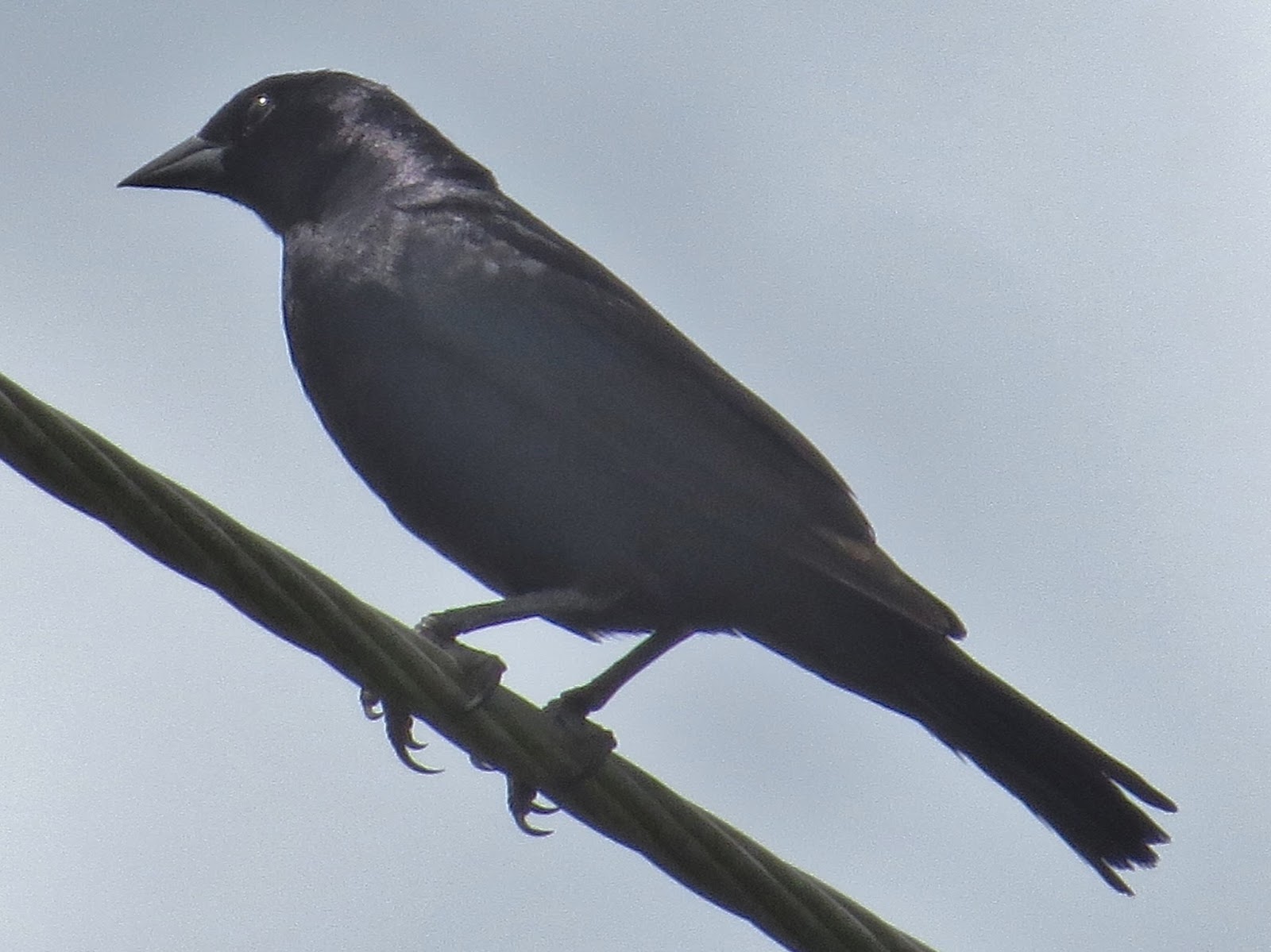
Earlier we did some investigating along Brown's Farm Road for any other hot spots. We were able to locate Black-bellied and Fulvous Whistling Ducks, more Black-necked Stilts, Mottled Ducks, Common Gallinule, Solitary Sandpipers, Killdeer, a lone Pectoral Sandpiper, Yellow-crowned and Black-crowned Night-herons, Common Nighthawks, Anhingas, a lone American White Pelican, Barn and Cliff Swallows, Glossy and White Ibis, various waders, White-winged, Mourning, Eurasian Collared and Ground Doves, Eastern Meadowlarks, Red-shouldered Hawk, a very high count on Green Herons and a great many Brown Cowbirds, Red-winged Blackbirds and Boat-tailed Grackles. 

Solitary Sandpiper
While on the phone with Dave McQuaid for an up-date on directions, we had a Gull-billed Tern right past the car. We managed to get a few pictures as a trio of the terns made several passes up and down the canal as they hunted.

Killdeer.
Photo by Bob Pelkey

Barn Swallow 
Black-bellied Whistling Duck

White-winged Dove

Brown-headed Cowbird

Least Sandpiper

Glossy Ibis

Shiny Cowbird
There was one more stop to make after finishing up at  Brown's Farm Road and that was to visit Belle Glade Marina on Torry Island, just a few north at Lake Okeechobee. Here, we are after a pair of Shiny Cowbirds, but we hit a snag.  Seems that the bridge providing access to Torry Island was under repair and would be closed for most of the day, except between Noon and One PM. We had almost a forty-five minute wait, but it was worth it. The male Shiny Cowbird was easily located within a few short minutes. We dipped in the orchard orioles and eastern kingbirds, but did see a Cooper's Hawk, Pileated Woodpecker, Limpkin  and a Great Egret which after reviewing its photo may possibly be a White Great Heron based on the leg color.

Is this a Great Egret or Great White Heron?

Apple Snail shell at Belle Glade Marina.
 No doubt refuse from a Limpkin's meal

Other sightings on the day included Swallow-tailed Kites, Ospreys, Crested Caracara, Red-tailed Hawk Chimney Swift and Fish Crows.  I'd have to say that a return trip is necessary after migration heats up.


Tuesday, July 19, 2016

Some Birding in Mid-July

Tuesday, July 18th

The summertime doldrums will be  ending in the coming weeks as when we will start seeing birds migrating back to our local venues. But we still can find interesting birds here in mid-July.


Sometimes I'll check-out Lee and Domestic Streets in the Alico Industrial Area in San Carlos Park in early morning. I'm always looking for any Burrowing Owls and the other day I spotted several atop a privacy wall at the Alginol research property on Lee Road.  The lighting was terrible for photography, but I managed to get a very interesting pic just the same. Other notable birds here included a very large number of Mourning Doves, a few Eastern Meadowlarks and a pair of Red-Tailed Hawks.


Yesterday, I was finally able to get out to Bunche Beach during a favorable low tide. It was interesting to find seven Yellow-crowned Night-herons, six of them juveniles, taking advantage to the large numbers of fiddler crabs on the beach. Spotted a pair of Spotted Sandpipers, the first seen in weeks, and a very early Pectoral Sandpiper. Other sightings included a Magnificent Frigatebird, several Willets, Marbled Godwits, Black-bellied Plovers, Wilson's Plovers, Semipalmated Plovers, Short-billed Dowitchers, Sanderlings, Western and Least Sandpipers, a pair of Reddish Egrets and a lone American Oystercatcher.  Also spotted Laughing Gulls, Least, Sandwich and Royal Terns, Black Skimmers and a few Brown Pelicans. Was keen on finding any returning Piping Plovers, but none seen. They should be back soon.

Fiddler Crab on Bunche Beach

Marbled Godwit

Pectoral Sandpiper
Western Sandpiper

Wilson's Plover


Purple Gallinule

Gray-headed Swamphen

Tricolored Heron
Today Bob Pelkey and I made an early run out to Harns Marsh in Lehigh Acres. This venue has been the go-to spot in our area for Snail Kites and Limpkins. But today in the two hours we spent here, no Snail Kites were seen. They are continuing to become more difficult to see at Harns. Its believed to be a food issue. The managers of the property, it appears, are keeping water level high which doesn't help the Apple Snails in there reproductive cycles. So the kites have been going elsewhere for food.

We did see several Sandhill Cranes, Tricolored Herons, Great Egrets, Limpkins, Mottled Ducks, Vultures, Least Bitterns, Gray-headed Swamphens and Purple Gallinules. One interesting observation was a distant call of what sounded like an Eastern Phoebe. Never found the source of the call, but Phoebes are not expected for a couple of months yet. 

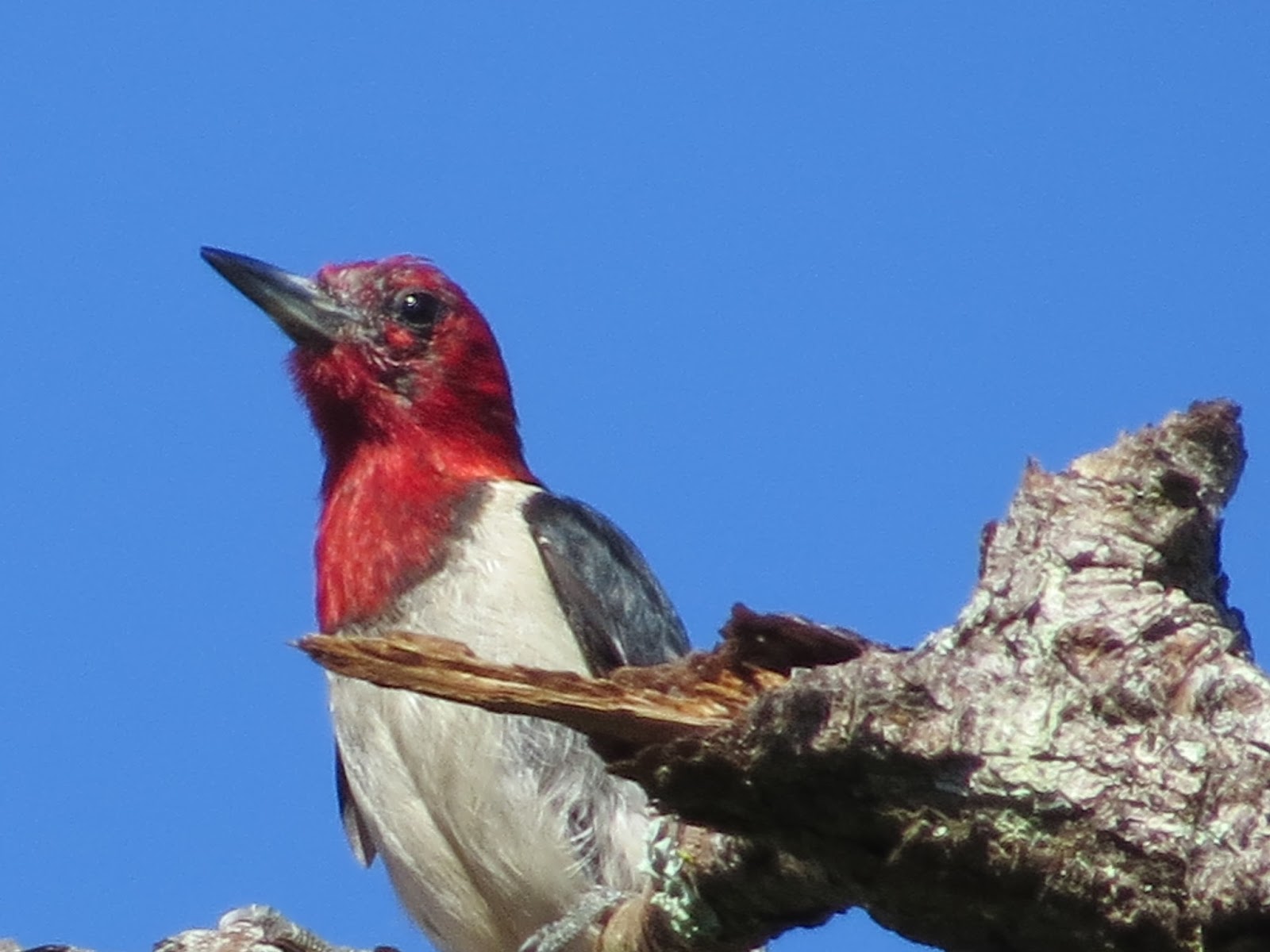
After Harns we checked out the Red-headed Woodpecker colony on Wellington Road in Lehigh Acres, were we spotted at least five, probably more of the woodpeckers, plus sighting of several Northern Bobwhites. This woodpecker colony should continue to be productive until the snags are eventually removed for development or just rot away. This particular location of snags was created by a brush fire that occasionally erupt in the area.

So there are always interesting birds
Red-headed Woodpecker

A Juvenile Red-headed Woodpecker

Monday, July 4, 2016

Kites and Swallows

Monday, July 4th


Mississippi Kite

Mississippi Kites nest in  Florida, each Spring, generally in the Panhandle and in Northern Florida. Occasionally we can spot one in the Fall in Southwest Florida has they migrate to South America for the winter. But for some of us from Southwest Florida looking to see these birds, it can be much more rewarding to travel to Central Florida in the Summer.

Swallow-tailed Kite
Today Bob Pelkey and I traveled to Marion County to witness the gathering of dozens of Swallow-tailed and Mississippi Kites concentrating in a community called Belleview, located near Ocala. The attraction here is the large number of grasshoppers present that they are feeding on. We arrived at 9:15 and for the two and a half hours we watched both kite species as they soared, swooped and rested. Our count was about fourteen Mississippi Kites and about ten Swallow-tailed Kites. Meet some nice people and had a rewarding experience.
Mississippi Kite

After leaving Belleview, we traveled south, making a stop to the Lake Apopka - North Shore Wildlife Drive. Last year the St John's River Water Management District, who mange this property, opened the eleven mile, North Shore Wildlife Drive. On weekends and holidays the drives is opened to auto traffic, otherwise access is by foot. Today we found that the was open and was actually busy. Some of the species encountered today include numbers of Least Bitterns, Green Herons, Barn Swallows, Red-winged Blackbirds and Common Gallinules. Other species included a, way early or way alte, Blue-winged Teal, Black-necked Stilts, White-winged doves, Anhingas, Alligators and various wading bird species. We did dip on purple gallinules and fulvous whistling ducks. From here it was time to head for home
Barn Swallow
Gator

Blue-winged Teal
Barn Swallows

Black-necked Stilt

Monday, June 27, 2016

Tropical Kingbird and Common Terns

Monday June 27th

Royal Tern bathing at Lido Beach
Today, Bob Pelkey had planned a return visit to the beach at Siesta Key, near Sarasota, in search of Common Terns. Last week he had been successful in locating a White-tailed Sandpiper at this location and maybe it'll still be around today. So I joined Bob on this trip, but we didn't see either species at this location. But we did see several Snowy Plovers that nest in this location. One surprise was a lone Greater Yellowlegs busy search the tidal pool for breakfast in the company of a pair of Rosette Spoonbills, Great Egrets, Snowy Egrets, White Ibis, Mottled Duck, Tricolored Heron, Semipalmated Plovers and a Western Sandpiper. We also had four Red Knots flyby as well as flyby Gull-billed Tern.
 
Mottled Duck at Siesta Key

Yellow-legs seen at Siesta Key Beach

Western Sandpiper at Siesta Key Beach

Rosette Spoonbill at Siesta Key Beach

We left here to search for another uncommon bird. A female Tropical Kingbird. This individual bird has been returning to a favored location at St Armonds Circle in Sarasota for several years now. This species belongs in Texas, especially in the summer. We do see occasional Tropical Kingbirds wintering in Florida, but this bird runs backward. It reportedly has been nesting with a Gray Kingbird. We first located a Nanday Parakeet and then found several Gary Kingbirds. The Tropical Kingbird did show, but took off before we could get any photos.
 
Tropical Kingbird

Tropical Kingbird

First Summer Common Term at Lido Beach

First Summer Common Term at Lido Beach

Black Skimmer Chick


Black Skimmer with chick at Lido Beach

So we elected to take to move on to nearby Lido Beach for another try at the Common Terns. Here we located six young birds in the company of numerous Sandwich Terns, Royal Terns, Laughing Gulls and hundreds of nesting Black Skimmers. Other species seen included Fish Crows, Sanderlings, Ruddy Turnstones. a Reddish Egret and a Magnificent Frigatebird.
 
Fish Crow at Lido Beach
Now we returned to St Armands Circle. As we waited for  Tropical Kingbird returned for a photo session, we encountered the Gray Kingbirds again, a couple of House Finches, a Chimney Swift and several House Sparrows. The Tropical Kingbird did show and gave us the photo opportunities we were waiting for.


It was a good trip 
Gray Kingbird

House Finch

House Finch