Sunday November 22nd
| Sea Lavender |
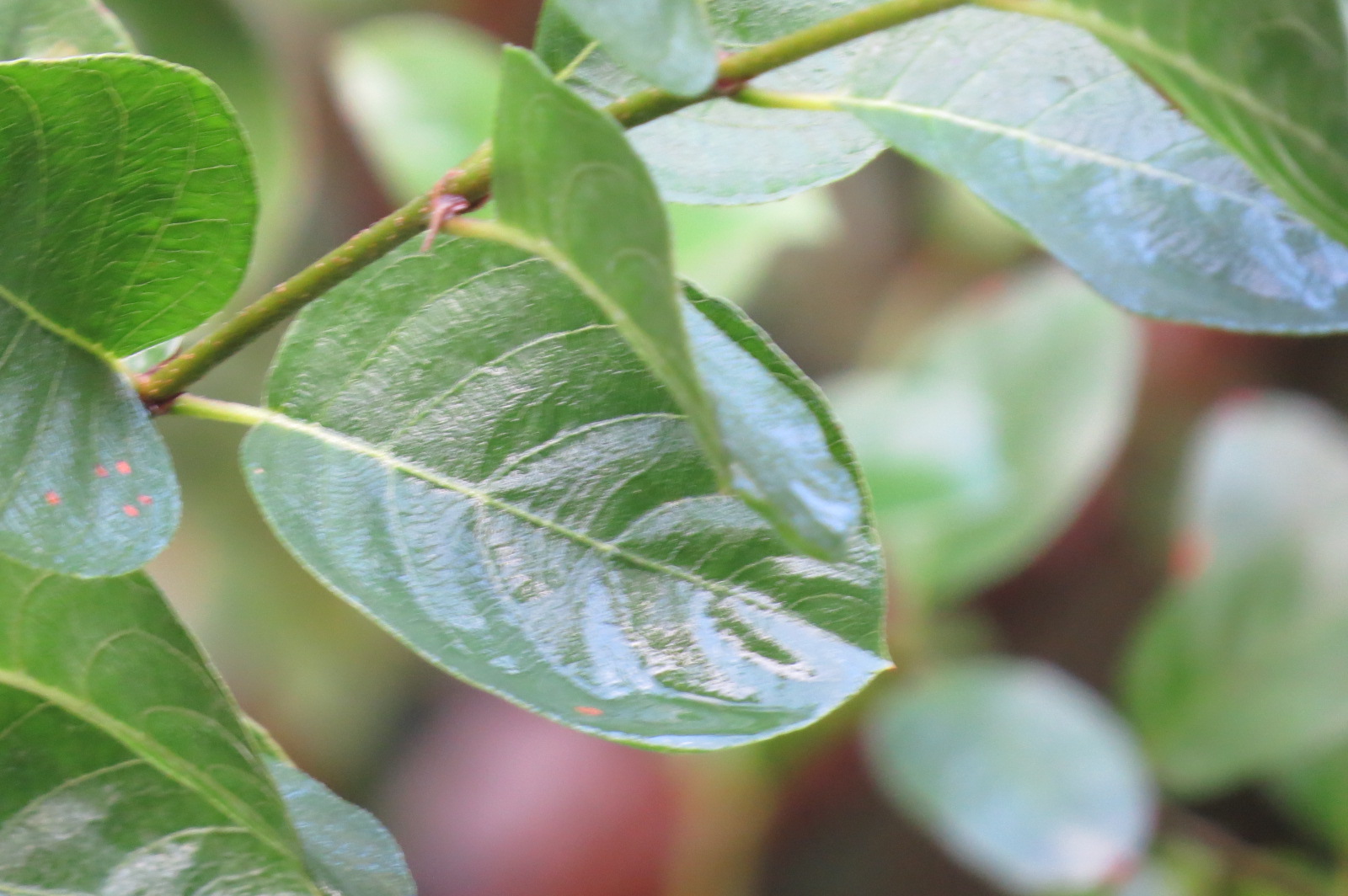
| Florida Silver Palms are primarily a Florida Keys species |
| Florida Silver Palm |
| Seven-Year Apple |
| Bahama Nightshade |
| Cassius Blue |
Sunday November 22nd
| Sea Lavender |
| Florida Silver Palms are primarily a Florida Keys species |
| Florida Silver Palm |
| Seven-Year Apple |
| Bahama Nightshade |
| Cassius Blue |
Sunday November 22nd
| White-crowned Pigeon seen on Key Largo |
| Common Myna seen in Florida City |
For me, its a five hour drive from Fort Myers down into the Florida Keys. Made the trip into a two day overnighter, because I also wanted to explorer some of the unique floral communities found nowhere in the US but in the Keys.
Did make a stop on Key Largo to look for interesting birds, flora and the endangered Florida Tree Snails
Moved on to Big Pine Key, which is just south of the famous seven mile bridge. Much of this Key is a part of the National Key Deer Refuge. Key Deer are a diminutive and endangered subspecies of White Tail Deer totally endemic to the Keys. Blue Hole is a former rock quarry used to provide material in the construction of Henry Flagler's Railroad through the Keys. Its now the only freshwater lake in the Keys
| A Key Deer seen near Blue Hole |
As for the Cuban Pewee, it was easily located from the Blue Hole overlook, were it is drawing many interested observers. It would pose nicely for photographs.
| Cuban Pewee seen at Blue Hole |
| Poisonwood at Key Largo Look but don't touch |
| Everglades Velvetseed at Key Largo |
| Lancewood at Key Largo |
| Florida Tree Snail at Key Largo |
| Bahama Strongbark |
| Blackbead at Blue Hole |
| Everglades Greenbriar at Blue Hole |
| Coker's Creeper at Blue Hole |
| Smooth Devil's Claws seen at Blue Hole |
| Mangrovevine at Blue Hole |
| Goatweed at Blue Hole |
| Rough Velvetseed seen at Blue Hole |
| Florida Thatch Palm seen at Blue Hole |
| Key Thatch Palm seen at Blue Hole |
| Chapman's Wild Sensitive Plant |
| Kestrel at Big Pine Key |
| Locustberry at Blue Hole |
Tuesday November 17th
| Florida Scrub Jay at Lake Wales Ridge WEA |
| Faey's Palafox |
Yesterday I visited the Lake Wales Ridge WEA - Lake Placid Scrub Tract, which is near Lake Placid and an excellent example of Florida Scrub. Was greeted by a pair of Florida Scrub Jays at the trail head.
| Florida Scrub Lizard |
| Florida Scrub Lizard |
Some of the flora found in this ecosystem included Sand Live Oak, Florida Scrub Oak, Scrub Palmetto, Sand Heath, Scrub Hickory, Rusty Lyonia, Sand Pine, Florida Scrub Bluecurls, Highlands Scrub Hypericum, Fringed Star Grass, Fringed Jointweed and Sandhill Wireweed
| Sand Live Oak |
| Florida Scrub Oak |
| Scrub Palmetto |
| Sand Heath |
| Scrub Hickory |
| Rusty Lyonia |
| Sand Pine |
| Highlands Scrub Hypericum |
| Florida Scrub Bluecurl |
| Fringed Star Grass |
| Fringed Jointweed |
| Sandhill Wireweed |
Wednesday November 11th
Haven't done very much birding lately, being stuck at home. Mostly just keeping an eye on the yard. But with Tropical Storm Eta, or sometimes as a Hurricane Eta, lingering in the Gulf of Mexico there maybe an opportunity to encounter some pelagic birds being blown toward shore.
| An Aberrant Laughing Gull |
Lots' of Laughing Gulls, Royal Terns, Sandwich Terns, some Common Terns, Ruddy Turnstones, Willets, Sanderlings, Brown Pelicans, Cormorants, plus Semipalmated Sandpipers, a Black Skimmer, a FOS Dunlin, Black bellied Plover and a Snowy Plover. The only pelagic was a single Magnificent Frigatebird.
| Black-bellied Plover |
| Willet |
| Royal Terns |
| Common Tern |